Development and Governance

Blog

  • Putting Children First

    It was very disturbing to read that in the USA, the world’s largest economy, the miniscule super rich are steadily growing richer, while child poverty is on the rise. And there has been a lot of finger pointing, as the US is now the only country in the world which has not ratified the UN Convention on Rights of the Child.

    So what exactly is the Convention on Rights of the Child (CRC), and has it been followed both in letter and spirit in the countries where it was ratified, with such alacrity, nearly a quarter of a century ago?

    The CRC is based on other Human Rights Conventions, and a wide range of indicators are regularly measured to make sure that all children’s rights mentioned in the Convention are being realized. The source agency for this data is, of course, UNICEF.

    So let us take a quick look at what the CRC expects, and the reality on the ground:

    CRC: Birth registration and migration: Every child has the right from birth to a name, a nationality and to know and be cared for by parents.

    Fact: Worldwide, 79 per cent of the richest children under the age of 5 have their births registered, but only 51 per cent of the poorest enjoy the right to an official identity. And while 80 per cent of children living in cities are registered, this is true for only 51 per cent of those living in the countryside.

    CRC: War: States Parties shall take all feasible measures to ensure that persons who have not attained the age of fifteen years do not take a direct part in hostilities.

    Fact: Africa has had a long and sad history of child soldiers for several decades now

    CRC: Poverty: Every child has the right to an adequate standard of living

    Fact: The richest 20 per cent of the world’s women are 2.7 times more likely than the poorest 20 per cent, to have a skilled attendant present at delivery. In South Asia, the richest women are nearly four times more likely than the poorest to have this benefit.

    CRC: Child Survival, Health, Vaccination, Immunization, Water and Sanitation: Every child has a right to life. Governments should ensure that children survive and develop healthily. Every child has a right to health and health services

    Fact: The poorest 20 per cent of the world’s children are twice as likely as the richest 20 per cent to be stunted by poor nutrition and to die before their fifth birthday. Children in rural areas are at a similar disadvantage compared to those who live in urban areas.

    Fact: Nearly three quarters (or around 1.8 billion) of the 2.5 billion people around the world who still have no access to improved sanitation, live in rural areas. Data from Bangladesh, India and Nepal, for example, show little progress between 1995 and 2008 in improved sanitation coverage among the poorest 40 per cent of households.

    CRC: Children with disabilities: All children with disabilities should enjoy a full and decent life, in conditions that ensure dignity, promote self-reliance and facilitate the child’s active participation in the community

    CRC: Female genital mutilation/cutting (FGM/C): States Parties are obliged to take all effective and appropriate measures to abolish traditional practices prejudicial to the health of children.

    Fact: Adolescent girls are more likely to be married or in union by age 19 than their male counterparts, and less likely than boys to have comprehensive knowledge of HIV. In South Asia, boys are almost twice as likely as girls to have this knowledge with which to protect themselves.

    CRC: Education: Every child has the right to an education

    CRC: Corporal punishment in schools: Every child has the right not to be subjected to torture or other cruel, inhuman or degrading treatment or punishment.

    Fact: Nearly 9 in 10 children from the wealthiest 20 per cent of households in the world’s least developed countries attend primary school – compared to only about 6 in 10 from the poorest households. The gap can be dramatic even in lower-middle-income countries. In Nigeria, for example, 94 per cent of children in the wealthiest house- holds attended school, compared to 34 per cent of children in the poorest households.

    Fact: Regardless of wealth, girls continue to be held back from schooling. For every 100 boys enrolled in primary school in West and Central Africa, only 90 girls are admitted. The exclusion is worse in secondary school, where only 76 girls are enrolled for every 100 boys.

    CRC: Participation: When adults make decisions that affect children, children who are capable of forming their own views have the right to express those views freely in matters affecting them, and adults will take those views into account, in accordance with the age and maturity of the child.

    CRC: Sport and play: Children have the right to rest and leisure, to engage in sport and play and recreational activities appropriate to the age of the child, and to participate freely in cultural life and the arts.

    CRC: Child labour: Every child has the right to be protected from hazardous or harmful work and from economic exploitation.

    My own country, India, has a rather sorry record in matters dealing with children, in comparison with other BRICS countries, a group it is very proud to be a member of:

    Child Post

    And as we talk of development all the time in this country, just how many new programmes has the present government announced to realize the rights of the child? ZILCH.


    Footnote: When I returned from my first visit to China, I was asked by my friends about the people and their attitude to life. Most Indians picture the Chinese as inscrutable, unsmiling automatons, living rigidly controlled lives of quiet misery, despite their shining cities. What could I say? It had been the month of August, the annual school break, and there were Chinese children everywhere – on the Great Wall, in the Shanghai Tower, in the myriad malls, on Nanking Street, in the museums… Laughing, healthy and happy children cheekily practising their English on us, and clicking selfies with their exotic neighbours from across the border… And it broke my heart to see the hungry, dirty street kids begging at every traffic light when I returned home.

    What is so wrong with India that a little real ‘development’ and compassion cannot mend, I wonder…

  • Infrastructure Projects in India

    What is it with first-time rulers that they waste no time in commissioning mega infrastructure projects, statuesque monuments and monumental statues? Perhaps it is a primal need in the human soul… and chieftains, kings and emperors have been building huge monuments even before the first signs of urban living e.g. in Turkey, nearly 10,000 years ago. And anthropologists, archaeologists and historians all agree: building huge monuments is essentially an expression of power by the ruler…

    So when the new Indian Government came to power on pledges of development, their first proclamations were the world’s tallest statue, the development of the River Ganga, and high speed trains between key metros. This was followed by announcements of smart cities, road networks, new railway links, ports, a new capital city for Andhra Pradesh and hundreds of bridges and power projects across the country. Failures to galvanize the Indian infrastructure sector in the past, were smugly put at the doorstep of the last government, and with some drastic tweaking of the land acquisition process, they were ready to give India the infrastructure (and monuments!) that would be the envy of all Asia – and that too in just 5 years!

    To be fair, the last government had tried its best to upgrade urban infrastructure through the JNNURM with private sector involvement, so why has the infrastructure sector in India NOT lived up to expectations?

    A report by McKinsey entitled ‘Building India – Accelerating Infrastructure Projects’ may have the answer. It identifies several bottlenecks in the development process from the planning and design of projects, to the tendering process, to their actual execution with inadequately trained manpower.

    Specifically, the report mentions:

    • Poor quality of planning and engineering design, which creates problems such as scope changes and variations during project execution, thereby creating disputes and delays.
    • Tendering of unviable PPP projects that are planned beyond their scope, contain dated cost estimates that lead to insufficient viability gap funding (VGF), and increased risk to the provider due to several contractual terms such as the possibility of termination of concession, if traffic crosses a threshold level.
    • Use of inappropriate contracts that allow the designs to be variable and increase the frictional cost of interaction between the nodal agency and the construction contractor.
    • Slow and centralised pre-tendering approval processes, involving a plethora of government agencies, with minimal or no accountability for resultant delays.

    Once a project finally gets going, the construction phase is marked by delays in land acquisition, ineffective resolution of disputes, shortages in the availability of skilled manpower and weak performance management in nodal agencies, resulting in time and cost over-runs.

    • Nodal agencies are hampered by weak performance management including low transparency in performance, lack of meaningful incentives, and absence of clearly defined consequences in the event of under-performance.
    • Insufficient availability of skilled and semi-skilled manpower is a major and enduring problem. A survey by the National Sample Survey Organisation estimates that while 13 million workers enter the market every year, only 3 million receive training. Furthermore, India’s vocational training curriculum is largely outdated and not based on clear standards, and the current certification process is based largely on theoretical testing, and does not ensure employability. So much for India’s demographic dividend!

    McKinsey manpower

    After winning a contract with great difficulty, the provider faces further problems. The report found that skills are weak across the value chain – ranging from the near absence of risk management skills, to below-par design and engineering skills. This paucity of skills is aggravated by a lack of best-in-class procurement practices, and low prevalence of lean construction principles.

    While the current Government may make some headway in addressing the land acquisition, project design, and tendering issues in the short term, the real challenge lies in building up the country’s skilled and semi-skilled manpower base.

    In other words, it should mature from the current project-mode of thinking to policy-mode.

    It took Japan, China, Singapore, South Korea and Thailand decades of social engineering to universalise primary and secondary education, and vocationalise their higher education, so that they had a trained and ready workforce in place when the industrial and infrastructure revolutions hit their shores. But the Indian Government is constrained by its 5-year electoral myopia and refuses to take a long term view of human and social development.

    What the country needs are not more IITs and IIMs to produce world class engineers and managers for the American economy, but more ITIs and vocational training centres in every city and town to get the Indian economy going …

    Sadly, the trouble with emperors is that they are so taken up with monumental projects that the child in the crowd who points out that the emperor has no clothes, is seldom heard…

  • It’s all about the land…

    (Written in February 2015, long before the Russian SMO in Ukraine, and reposted because these issues are still relevant and largely remain unaddressed by the Indian Government.)

    An article I read on the ICH really shook me up, as it spoke about the real purpose behind the Ukraine coup and subsequent conflict – capturing the ‘granary’ of Europe, so that its lucrative agro-industries could be corporatized by western MNCs. And here we were naively assuming that wars were essentially fought over petrol and gas in the 21st Century!

    This article resonated with me particularly, as India is currently in the throes of a great debate between corporate promoters of infrastructure development, and protectors of those who make a living from the land which will be needed to develop this infrastructure – the millions of small and marginal farmers across the country.

    The occasion is the introduction in Parliament of the Bill amending the Right to Fair Compensation and Transparency in Land Acquisition, Rehabilitation and Resettlement Act, 2013 in such a way, that the social impact analysis and consent elements (which gave a voice to land owners) have been greatly undermined.

    So it boils down to the age-old rural-urban conflict, and how to allocate scarce resources like land in an equitable and just manner for the overall development of the nation.

    However, it is my personal view as a mere citizen that this is a false dichotomy. Greater efficiency in urban land use; and higher productivity on agricultural land are both achievable with a little forethought and planning, and can mitigate a lot of this false conflict.

    Let us look at urban land use first: Despite only 31% urbanization, India has the second largest urban population after China, and the differences in the Indian and Chinese approaches to urbanization have been amply covered in my earlier posts. (China and India: Two roads diverged… and China and India: Our cities, their cities)

    Essentially, I make a case for better land management, empowering of local urban government, and the densification of Indian cities to make them more efficient and citizen-friendly.

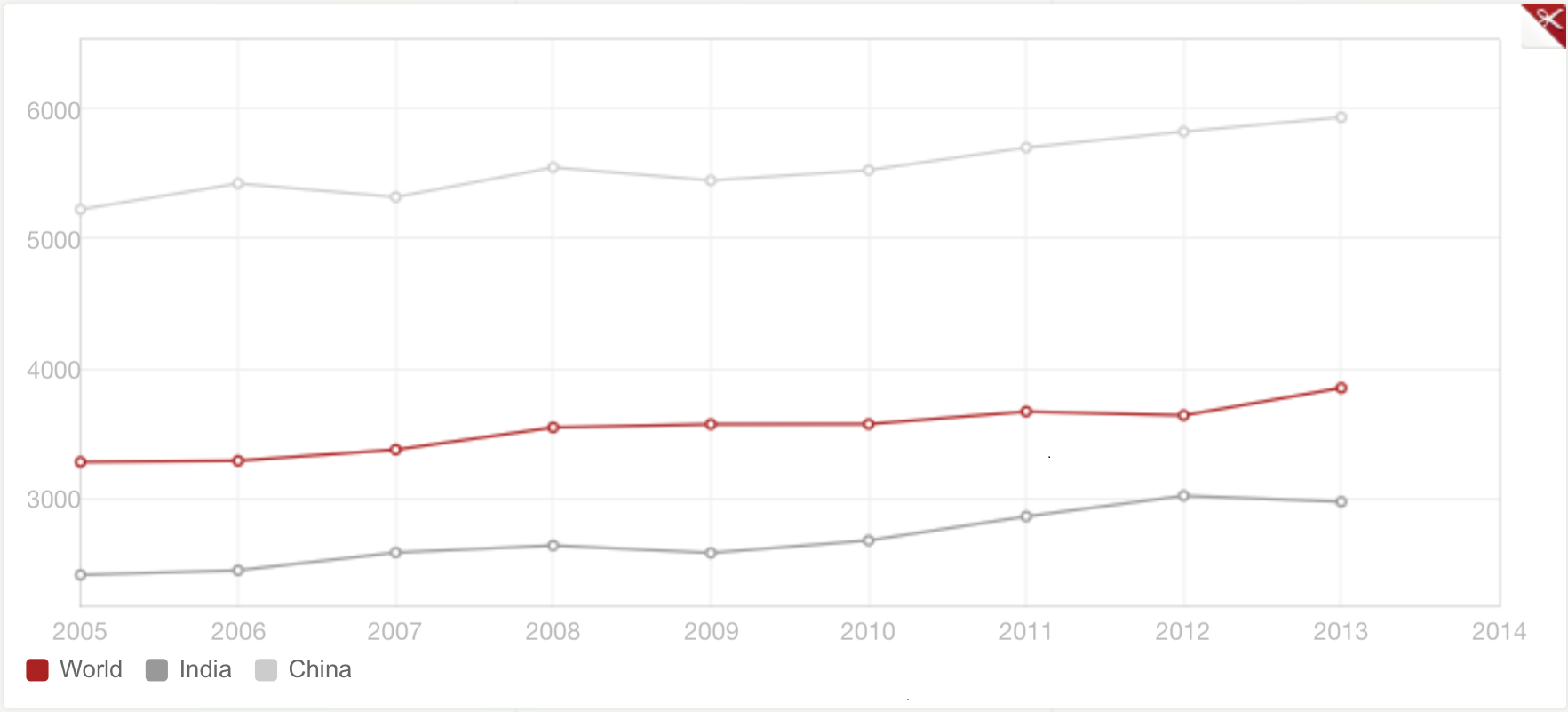
    Now look at the rural/agricultural scenario in these two countries, and one key indicator i.e. cereal production in kg/hectare:

    CEREAL PRODUCTION

    (Source: World Bank)

    Again, while Indian cereal production has remained consistently below the world average, China manages almost twice that. No wonder that 2013 estimates of the Indian economy put industry at 25.8%, the services sector at 56.9%, and agriculture at merely 17.4% of GDP.

    Slow agricultural growth (and not smart cities) should be the top priority of any Indian Government, as two thirds of India’s population depends on rural employment for a living. Ministers should be considering why current agricultural practices are neither economically nor environmentally sustainable, and why India’s yields for many agricultural commodities are consistently low.

    There are several reasons cited for this:

    • Firstly, acts of omission and commission by past governments (which a government promising ‘development’ and ‘good governance’ should be able to address, but won’t), like poorly maintained irrigation systems; absence of good extension services which facilitate the transfer of technology from the lab to the farm; poor roads; rudimentary market infrastructure; slow progress in implementing land reforms; inadequate or inefficient finance and marketing services for farm produce; and excessive regulation.
    • Secondly, the endemic poverty, illiteracy, general socio-economic backwardness of the Indian countryside. But as the current government has little time for advocates of human development like Dr Amartya Sen, I don’t see much hope there either…

    So constrained by its corporate backers, does this Government really have the will to do something for India’s farmers? They could start off by taking a leaf out of China’s book and pool agriculture land for economies of scale – maybe not as communes or collectives, but as cooperatives, which have proved so successful for sugarcane plantation in Maharashtra.

    Then there are alternatives to capital-intensive and heavy fertilizer dependent agriculture, which has only left behind a sad trail of rural indebtedness, despair and farmer suicides. Holistic farming systems which utilise locally appropriate knowledge, native wisdomand local labour  can successfully tertiarize rural economies and create significantly higher employment opportunities in the rural sector, thereby halting and reversing migration from rural to urban areas.

    Empowering farmers to ensure their own food and livelihood security through holistic farming systems, and through dispersed small industry based on agricultural produce, seems to be the only way forward.

    Sadly, instead of supporting small and marginal farmers through adequate budgetary allocations, the Central and State Governments have been expropriating their land for industrial corridors, townships and SEZs with huge incentives to their promoters, which eventually come out of the taxpayers’ pockets.

    It is rumoured that the proposed new capital for the state of Andhra Pradesh will be initially acquiring 30,000 acres of fertile, food-producing land – surely an extravagance India can ill afford.

    And the shiny new buildings there will produce a lot of food for thought perhaps, but none for the belly…

  • Vulnerability and Risk

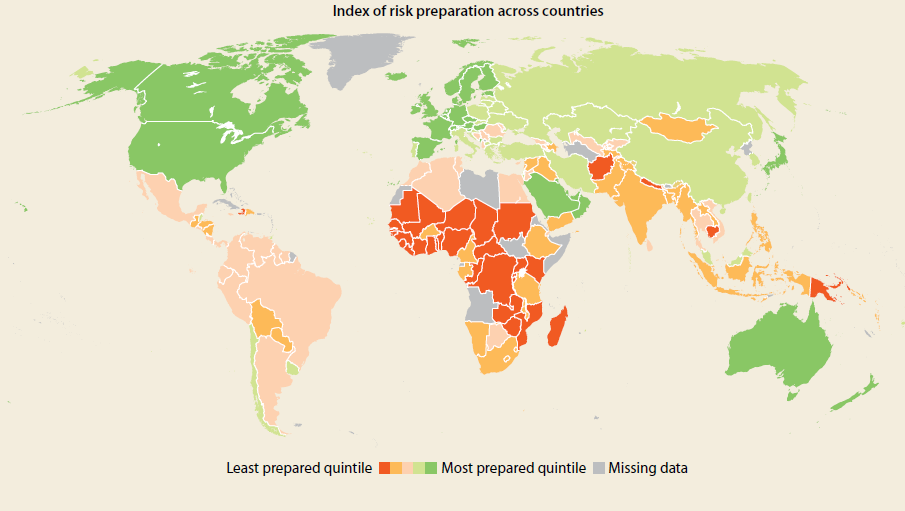
    I always enjoy comparing the views of World Bank and UNDP on what ails this world of ours, and their 2014 flagship publications (World Bank’s World Development Report, WDR 2014, and UNDP’s Human Development Report HDR 2014) approach the question of growing vulnerability in today’s world from exactly opposite directions. The World Bank sticks to the classic progression of VULNERABILITY > RISK > OPPORTUNITY; while the UNDP warns that heightened vulnerabilities in an interconnected world could undo the progress achieved in HUMAN DEVELOPMENT in the last two decades.

    The WDR looks at the risk preparedness of the world and presents a rather dismal picture for countries like India: Risk preparedness Its suggestions for better risk management and reduction of vulnerabilities too, are rather predictable: WDR Risk Management

    Not only does the role of the state remain paternalistic and minimal in this paradigm, it puts the onus on Civil Society and the Private Sector, yet again. Never mind that civil society in developing countries like India remains fragmented and powerless; and the private sector is not in the business of greater social responsibility. (See my earlier post on India an Aspirational Society? Not yet…)

    So we must look perforce at the UNDP’s suggestions… The entire approach of the Human Development Index differs from income-based indicators because it does not look at what people have or do not have; but what they can or cannot do. It looks at capabilities. The Human Development Index 2014 is mapped below: HDI Map

    The HDR 2014 introduces the concept of human vulnerability and how it erodes people’s capabilities and choices. Despite recent progress in poverty reduction, more than 2.2 billion people are either near or living in multidimensional poverty. The challenge is not just to keep vulnerable populations from falling back into extreme difficulty and deprivation; it is to create an enabling environment for their continuing human development advancement in the decades to come.

    The report feels that as globalization deepens, the policy space available to individual governments to enhance coping capabilities is becoming increasingly constrained. And “… unless more-vulnerable groups and individuals receive specific policy attention and dedicated resources across all dimensions of human development, they are in danger of being left behind, despite continuing human progress in most countries and communities.”

    The HDR 2014 reiterates that to tackle vulnerability, particularly among marginalized groups, and sustain recent achievements, reducing inequality in all dimensions of human development is crucial.

    The key messages of the HDR 2014 are:

    • Vulnerability threatens human development— and unless it is systematically addressed, by changing policies and social norms, progress will be neither equitable nor sustainable.
    • Life cycle vulnerability, structural vulnerability and insecure lives are fundamental sources of persistent deprivation—and must be addressed for human development to be secured and for progress to be sustained.
    • Policy responses to vulnerability should prevent threats, promote capabilities and protect people, especially the most vulnerable.
    • Everyone should have the right to education, health care and other basic services. Putting this principle of universalism into practice will require dedicated attention and resources, particularly for the poor and other vulnerable groups.

    Although the world has pulled up its socks and made remarkable strides in human development through the Millennium Development Goals (MDG), the agenda for future human development must necessarily focus on building up the resilience and coping mechanisms of the deprived.

    And this will require a common commitment—national and global—towards universal provision of social services, strengthening social protection and assuring full employment. Besides the universal provision of health and education, and strengthening social protection through unemployment benefits, protective labour laws, pensions, provident funds etc in both the formal and informal sector, national governments are also responsible for enhancing cohesion in society by building institutions of governance that are responsive and accountable, and can address and overcome the “… sense of injustice, vulnerability and exclusion that can fuel social discontent…”

    Is the Indian Government ready to take up this responsibility, or will it continue to march on its present path of greater privatisation, blatantly pro-rich policies, and confrontational and divisive politics? Only time will tell, but it is time India can ill afford and may put the country seriously behind in achieving the human development goals it set itself long, long ago when it set up its ‘tryst with destiny’ on 15 August 1947…

  • Happy Republic Day India

    26 January is celebrated each year in India with great pomp, pride and ceremony, as it commemorates the day independent India gave to itself, its own Constitution, crafted with love, care and pride by India’s intellectual elite of the time – almost all educated in England in the age of ‘liberal’ Fabianism.

    This idealism (with a soupçon of the French Revolution) is best reflected in the PREAMBLE which captures the very essence of the Constitution:

    WE, THE PEOPLE OF INDIA, having solemnly resolved to constitute India into a SOVEREIGN SOCIALIST SECULAR DEMOCRATIC REPUBLIC and to secure to all its citizens:

    JUSTICE, social, economic and political;

    LIBERTY of thought, expression, belief, faith and worship;

    EQUALITY of status and of opportunity; and to promote among them all

    FRATERNITY assuring the dignity of the individual and the unity and integrity of the Nation;

    IN OUR CONSTITUENT ASSEMBLY this twenty-sixth day of November, 1949, do

    HEREBY ADOPT, ENACT AND GIVE TO OURSELVES THIS CONSTITUTION.

    So how well are these lofty sentiments understood in the raucous India of today? Let us see…

    SOVEREIGN means putting the national interest above all else

    SOVEREIGN DOES NOT MEAN converting India into an instrument of another’s geo-political strategy

    SOCIALIST means inclusive growth

    SOCIALIST DOES NOT MEAN changing the rules of play to favour the rich

    SECULAR means separation of State and Religion, and equal respect for all religions

    SECULAR DOES NOT MEAN engineering communal violence for electoral gain, or making the minorities feel so alienated and insecure that they turn to violence themselves

    DEMOCRATIC means moving forward on a basis of consensus

    DEMOCRATIC DOES NOT MEAN seeking constant confrontation with one’s political opponents

    REPUBLIC means the people are supreme

    REPUBLIC DOES NOT MEAN that Indians who do not even live in India can decide its destiny

    JUSTICE means social, economic and political equity

    JUSTICE DOES NOT MEAN over 31.3 million cases pending in Indian courts and the consequent brutalization of over 2,80,000 unconvicted undertrials languishing in Indian jails; or the summary justice meted out by ‘khap panchayats’ (village courts)

    LIBERTY means the liberty of thought, expression, belief, faith and worship;

    LIBERTY DOES NOT MEAN the banning of this book, or the censoring of that film, or the rewriting of history, or honour killings, or reconversions, or offering to ‘cure’ homosexuality…

    EQUALITY of status and of opportunity means just that

    EQUALITY DOES NOT MEAN that the top 10% hold 74% of the country’s total wealth, while the bottom 10% hold just 0.2%

    FRATERNITY means assuring the dignity of the individual and the unity and integrity of the Nation

    FRATERNITY does not mean blatantly racist attacks on Indian citizens from the North Eastern states, on the streets of the national capital…

    Happy Republic Day, India!

    Let us rediscover the Constitution we gave ourselves 65 years ago…


  • India an Aspirational Society? Not yet…

    (Since this was written in January 2015, India is more divided than ever – economically, socially, politically. Aspiration has given way to cynicism and despair and people are largely disconnecting from any larger vision for themselves or the country. Sad.)

    Visitors to India are struck by the existence of 2 Indias – that inhabited by the middle and upper classes, who have probably received a western education and are fluent in English and 2-3 local languages; and the vast majority of those that “…also serve, who only stand and wait…” The first are the type you would come across at any American campus – a class of the privileged imbued with a sense of entitlement, who will clean their apartments, drive carefully and work hard when abroad; but employ at least one or more ‘servants’ when at home to wash, clean, cook, sort their garbage, and run errands for them.

    These are the ‘citizens’ of the world’s largest democracy, with all the benefits that citizenship implies: participation in the sovereignty of the state, and driven by a moral and ethical purpose. The laws of the land flow from citizens’ response to a situation, which are validated by government to become the law of the land, conferring rights and imposing limits on all citizens. Citizenship strengthens, empowers and enables. This is what the world perceives as the ‘civil society’ in India.

    The vast majority of Indians, however, are imbued with a sense of fatalism and are merely the ‘public’ or populations which are a creation of government: they are identifiable, classifiable, and describable by empirical or behavioural criteria, and are amenable to statistical techniques like censuses and sample surveys. (Labels like ‘backward’ castes, Project-Affected Persons, Small and Marginal farmers, Landless Labourers, rag-pickers, scavengers, street hawkers, physically and mentally handicapped persons, actually occur in various laws and government schemes!)

    Membership of a population diminishes, disempowers and disenfranchises. This is not ‘civil society’ in the accepted sense, and it took the eminent writer Partha Chatterjee to give them a name. He called them Political Society, in his book the Politics of the Governed (2004).

    According to Chatterjee, the marginalized sections of society first seek legitimacy by declaring themselves as a group or community, and then negotiate directly with the ruling political class based on their numbers and ability to swing elections. In fact they function as ‘vote banks’ – a particularly pejorative term in middle class discourse in India.

    The dynamics of demanding accountability at both these levels is very interesting. While civil society is more comfortable dealing with the permanent professional bureaucracy (People Like Us); political society prefers to deal directly with its elected representatives. Once approached, it is up to the elected representatives to instruct the bureaucracy to take up the issue, mostly through arrangements outside of legality. And it is these paralegal arrangements, which prevent tighter regulation of informal businesses; procure that coveted contract; or halt the demolition of an illegal slum.

    So civil society and political society have long coexisted in Independent India in the mould of the centuries-old caste system (with modern class overtones) – interdependent, yet independent.

    However, since 1991 and the economic reforms which pinned India to the global economy, the lines of this social divide have began to blur for several reasons:

    Politics of Coalition Governments: Following the State of Emergency declared in 1975, there was a splintering of political parties across the ideological spectrum, and the emergence of regional parties, which meant that clear majorities at the Centre and State elections were a distant memory, and coalitions forced together strange bedfellows from either side of this social divide – the most notable being the coalition between the comfortably middle class BJP and the street savvy Shiv Sena in Maharashtra in 1995.

    Affirmative Action: Reservations for the disadvantaged in higher education and government jobs for over 40 years, have also helped move millions across the social divide.

    Liberalization, Privatization and Globalization have created new career paths and speeded up the mobility in society.

    Peri-urbanization or the growth of cities into the hinterland has created a class of the new rich, whose hitherto unproductive lands have shot up manifold in value, once they become part of a city.

    NGO-CBO Collaboration: In a post-internet global community, Non-Government Organizations (NGOs) have had the means and the willingness to set up Community-based Organizations or CBOs (often at the insistence of international donor agencies) and this collaboration has increasingly built bridges across the social divide.

    Formal-Informal Interactions: The opening up of the Indian economy has allowed private investments (both foreign and domestic) in everything from infrastructure, to financial services, to e-retail, and this means that the formal sectors are hugely dependent on the informal sector somewhere along their supply chains. This has brought in a new set of interdependencies into the civil-political society equation.

    Commercialization of Higher Education: Post-1991, there has been a boom in private institutions of higher education and it is possible to ‘buy’ a seat in every type of institution – IT, Medicine, Engineering. This has enabled expatriate workers and the new rich to educate their children, and examples of a rickshaw driver’s son or daughter holding a prestigious post in a scientific institution, are now commonplace.

    This blurring of lines between the governed and those who govern, has given rise to a new generation who have the same aspirations as their contemporaries around the world. And coming of age, they have been a key factor in the 2014 election.

    The question is can India now be termed an aspirational society? I think not yet…

    Writing in The Washington Times on September 8, 2014, Richard W. Rahn argues that:

    “Hong Kong, like Singapore, South Korea, Chile and Switzerland are aspirational societies, rather than societies consumed with envy, like France. Work, saving and investment are not punished in aspirational societies, and there tend to be less social conflict and a higher level of civility. The United States used to be an aspirational society, but has increasingly become an envious society.”

    Recent events in USA (with the Police forces accused of racism) and France (with its banlieue ghettoization of immigrants) contrasted with the peaceful protests in Hong Kong; do vindicate Rahn’s point of civility and unity of purpose being key to a society becoming an aspirational society. One may also add lower economic and social disparity to this mix. Chile from the above list of aspirational societies, has perhaps the most egalitarian society among comparable countries.

    The seeds of an aspirational society are there in India in this ‘bridge’ generation. The question is can the government rein in its extremist fringe which thrives on divisiveness, and can all political parties come together on a common purpose and action plan. And can a party that came to power on promises of development, also make this development inclusive

    Only time will tell…


  • Is La Liga killing off the World Cup?

    I chose the Spanish League for my title only because it is the most enjoyable league for a neutral to watch these days, and because the South American Triumvirate and its exploits are the most talked about football events in the world today.

    messineymarsuarez

    And we know precisely how badly they let down their national teams in the World Cup 2014. Neymar, poor chap, couldn’t play after his injury; Suarez because he drew the wrath of the Western European establishment at FIFA, and got punished beyond all reasonableness; and Messi just couldn’t get the support from his team-mates that comes his way at every Barcelona match.

    What we forget when lamenting the decline of the South American game is that like a thousand other professions, footballers also operate in a labour market and the trend over the last few years has been that the best deals are to be had only in the major European Leagues.

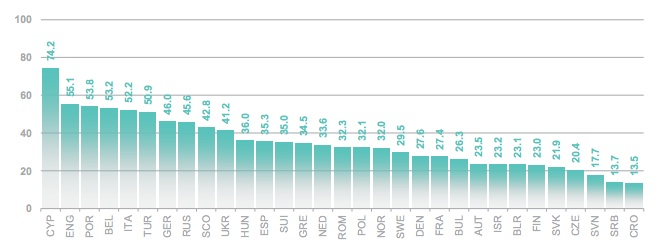
    A recent Report published by the CIES Football Observatory in Switzerland shows that the number of foreign players playing in European Leagues has reached a record high of 36.1% in recent years, with the top leagues in England, Portugal, Belgium, Germany, Italy and Spain as the major employers:

    Foreign-players-in-Euro-leagues

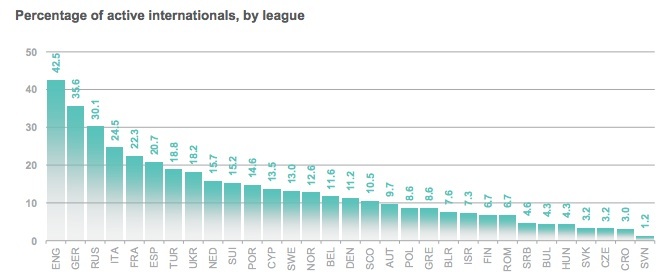
    The trend is reaffirmed if we look at the number of expatriate national caps playing in Europe, with the richest clubs at the forefront in England, Germany, Russia, Italy and France:

    Active-internationals-by-league-2012

    As an honorary brasileira (see my ABOUT page), I am proud that Brazil remains the major talent producing country in the football world, but am also dismayed to note that there were no less than 515 Brazilians spread over 31 European leagues in 2012, with varying form and incipient injuries, so how could any Brazilian coach gather together the most talented 22 in time for the World Cup 2014? After all, a country that plays together wins together, and Spain in 2010 had all but one of the championship side playing at home, and most played for just one club – Barcelona. Ditto the mark of Bayern Munich on the German players in 2014.

    Origin-of-expats-in-31-top-Euro-divisions

    This internationalization of football is inevitable in a fast-globalizing world, but it has killed off the joys of nationalist fervour we saw, once every 4 years. And this nationalism was to be seen in the most positive and joyous terms. Like on the streets of football-crazy Calcutta, where a ‘Brazilian’ brother would face-off against his ‘Argentine’ brother to see who displayed the largest banner. In large parts of Asia, we spelt football as B-R-A-Z-I-L, and when Brazil won (in Asia in 2002) the World won; but when Germany wins in 2014, only Germans win.

    Another sad fall-out of the big European clubs cornering the world’s Football talent is that their national teams have started reflecting the same predatory tendencies. And they have the (very convenient) Article 17 of FIFA Rules on the ‘Acquisition of a new nationality’, which states that:

    “Any player who refers to article 15 Para 1 to assume a new nationality and who has not played international football in accordance with Art 15 para 2, shall be eligible to play for the new representative team, only if he fulfils one of the following conditions:

    1. He was born on the territory of the relevant Association;
    2. His biological mother or biological father was born on the territory of the relevant Association;
    3. His grandmother or grandfather was born on the territory of the relevant Association;
    4. He has lived continuously for at least 5 years, after reaching the age of 18 on the territory of the relevant Association.”

    It is obvious that the first three provisions will favour former colonial powers – all European – and the last is a way to fast track naturalization of a talented 18 year old, so that he can become a full international player of his adopted country through his prime playing years of 23-30. QED.

    It is hardly surprising that the naturalization route taken by countries in Western Europe has greatly enhanced their chances of success in the World Cup – never mind that they have strict anti-immigration rules for other aspiring migrants; and islamophobia, xenophobia and racism are rampant in their societies, which limits all ethnic diversity exclusively to the football field. That’s it.

    When you see half a European team not singing the national anthem at the start of a World Cup match, you wonder what happened to the joyous nationalistic fervour I mentioned above…And you know why this is so…

    However, despite my despondency at Brazil’s prospects of ever recapturing its past glories, here’s hoping that Latin America will keep the joy alive in football, with a Colombia here, a Uruguay there, and brave little Costa Rica popping up unexpectedly. After all, Brazil played some of its best football under Socrates in the 1980s, without winning the World Cup, and have consistently been a joy to watch in the Confederations Cup – who can forget Ronaldinho running circles around Argentina in 2005, or the rout of Spain as recently as 2013?

    So roll on 2018. We are ready…


  • Prospects for Prosperity of Indian Cities

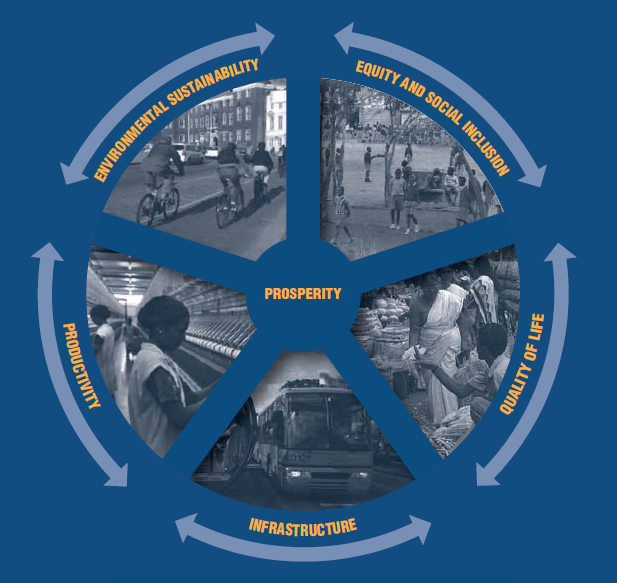
    As we saw in the last post, the UN-Habitat’s Wheel of Prosperity has the 5 dimensions of prosperity interacting with each other; and prosperity depends directly on whether these interactions reinforce or undermine each other.

    wheel of prosperity 2

    We also saw that according to the UN-Habitat’s survey, both Delhi and Mumbai made it only to the category of moderate prosperity factors (0.600–0.699), characterised by:

    • Wider discrepancies among the 5 dimensions of prosperity
    • Institutional and structural failings
    • Less balanced development
    • Neat divide between rich and poor

    The main problem in integrating the 5 dimensions of prosperity in Indian cities is the growing informalisation of the city’s economy, with Mumbai having the dubious distinction of 68% of its economy being informal, while Delhi and Chennai have over 61% of informalisation. As mentioned in my earlier post, by operating in the 3 sectors of industry, enterprise, and housing, the informal economy weakens the national economy in the long run:

    • By pushing more and more of its practitioners deeper into poverty
    • By dissipating India’s age advantage, as deprivation leaches away at the human potential of generation after generation, denied access to education and skill building
    • By operating below the tax radar and denying taxes to the local, State and Central Governments
    • By untold damage to the urban environment, as a consequence of little or no monitoring or regulation

    Large scale informalisation weakens all the 5 dimensions of prosperity, because informal production seldom gets reflected in the productivity figures of the city – especially as India lacks a proper representational system (guaranteed by a local/state authority) of documenting land deals, goods produced, inventories maintained, or transactions completed.

    By acting below the tax radar, the informal economy deprives the local government of taxes, and a resource-strapped local body is hardly likely to provide adequate services like health, education, water and sanitation, which directly impacts quality of life.

    The informal sector thrives in any economy, only because it is profitable for the formal sector to have all, or part of its supply chain in the informal sector. This segment can provide cheap goods and services as it pays abysmally low wages and offers no social security to its workers, as it falls outside the ambit of the country’s labour laws, meant to safeguard worker rights. This means that millions of informal sector workers are perpetually caught up in a poverty trap, generation after generation – a situation exacerbated by the unavailability of affordable or rental housing. In fact I have a simple thumb rule, if according to the decadal Census, x% of a city’s population lives in slums, then x*1.3% of its economy must be in the informal sector! Such high prevalence of urban poverty and the policies which perpetuate it in Indian cities make a mockery of the equity and social inclusion dimension of prosperity.

    The informal industrial sector is also guilty of the worst pollution in a city, and being unmonitored and unregulated, there is no incentive for these enterprises to clean up their act, so there goes environmental sustainability!

    I have left infrastructure for the last, because every government in recent times looks upon urban infrastructure as its most tangible ‘mark’ on the horizon, and given a limited span of 5 years to ‘prove themselves’ they opt for quick fixes like roads, bridges and flyovers which only encourage more private vehicles, add to the pollution, and are hardly ‘inclusive’ in their exclusive use by the wealthy. Spending the same money on improving the quality of health and education, lowering the city’s carbon footprint, or upgrading the city’s water supply system makes more sense for Indian cities, but by the time their impact is seen, the election has come and gone…

    So instead, we are happy with news-bites, putting up huge statues of the icons of the day, and providing photo-ops for VIPs sweeping the streets to dump the garbage god knows where!

    In India it is called ‘good governance’…


    How then, can we go about making Indian cities more prosperous? Primarily by addressing the issues at the hub of the Wheel of Prosperity – Government institutions; and Laws and Urban Planning.

    Despite almost 70 years of independence, India does not have a national urban policy nor a National Urban Plan. When China opened up, the first thing it did was to invest billions in developing its National Central Cities and business hubs like Pu Dong in Shanghai and Shenzhen near Guangzhou. The Government investment earned magnificent returns, as China went on to become the world’s factory in the following decade. Indian Governments must realise that national investment in urban infrastructure is key to economic growth, and cannot be left at the mercy of the private sector, as happened under JNNURM and is going to happen again under the new regime..

    Plus (unlike Brazil) there has been no attempt in India to involve the community in urban management and planning, nor to subsume public housing in urban planning, as in Singapore.

    Further, taking a lesson from cities which rank much higher than us, we notice one common thread: they all have very strong, enabled and empowered local governments. India needs to follow suit. Although it is over 20 years since the 74th Constitutional Amendment, decentralisation has not really taken off, because only the functions have been delegated to the local level, not the resources, powers or personnel.

    As I had pointed out in my earlier post, the Mayor of Shanghai is such a powerful personage, that visiting Heads of States come calling whenever they visit China. He is assisted by a plethora of urban planners, administrators and engineers whose only concern is their home city of Shanghai. Contrast that with Mumbai, whose highest local official is the City Engineer, who is subject to a Municipal Commissioner and numerous Additional Municipal Commissioners, all officers of the Central Indian Administrative Service or IAS (who are generalist career civil servants and not  qualified urban professionals), posted by the State government for a short duration, to run local government! How amusing…

    The New York Police Department (consisting of officers who spend their entire careers serving the city) reports to its Mayor, an elected public official, while Delhi’s Police Commissioner is from the Central Indian Police Service (IPS), posted by the State Government for a couple of years to police the city, and report to some IAS Officer at the State Home Department!

    The same system prevails when it comes to urban planners, who are responsible not to the local body, but to the State Government’s Urban Development Department, headed (you guessed it!) by yet another IAS Officer. For instance in Maharashtra, if a city finds that its industries are moving further out from the city centre and the large swathes of land under factories will remain unutilised, it cannot authorise change of use to commercial or residential development, without the say-so of the State Government. So much for autonomy in local planning!

    This absence of qualified urban professionals (who are lifetime employees of a local government in charge of their city’s planning and development) is at the heart of misgovernance in Indian towns and cities. Without a strong local administration, it becomes impossible to elect and empower Mayors who can act as true CEOs of their cities, as in other parts of the world.

    However, given the clout of the Central permanent bureaucracy (which considers urban local bodies as plum postings), things are unlikely to change soon, and Indian cities will have to postpone their dreams of prosperity a little longer yet… no matter which political party is in power.

  • City Prosperity

    The consensus among urban experts is that a ‘good’ city for the 21st century is one that is people-centred and capable of integrating the tangible and intangible aspects of prosperity, and shedding the inefficient, unsustainable forms and functionalities of the city of the previous century.

    We have long been lamenting the growing disparity, inequity, poverty, deprivation and lack of choice and voice in cities across the developing world, which are largely a legacy of the post-colonial cities of former colonies, which simply did not have the capacity or resources to move away from the inherited British, Spanish, French or Portuguese forms of urban local governance.

    As these problems seem to be overwhelming us, the UN-Habitat in its flagship publication, the State of the World’s Cities, took a refreshing new look at urban management in its 2012-13 Report, and came up with the idea of replacing the urban poverty paradigm with that of city prosperity.

    According to this Report, “… prosperity implies success, wealth, thriving conditions, and well-being as well as confidence and opportunity. In general terms, a prosperous city offers a profusion of public goods and develops policies and actions for sustainable use, and allows equitable access to ‘commons’…

    The Report conceptualises city prosperity along 5 parameters:

    First, a prosperous city contributes to economic growth through productivity, generating the income and employment that afford adequate living standards for the whole population

    Second, a prosperous city deploys the infrastructure, physical assets and amenities – adequate water, sanitation, power supply, road network, information and communications technology, etc. – required to sustain both the population and the economy

    Third, prosperous cities provide the social services – education, health, recreation, safety and security, etc. – required for improved living standards, enabling the population to maximize individual potential and lead fulfilling lives

    Fourth, a city is only prosperous to the extent that poverty and inequalities are minimal. No city can claim to be prosperous when large segments of the population live in abject poverty and deprivation. This involves reducing the incidence of slums and new forms of poverty

    Fifth, the creation and (re)distribution of the benefits of prosperity do not destroy or degrade the environment; instead, the city’s natural assets are preserved for the sake of sustainable urbanization.

    The 5 aspects are combined in the Wheel of Urban Prosperity, and their interconnectedness and interactivity is very apparent:

    Prosperity Wheel

    The Report then goes on to calculate the City Prosperity Index (CPI) of a number of large cities across the world, and its findings make for interesting reading.

    Cities CPI

    So there India, you have it: Both the national and financial capital make it only to Cities with moderate prosperity factors (0.600–0.699), characterised by:

    • Wider discrepancies among the 5 dimensions of prosperity
    • Institutional and structural failings
    • Less balanced development
    • Neat divide between rich and poor.

    And remember, both New Delhi and Mumbai are the best-resourced cities in India – the first because the Central Government lavishes a lot upon its showcase capital; the second because it has the perhaps the highest ‘City to National GDP’ ratio of 4.0  (this is just 1.2 for Tokyo, 1.3 for Sydney, 1.6 for NYC). The smaller Indian cities are much worse off in terms of the City Prosperity Index.

    In my next post, I hope to examine ways in which changes in policies and practices may actually make Indian cities more prosperous.

    See you then…

  • Merry Christmas, Palestine

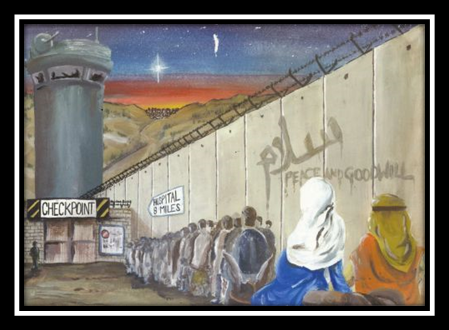
    As the world prepares to mark the birth of the greatest Palestinian of all time, I wonder what Bethlehem was like at the time of His birth. Well, it was under the oppressive regime of King Herod, ‘client’ king of the only superpower of the time, Rome, which wanted to retain control of Palestine because of its proximity to Rome’s two resource rich domains – Syria and Egypt.

    Not much changes in a mere 2000 years, does it?

    In my quest for a present day resident of Bethlehem, I came across Anton Murra, a Palestinian Christian and writer specializing in interfaith dialogue, Israeli-Palestinian peace initiatives and multicultural understanding.

    In his recent post on the Huffington Post, Murra explains:

    Religion plays a big role in the life of Palestinians – and integrates itself into politics, culture, society and ethics – like no other place in the world. In Bethlehem, Palestinian Christians and Muslims have experienced good relations and have demonstrated solidarity and support for each other on many occasions. There is a shared history among the Palestinians in Bethlehem that has created good relations throughout history… Today in Bethlehem, however, Christianity is experiencing a crisis. This is not due to the growth of so-called Islamic fundamentalism or the persecution of “believers” by their Muslim neighbors, misrepresentations that are unfortunately used to distract from the realities of occupation. (emphasis added)

    Instead, the plight of the Palestinian Christian is very much connected to that of the Palestinian Muslim in that both experience injustices every day as a result of oppressive and discriminatory policies imposed on them by the Israeli Occupation.

    Bethlehem is about six miles (10 kilometers) south of Jerusalem. Although only about 20% of Palestinians in Bethlehem are Christians, Christians and Muslims in Bethlehem have been living together for centuries. They are neighbors, friends and classmates. Both have suffered from the Israeli occupation for over sixty years and both have showed steadfastness in the face of oppression.

    Like their Muslim neighbors, who are also prevented at checkpoints and roadblocks from making pilgrimage to the Al-Aqsa Mosque in Jerusalem, Christians in Bethlehem are denied basic religious freedoms, routinely prohibited from traveling very short distances to worship in one of the most holy sites in Christianity – the Church of the Holy Sepulcher in the Old City of Jerusalem, where the crucifixion, death, burial and resurrection of Jesus are commemorated.”

    Murra goes on to elucidate the responses he got to his question: What do Palestinians want for Christmas?

    … Some people mentioned spiritual gifts like love, faith and hope… Other people wished for the end of the occupation and freedom for Palestine. These people have suffered tremendously from the Israeli occupation… Like those who wish for world peace, these wish for peace and justice for the Palestinian people. They are not activists nor are they affiliated to any political group. They are simply ordinary people who are frustrated with the Israeli occupation and consider it the source of hatred and evil.

    Roger Salameh, a 27-year-old Palestinian from Bethlehem, argues ‘for us to live in peace, the occupation must end.’ His Christmas wish is for ‘a free country recognized by the world.’ Another group of people wishes for a better life situation for themselves and for their relatives and friends. Others wish for food security, health, jobs and reconciliation with their relatives and neighbors. They want to challenge the depressing reality that surrounds them and live lives despite all the odds.

    Murra then explains his own thoughts and dreams:

    I myself have been experiencing the Israeli occupation all my life. I’ve heard people talking about peace and justice since I was a little boy. A lot of people were lost struggling for peace and justice. I have been actively working towards achieving peace and bringing justice for the Palestinians since 2000. I haven’t given up hope and I will keep working to bring about positive change.

    ‘I have a dream’ and I don’t care how disappointing it has been working to achieve that dream. But I know that my dream is possible. I know that in process of achieving my dream I will encounter a lot of failure, a lot of pain. Sometimes when I am alone and I see all the injustices, I doubt my faith and I start asking why this is happening to us? Palestinians are just trying to take care of their families.”

    So as you rush around to fulfil every little Christmas wish of those near and dear to you, what will you do to help Anton Murra and his fellow-Palestinians to fulfil their dreams?

    Merry Christmas and a Happy New Year !!!

    Palestine2

    Courtesy: warpoetry.co.uk