Development and Governance

Tag: India

  • Indian Independence and Globalization

    As someone born long after India gained Independence, one heard of Jawaharlal Nehru’s first Independence Day speech only from one’s elders and betters and got to actually hear it years later, only after the advent of the Internet. That scratchy recording from the radio archives; that emotion-laden voice, on the verge of breaking; those extempore words in an alien language…

    “Long years ago we made a tryst with destiny, and now the time comes when we shall redeem our pledge, not wholly or in full measure, but very substantially. At the stroke of the midnight hour, when the world sleeps, India will awake to life and freedom. A moment comes, which comes but rarely in history, when we step out from the old to the new, when an age ends, and when the soul of a nation, long suppressed, finds utterance. It is fitting that at this solemn moment, we take the pledge of dedication to the service of India and her people and to the still larger cause of humanity.”

    And what a pledge it proved to be! Nehru had inherited a partitioned land, a ravaged countryside, little or no manufacturing industry and famine stalking the masses at every turn. His first task was to interpret independence as self-reliance and address the abysmal poverty of the common Indian. Hence the Green Revolution to provide basic food security, and setting up of mega industries in the public sector, to provide employment in urban areas.

    In tandem was the establishment of the Indian Institutes of Technology, the Indian Institutes of Management, the National Defence Academy, and scientific research institutions like the National Laboratories, TIFR, BARC, ISRO and many more.

    Internationally, Nehru’s vision of Non-alignment protected India from the worst excesses of the Cold War, wreaking havoc all around us – South-East Asia, Africa and Latin America. Of course, the devil is always in the detail, and man is mortal, so Nehru could not redeem his pledge in its entirety, but he did leave behind a legacy of vision and daring.

    So what happened to derail Project Independent India? In a word – globalization. Ever since India chose this path, one has not heard any Prime Minister either make a pledge to the people of India, or show the courage to go it alone in the interests of the country. We are all too busy chasing Foreign Direct Investment and let the devil take the hindmost…

    In reality, the globalized world economy has deeply fragmented production processes, labour markets, political entities and societies, creating a plethora of interest groups and lobbies which have undermined the integrity of civil society and its rights and entitlements across the world. This is becoming increasingly visible in rich and poor countries in the form of growing disparity between places, people and groups. In India, globalization is manifested in much greater income inequalities and growing agrarian distress.

    In the international realm, the once proud Indian foreign office bows quietly to Washington in voting or abstaining on UN resolutions, and surrenders quietly to tough terms of international trade. Globalization, spearheaded largely by MNCs, now decides which domestic land laws need to be amended and which social issues can be ignored – like child labour, informalisation of urban economies, land rights of indigenous people, deteriorating health and education, pollution, environmental degradation and so on…

    Advocates of globalization claim that greater international connectivity has enhanced accountability of governments. True. But the global elite still get away with murder – they call it collateral damage, of course. The UN bodies, International Courts of Justice and other fora are as biased in favour of the West as before, so what has really changed for the better?

    The recent referendum in Scotland was precisely about this – globalization or independence? As is the ongoing ideological conflict in Greece. And look what happened there – economically weaker countries have quietly given up the battle and taken their humble places in the new global pecking order, and all’s well with God’s Earth! Even that bastion of hope – Cuba – is in a hurry to jump on to the globalization bandwagon… apparently globalization is as inevitable as death and taxes.

    So as India celebrated its 68th Independence Day this August, isn’t it time to take stock of where we are headed and why? To whose benefit? And at whose cost?

    It is time for India to break out of this global thraldom, and awaken once again to life and freedom…

  • Social Security Nets as guarantors of Human Development

    Whenever one talks of sustainable livelihoods, we look not only at the 5 types of assets of a community or individual, but also at their coping strategies. Thus vocational diversity in a farming family will cushion it against a bad crop or a natural disaster, or the sudden death of the principal breadwinner. At the national level, the coping mechanism is provided by the state in the form of social security nets like unemployment benefits, health care, free education, pensions or child benefits.

    The second edition of The State of Social Nets which attempts to compile, analyze, and disseminate data and developments as part of the World Bank’s 2012–22 Social Protection and Labor Strategy, makes for interesting reading, and its key findings are summarized below:

    • The portfolio of social safety net programmes is large and diverse. A developing country runs about 20 different safety net programmes, on average.
    • Cash transfers and school feeding programmes are present in almost all countries. Cash transfers are becoming more popular and increasingly complex. Conditional cash transfer programmes are now present in 64 countries, a dramatic increase from 2 countries in 1997 and 27 countries in 2008.
    • Worldwide, 1.9 billion people are enrolled in social safety net programmes.
    • The world’s five largest social safety net programmes are all in middle-income countries and reach over 526 million people.

    It was also noted that the social security programmes and composition of social spending varied greatly across regions, as seen below:

    Social Security Nets

    However, the Report  found that despite remarkable progress over the past 5 years, most of the poor remain outside the social safety net system, especially in low- and lower-middle-income countries, which have the lowest coverage levels of poor people in their societies, and the least ability to direct resources to those most in need. The coverage gap is particularly acute in Sub-Saharan Africa and South Asia, where most of the global poor live. In these regions, only one-tenth and one-fifth of the poorest 20 percent have access to social safety nets, respectively. Urban areas have serious gaps in coverage, at all income levels. While 285 million poor people live in cities in developing countries, reaching them presents special challenges, including identifying, targeting, communicating with, and enrolling perspective beneficiaries.

    In this writer’s own experience, the National Social Assistance Programme (which consisted of a nominal pension to the poor above the age of 65) showed very good results in rural areas, but was absent from the big metros, chiefly because the pension was disbursed through money orders, and the urban poor being homeless, simply did not have a postal address! Such procedural lapses are the chief cause that the social security coverage of the poorest in developing countries remains inadequate. Take the latest case of cheap loans for farmers, which have been cleverly diverted to non-farming uses. Firstly, as these loans use land as collateral, the poorest landless tenant farmers are not covered; and as the scrutiny before granting loans is cursory at best, a lot of these loans end up in Fixed Deposits earning the borrower anything from 8-9% interest, while he pays no more that 4% on his loan.

    To plug such loopholes, many countries are increasingly looking to Unconditional Cash Transfers (UCT) and Conditional Cash Transfers (CCT). This strategy has several additional benefits, as the Report points out: “Newer studies confirm the positive and significant impacts of cash transfers on school enrollment and attendance; increased live births in safer facilities; improved prenatal and postnatal care; regular growth monitoring of children during critically important early ages; and enhanced food security.”

    The studies also delve deeper into the productive impacts of cash transfers, demonstrating how predictable cash transfers enhance households’ investment in activities to generate agricultural and nonagricultural income. In the urban context, a secure and predictable monthly income can mean the difference between shelter and homelessness, between education and illiteracy, between health and illness. Cash transfers also have major positive spillover effects on the local economy of target communities, especially in urban areas.


    Sadly, India is now ignoring all these benefits and the new government has ruthlessly slashed social expenditure in its last budget. What is frightening is that the eternal chase for higher growth rates (with a matching aversion to any form of subsidies and direct cash transfers, which are now being replaced by contributory insurance schemes), may rapidly undo all the gains in the areas of social security, social welfare and food security made by India as part of its commitment to the global social agenda, and the Millennium Development Goals.

  • Land and growing social malaise

    The ongoing brouhaha in India about the amendments proposed to the Right to Fair Compensation and Transparency in Land Acquisition, Rehabilitation and Resettlement Act, 2013 has concentrated on its potential for depriving small and marginal farmers of their meagre land-holdings, pushing several of them to desperation and even suicide. But addressing just one of the several major issues in Indian agriculture and the resultant endemic rural poverty is at best a short-sighted attempt to gain political brownie points. Nothing more.

    Farmers’ suicides mainly occur in the more remote areas of States like Maharashtra, which are part of the great underdeveloped hinterland of India, and unlikely to attract large infrastructure projects in any case, so issues of land acquisition by government (whether under the unamended or amended Act) are moot. The major cause of farmers’ suicides continues to be great rural indebtedness. How many otherwise well informed urban Indians know that if a farmer wants to take a personal loan because of an illness or marriage in the family, the formal sector banks insist he put up his land as collateral? Otherwise he has no alternative but to approach the rapacious village money-lender, and either way, he is a hostage to the vagaries of weather and market forces, and a couple of failed crops seals his doom. (What ails Indian agriculture as a whole is a separate issue covered partly in my post ‘It’s all about the land…’, so I shall not dwell upon it here.)

    The failure of successive governments to tertiarize the rural economy, through the development of agro-industries in the myriad small market towns which dot the countryside, is the primary reason for widespread poverty in rural India. This situation has been made worse by engendering a deep sense of dependency among the rural poor, so that they have lost all appetite for enterprise, risk-taking and innovation. And again, it suits successive governments to have a pliant and dependent peasantry, ready to accept its state of perpetual misery as karma, never revolting, never protesting; but ever grateful for any largesse that comes its way (like loan waivers) in the  year immediately before a General Election. That way, they will not demand their basic rights – like universal education and health care and access to higher education.

    Suffice it to say that right now, the greater opposition to the Land Bill Amendments will come not from these crushed millions, but from relatively prosperous farmers, carrying out commercial rather than subsistence farming, closer to the big towns and definitely not prone to desperate measures like suicide! Theirs are the lands most likely to be acquired for industrial corridors, intercity expressways, new airports, ports and high speed transit systems. And this is also the group which has benefited the most from farm subsidies, and even cheap electricity, since the Green Revolution of the 1960s.

    Of course small and marginal farmers in these catchment areas are also at risk of losing their sole means of livelihood, and forfeiting not just their own future but also that of their children and grandchildren, because all such laws basically speak only of monetary compensation and there is no provision for alternative and sustainable livelihoods included in the compensation package.

    The real concern about the Amendments among grassroots NGOs and Community-based Organizations (CBOs) however, is the dilution of 2 provisions of the 2013 Act: The government has amended Section 10(A) of the Act to expand sectors where assessment and consent will NOT be required. These are: national security, defence, rural infrastructure (including electrification), industrial corridors and housing for the poor including PPP where ownership of land continues to be vested with the government. For these five sectors, the government or private individuals/companies will no longer need the mandatory 80% consent for land acquisition.

    The more disturbing aspect of this amendment is that by omitting the mandatory social impact assessment, the government will be required to compensate only the land owner, not all those who are dependent on the land and likely to permanently lose their livelihoods; and who also needed to be compensated. To add insult to injury, the fertility or infertility of the land will NOT be taken into consideration while acquiring it for these five specific sectors. Thus, even if the land is extremely fertile, it can be acquired if it fits the criterion of these five sectors, no questions asked.


    These Amendments have been opposed by several stakeholders, and their very legitimate concerns need to be addressed in totality, not piecemeal. Allowing these grievances to fester will not only stymie development through Public Interest Litigation (PIL), but will add further to the unrest and malaise seething just below the surface in Indian society, which manifests itself in increasing violence in day to day social transactions as much as in the sporadic skirmishes between extremists and law enforcement agencies in the ‘hot spots’.

    The political class needs to stop playing its power games, and listen…

  • Social Progress and Directed Growth

    Blog Entree The recently published Social Progress Index Report made big news in India, because it put India lower than both Nepal and Bangladesh in its rankings. The ruling rightist Government (which worships at the altar of S&P, McKinsey and Moody’s) dismissed it as yet another leftist conspiracy – just as they dismiss all critics from Amartya Sen to Greenpeace – not realising that the report comes from the pens of globalization experts and management gurus like Michael E Porter.

    The Report defines Social Progress as “… the capacity of a society to meet the basic human needs of its citizens, establish the building blocks that allow citizens and communities to enhance and sustain the quality of their lives, and create the conditions for all individuals to reach their full potential.”

    Under these 3 broad categories, the Social Progress Index measured the following indicators for 132 countries:

    SPI COMPONENETS The Social Progress Report makes it a point to disassociate itself from prevalent economic indicators like GDP, pointing out that the top ranker on this Index (New Zealand) has a GDP practically half that of the world’s largest economy, the USA, yet outranks it by 15 places.

    The following graph is very interesting (especially to the BRICS Countries, where India again, sadly, brings up the rear…):

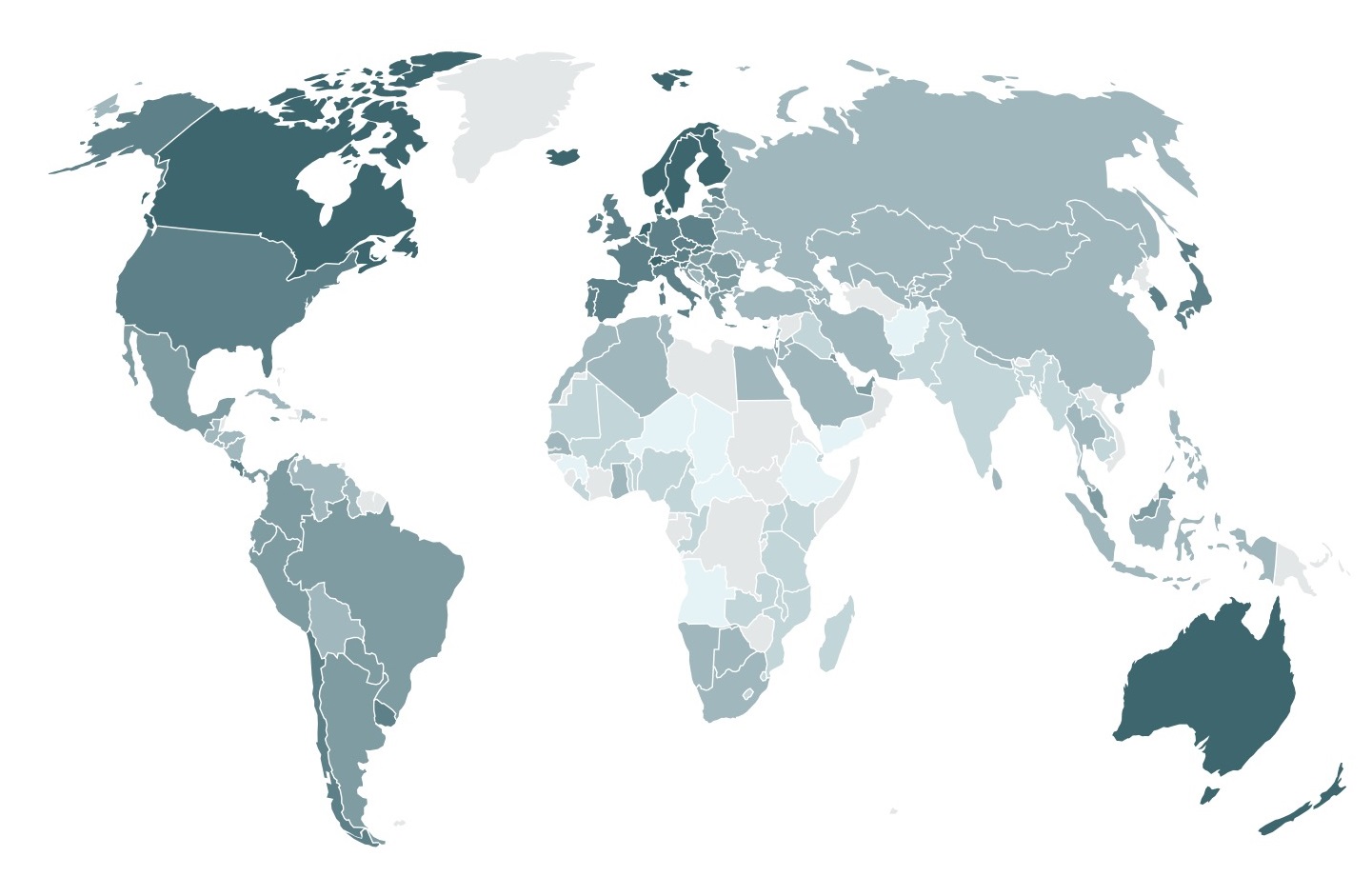
    SPI & GDP The overall findings of the Social Progress Report 2015 are best encapsulated in this map:

    SPI MAP The beauty of the Social Progress Index is that it is interactive, and you can immediately see the impact of any indicator by adding a component and watching the colours change. I tried it for each of the components, one by one, and read at a glance the signals for India, especially those where it faded from pale to paler jade, to almost white… and the real areas of concern were:

    • Availability of Water
    • Availability of affordable housing
    • Deterioration of the environment
    • Inequality in the attainment of education
    • Average years spent in school by the female half of the population
    • Years of tertiary education
    • Access to advanced education
    • Religious intolerance
    • Discrimination and violence against minorities – religious, ethnic, sexual preferences

    Of course it would not be fair to put the blame on (or give the credit to, for that matter) a government which has been in office for less than a year. However, if development is directed growth, and progress the distance covered in that direction, then it is the direction which may need to change – especially for a government which came to power on the promise of ‘development for all’…

    Or else, the next 4 years will see increasing discontent in civil society, more violence from the disgruntled, more Public Interest Litigation in the courts, more protests, and more raucousness in Parliament.

    Then how will the dream of smart cities and industrial corridors be achieved?

  • Vulnerability and Risk

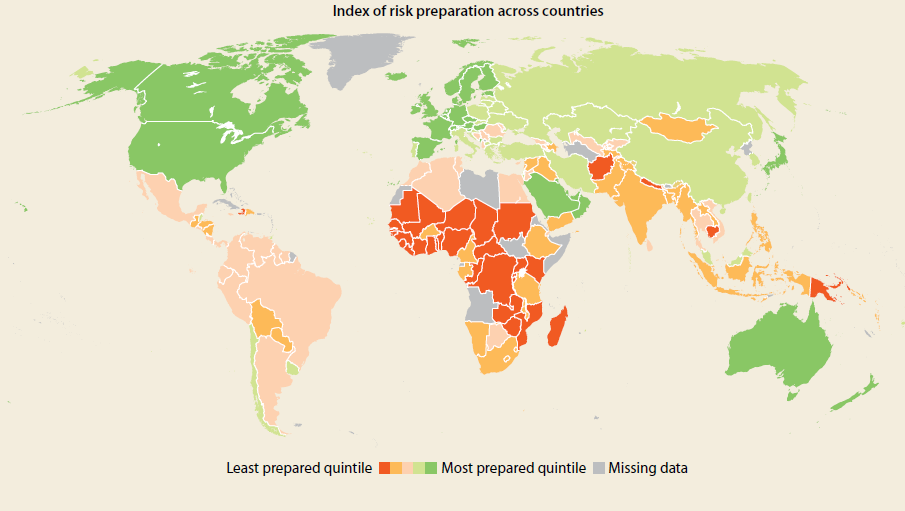
    I always enjoy comparing the views of World Bank and UNDP on what ails this world of ours, and their 2014 flagship publications (World Bank’s World Development Report, WDR 2014, and UNDP’s Human Development Report HDR 2014) approach the question of growing vulnerability in today’s world from exactly opposite directions. The World Bank sticks to the classic progression of VULNERABILITY > RISK > OPPORTUNITY; while the UNDP warns that heightened vulnerabilities in an interconnected world could undo the progress achieved in HUMAN DEVELOPMENT in the last two decades.

    The WDR looks at the risk preparedness of the world and presents a rather dismal picture for countries like India: Risk preparedness Its suggestions for better risk management and reduction of vulnerabilities too, are rather predictable: WDR Risk Management

    Not only does the role of the state remain paternalistic and minimal in this paradigm, it puts the onus on Civil Society and the Private Sector, yet again. Never mind that civil society in developing countries like India remains fragmented and powerless; and the private sector is not in the business of greater social responsibility. (See my earlier post on India an Aspirational Society? Not yet…)

    So we must look perforce at the UNDP’s suggestions… The entire approach of the Human Development Index differs from income-based indicators because it does not look at what people have or do not have; but what they can or cannot do. It looks at capabilities. The Human Development Index 2014 is mapped below: HDI Map

    The HDR 2014 introduces the concept of human vulnerability and how it erodes people’s capabilities and choices. Despite recent progress in poverty reduction, more than 2.2 billion people are either near or living in multidimensional poverty. The challenge is not just to keep vulnerable populations from falling back into extreme difficulty and deprivation; it is to create an enabling environment for their continuing human development advancement in the decades to come.

    The report feels that as globalization deepens, the policy space available to individual governments to enhance coping capabilities is becoming increasingly constrained. And “… unless more-vulnerable groups and individuals receive specific policy attention and dedicated resources across all dimensions of human development, they are in danger of being left behind, despite continuing human progress in most countries and communities.”

    The HDR 2014 reiterates that to tackle vulnerability, particularly among marginalized groups, and sustain recent achievements, reducing inequality in all dimensions of human development is crucial.

    The key messages of the HDR 2014 are:

    • Vulnerability threatens human development— and unless it is systematically addressed, by changing policies and social norms, progress will be neither equitable nor sustainable.
    • Life cycle vulnerability, structural vulnerability and insecure lives are fundamental sources of persistent deprivation—and must be addressed for human development to be secured and for progress to be sustained.
    • Policy responses to vulnerability should prevent threats, promote capabilities and protect people, especially the most vulnerable.
    • Everyone should have the right to education, health care and other basic services. Putting this principle of universalism into practice will require dedicated attention and resources, particularly for the poor and other vulnerable groups.

    Although the world has pulled up its socks and made remarkable strides in human development through the Millennium Development Goals (MDG), the agenda for future human development must necessarily focus on building up the resilience and coping mechanisms of the deprived.

    And this will require a common commitment—national and global—towards universal provision of social services, strengthening social protection and assuring full employment. Besides the universal provision of health and education, and strengthening social protection through unemployment benefits, protective labour laws, pensions, provident funds etc in both the formal and informal sector, national governments are also responsible for enhancing cohesion in society by building institutions of governance that are responsive and accountable, and can address and overcome the “… sense of injustice, vulnerability and exclusion that can fuel social discontent…”

    Is the Indian Government ready to take up this responsibility, or will it continue to march on its present path of greater privatisation, blatantly pro-rich policies, and confrontational and divisive politics? Only time will tell, but it is time India can ill afford and may put the country seriously behind in achieving the human development goals it set itself long, long ago when it set up its ‘tryst with destiny’ on 15 August 1947…

  • Happy Republic Day India

    26 January is celebrated each year in India with great pomp, pride and ceremony, as it commemorates the day independent India gave to itself, its own Constitution, crafted with love, care and pride by India’s intellectual elite of the time – almost all educated in England in the age of ‘liberal’ Fabianism.

    This idealism (with a soupçon of the French Revolution) is best reflected in the PREAMBLE which captures the very essence of the Constitution:

    WE, THE PEOPLE OF INDIA, having solemnly resolved to constitute India into a SOVEREIGN SOCIALIST SECULAR DEMOCRATIC REPUBLIC and to secure to all its citizens:

    JUSTICE, social, economic and political;

    LIBERTY of thought, expression, belief, faith and worship;

    EQUALITY of status and of opportunity; and to promote among them all

    FRATERNITY assuring the dignity of the individual and the unity and integrity of the Nation;

    IN OUR CONSTITUENT ASSEMBLY this twenty-sixth day of November, 1949, do

    HEREBY ADOPT, ENACT AND GIVE TO OURSELVES THIS CONSTITUTION.

    So how well are these lofty sentiments understood in the raucous India of today? Let us see…

    SOVEREIGN means putting the national interest above all else

    SOVEREIGN DOES NOT MEAN converting India into an instrument of another’s geo-political strategy

    SOCIALIST means inclusive growth

    SOCIALIST DOES NOT MEAN changing the rules of play to favour the rich

    SECULAR means separation of State and Religion, and equal respect for all religions

    SECULAR DOES NOT MEAN engineering communal violence for electoral gain, or making the minorities feel so alienated and insecure that they turn to violence themselves

    DEMOCRATIC means moving forward on a basis of consensus

    DEMOCRATIC DOES NOT MEAN seeking constant confrontation with one’s political opponents

    REPUBLIC means the people are supreme

    REPUBLIC DOES NOT MEAN that Indians who do not even live in India can decide its destiny

    JUSTICE means social, economic and political equity

    JUSTICE DOES NOT MEAN over 31.3 million cases pending in Indian courts and the consequent brutalization of over 2,80,000 unconvicted undertrials languishing in Indian jails; or the summary justice meted out by ‘khap panchayats’ (village courts)

    LIBERTY means the liberty of thought, expression, belief, faith and worship;

    LIBERTY DOES NOT MEAN the banning of this book, or the censoring of that film, or the rewriting of history, or honour killings, or reconversions, or offering to ‘cure’ homosexuality…

    EQUALITY of status and of opportunity means just that

    EQUALITY DOES NOT MEAN that the top 10% hold 74% of the country’s total wealth, while the bottom 10% hold just 0.2%

    FRATERNITY means assuring the dignity of the individual and the unity and integrity of the Nation

    FRATERNITY does not mean blatantly racist attacks on Indian citizens from the North Eastern states, on the streets of the national capital…

    Happy Republic Day, India!

    Let us rediscover the Constitution we gave ourselves 65 years ago…


  • India an Aspirational Society? Not yet…

    (Since this was written in January 2015, India is more divided than ever – economically, socially, politically. Aspiration has given way to cynicism and despair and people are largely disconnecting from any larger vision for themselves or the country. Sad.)

    Visitors to India are struck by the existence of 2 Indias – that inhabited by the middle and upper classes, who have probably received a western education and are fluent in English and 2-3 local languages; and the vast majority of those that “…also serve, who only stand and wait…” The first are the type you would come across at any American campus – a class of the privileged imbued with a sense of entitlement, who will clean their apartments, drive carefully and work hard when abroad; but employ at least one or more ‘servants’ when at home to wash, clean, cook, sort their garbage, and run errands for them.

    These are the ‘citizens’ of the world’s largest democracy, with all the benefits that citizenship implies: participation in the sovereignty of the state, and driven by a moral and ethical purpose. The laws of the land flow from citizens’ response to a situation, which are validated by government to become the law of the land, conferring rights and imposing limits on all citizens. Citizenship strengthens, empowers and enables. This is what the world perceives as the ‘civil society’ in India.

    The vast majority of Indians, however, are imbued with a sense of fatalism and are merely the ‘public’ or populations which are a creation of government: they are identifiable, classifiable, and describable by empirical or behavioural criteria, and are amenable to statistical techniques like censuses and sample surveys. (Labels like ‘backward’ castes, Project-Affected Persons, Small and Marginal farmers, Landless Labourers, rag-pickers, scavengers, street hawkers, physically and mentally handicapped persons, actually occur in various laws and government schemes!)

    Membership of a population diminishes, disempowers and disenfranchises. This is not ‘civil society’ in the accepted sense, and it took the eminent writer Partha Chatterjee to give them a name. He called them Political Society, in his book the Politics of the Governed (2004).

    According to Chatterjee, the marginalized sections of society first seek legitimacy by declaring themselves as a group or community, and then negotiate directly with the ruling political class based on their numbers and ability to swing elections. In fact they function as ‘vote banks’ – a particularly pejorative term in middle class discourse in India.

    The dynamics of demanding accountability at both these levels is very interesting. While civil society is more comfortable dealing with the permanent professional bureaucracy (People Like Us); political society prefers to deal directly with its elected representatives. Once approached, it is up to the elected representatives to instruct the bureaucracy to take up the issue, mostly through arrangements outside of legality. And it is these paralegal arrangements, which prevent tighter regulation of informal businesses; procure that coveted contract; or halt the demolition of an illegal slum.

    So civil society and political society have long coexisted in Independent India in the mould of the centuries-old caste system (with modern class overtones) – interdependent, yet independent.

    However, since 1991 and the economic reforms which pinned India to the global economy, the lines of this social divide have began to blur for several reasons:

    Politics of Coalition Governments: Following the State of Emergency declared in 1975, there was a splintering of political parties across the ideological spectrum, and the emergence of regional parties, which meant that clear majorities at the Centre and State elections were a distant memory, and coalitions forced together strange bedfellows from either side of this social divide – the most notable being the coalition between the comfortably middle class BJP and the street savvy Shiv Sena in Maharashtra in 1995.

    Affirmative Action: Reservations for the disadvantaged in higher education and government jobs for over 40 years, have also helped move millions across the social divide.

    Liberalization, Privatization and Globalization have created new career paths and speeded up the mobility in society.

    Peri-urbanization or the growth of cities into the hinterland has created a class of the new rich, whose hitherto unproductive lands have shot up manifold in value, once they become part of a city.

    NGO-CBO Collaboration: In a post-internet global community, Non-Government Organizations (NGOs) have had the means and the willingness to set up Community-based Organizations or CBOs (often at the insistence of international donor agencies) and this collaboration has increasingly built bridges across the social divide.

    Formal-Informal Interactions: The opening up of the Indian economy has allowed private investments (both foreign and domestic) in everything from infrastructure, to financial services, to e-retail, and this means that the formal sectors are hugely dependent on the informal sector somewhere along their supply chains. This has brought in a new set of interdependencies into the civil-political society equation.

    Commercialization of Higher Education: Post-1991, there has been a boom in private institutions of higher education and it is possible to ‘buy’ a seat in every type of institution – IT, Medicine, Engineering. This has enabled expatriate workers and the new rich to educate their children, and examples of a rickshaw driver’s son or daughter holding a prestigious post in a scientific institution, are now commonplace.

    This blurring of lines between the governed and those who govern, has given rise to a new generation who have the same aspirations as their contemporaries around the world. And coming of age, they have been a key factor in the 2014 election.

    The question is can India now be termed an aspirational society? I think not yet…

    Writing in The Washington Times on September 8, 2014, Richard W. Rahn argues that:

    “Hong Kong, like Singapore, South Korea, Chile and Switzerland are aspirational societies, rather than societies consumed with envy, like France. Work, saving and investment are not punished in aspirational societies, and there tend to be less social conflict and a higher level of civility. The United States used to be an aspirational society, but has increasingly become an envious society.”

    Recent events in USA (with the Police forces accused of racism) and France (with its banlieue ghettoization of immigrants) contrasted with the peaceful protests in Hong Kong; do vindicate Rahn’s point of civility and unity of purpose being key to a society becoming an aspirational society. One may also add lower economic and social disparity to this mix. Chile from the above list of aspirational societies, has perhaps the most egalitarian society among comparable countries.

    The seeds of an aspirational society are there in India in this ‘bridge’ generation. The question is can the government rein in its extremist fringe which thrives on divisiveness, and can all political parties come together on a common purpose and action plan. And can a party that came to power on promises of development, also make this development inclusive

    Only time will tell…


  • City Prosperity

    The consensus among urban experts is that a ‘good’ city for the 21st century is one that is people-centred and capable of integrating the tangible and intangible aspects of prosperity, and shedding the inefficient, unsustainable forms and functionalities of the city of the previous century.

    We have long been lamenting the growing disparity, inequity, poverty, deprivation and lack of choice and voice in cities across the developing world, which are largely a legacy of the post-colonial cities of former colonies, which simply did not have the capacity or resources to move away from the inherited British, Spanish, French or Portuguese forms of urban local governance.

    As these problems seem to be overwhelming us, the UN-Habitat in its flagship publication, the State of the World’s Cities, took a refreshing new look at urban management in its 2012-13 Report, and came up with the idea of replacing the urban poverty paradigm with that of city prosperity.

    According to this Report, “… prosperity implies success, wealth, thriving conditions, and well-being as well as confidence and opportunity. In general terms, a prosperous city offers a profusion of public goods and develops policies and actions for sustainable use, and allows equitable access to ‘commons’…

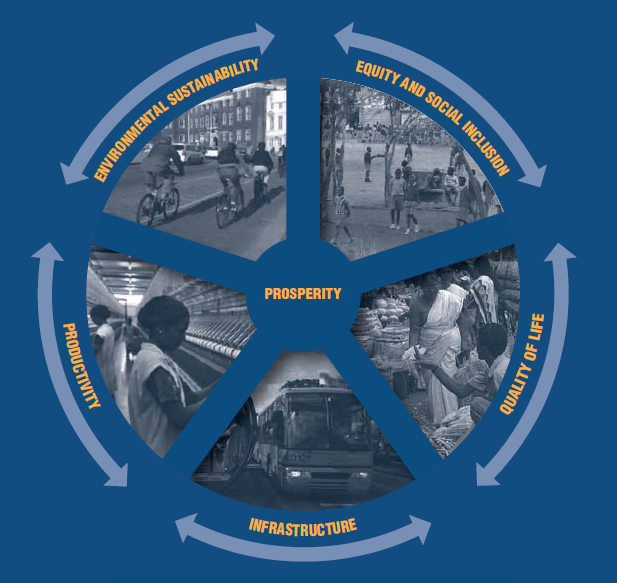
    The Report conceptualises city prosperity along 5 parameters:

    First, a prosperous city contributes to economic growth through productivity, generating the income and employment that afford adequate living standards for the whole population

    Second, a prosperous city deploys the infrastructure, physical assets and amenities – adequate water, sanitation, power supply, road network, information and communications technology, etc. – required to sustain both the population and the economy

    Third, prosperous cities provide the social services – education, health, recreation, safety and security, etc. – required for improved living standards, enabling the population to maximize individual potential and lead fulfilling lives

    Fourth, a city is only prosperous to the extent that poverty and inequalities are minimal. No city can claim to be prosperous when large segments of the population live in abject poverty and deprivation. This involves reducing the incidence of slums and new forms of poverty

    Fifth, the creation and (re)distribution of the benefits of prosperity do not destroy or degrade the environment; instead, the city’s natural assets are preserved for the sake of sustainable urbanization.

    The 5 aspects are combined in the Wheel of Urban Prosperity, and their interconnectedness and interactivity is very apparent:

    Prosperity Wheel

    The Report then goes on to calculate the City Prosperity Index (CPI) of a number of large cities across the world, and its findings make for interesting reading.

    Cities CPI

    So there India, you have it: Both the national and financial capital make it only to Cities with moderate prosperity factors (0.600–0.699), characterised by:

    • Wider discrepancies among the 5 dimensions of prosperity
    • Institutional and structural failings
    • Less balanced development
    • Neat divide between rich and poor.

    And remember, both New Delhi and Mumbai are the best-resourced cities in India – the first because the Central Government lavishes a lot upon its showcase capital; the second because it has the perhaps the highest ‘City to National GDP’ ratio of 4.0  (this is just 1.2 for Tokyo, 1.3 for Sydney, 1.6 for NYC). The smaller Indian cities are much worse off in terms of the City Prosperity Index.

    In my next post, I hope to examine ways in which changes in policies and practices may actually make Indian cities more prosperous.

    See you then…

  • Costs of Corruption

    B-school grads and non-resident Indians get very perturbed each year, when Transparency International publishes its Corruption Perception Index, with India lingering somewhere in the lower reaches, among the poor and corrupt of Africa and Asia. They feel that corruption and bribery dent India’s image abroad and prevent Foreign Direct Investment (FDI) by Multi-National Corporations (MNC), so necessary for its economic growth. (Really? I thought it was more for the economic growth of the MNCs, but never mind…)

    What these advocates of ‘probity’ forget is that the Corruption Perception Index is just that – a set of ‘perceptions’ with all the in-built biases that the word implies. In fact, the 12 contributing organisations are all based in the US or Western Europe and are strong advocates of free market capitalism.

    In 2013, Alex Cobham of the Centre for Global Development in Europe, went so far as to suggest that the CP Index embeds a ‘powerful and misleading elite bias’ in popular perceptions of corruption, and should be discontinued. What could be more biased than the fact that many of the highest scorers appear ‘clean’ simply because they have long ago institutionalised and legalised various forms of corruption – like old-fashioned bribery of politicians made kosher by re-naming it as a campaign fund-raiser!

    Yet, if bribery continues to grow, then there must be someone somewhere profiting from it. At its most basic, a company’s shares are guaranteed to shoot up if it lands a big contract, and as the profit made by its share-holders far exceeds any bribes paid to procure that contract, corruption is justified! Take that to the level of natural resources and infrastructure, and we are really talking big money.

    If like me, you believe that the hand which gives a bribe is as dirty as the one which takes it, it is very enlightening to look at the whole issue from the point of view of the bribe-givers – the large MNCs in a largely globalised world. I came across a very interesting graphic on statista.com, sourced from OECD, which is a kind of league table of industries where bribery flourishes the most. And here it is:

    bribery

    It stands to reason that the most laws and regulations in any country always safeguard an activity or commodity that is of greatest significance to that country, right? And the largest bribes would be demanded where the most laws and regulations need to be bent or broken, isn’t it? No wonder Multinationals are willing to pay the most bribes (OECD estimate 21%) for the extractive sectors like oil, gas and mining of coal, rare earths, uranium, gold or diamonds, because that’s where the largest profit margins are. Stands to reason.

    For global corporates it’s a win-win situation, and only the host country is the loser – its most precious resource is gone forever; the profits have gone to another country; and the taxes thereon to another exchequer. RIP.

    MNCs salve their guilt of profiteering by claiming to create jobs in the host country, but at what cost? The bribe culture lets them get away with paying pitiful wages, running sweatshops, employing child labour, and providing terrible work conditions with minimal regard for worker health and safety. These practices would be unthinkable in the MNC’s home countries, and would probably attract swift legal retribution as well.

    And to add insult to injury, the same MNCs insist that the country they are stripping of its precious and irreplaceable resources should provide the necessary infrastructure and transport for the commodity extracted. And voila! A host of other MNCs step in to provide just that… No wonder construction and transport are the next two sectors in the bribery league table.

    Furthermore, the development of infrastructure comes with strings attached – the host country is offered soft loans by various international bodies, and it is estimated that for every US$1 borrowed, some African countries have had to pay back as much as US$15! It is this debt repayment which has broken the back of half the countries in that region.

    And at the end of the day, what are we left with – swinging 6-lane expressways to and from the larger cities, while 90% of the rural population is lucky to be able to afford a bicycle!

    What intrigued me looking further down the chart, was the inclusion of storage with transportation as a high bribery industry. Until I had a eureka moment. Of course, we are talking about storage and subsequent disposal of e-waste, hazardous materials, radioactive waste, and other nice things.

    For example, the UN’s Step Initiative says that the global volume of electronic waste is expected to grow by 33% in the next four years, and contains toxic substances such as lead, mercury, cadmium, arsenic and flame retardants. Once in landfill, these toxic materials seep out into the environment, contaminating land, water and the air. In addition, devices are often dismantled in primitive conditions. Those who work at these sites suffer frequent bouts of illness, and long-term diseases.

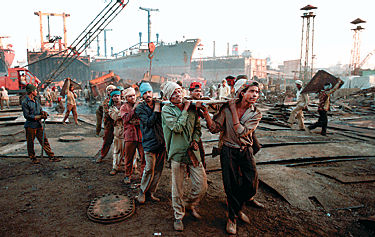
    Evidence of the aftereffects of working with hazardous materials are near at hand in India – in fact in Mr Modi’s home State of Gujarat, at the ship-breaking yard at Alang, considered the largest graveyard for ships, salvaging 50% of the world’s old super-tankers, car ferries, container ships… The workers there have a joke that their fate is from ‘Alang to palang’ (from the Yard to the deathbed)…

    Alang

    A recent study by the Tata Institute of Social Sciences, Mumbai, discovered that the health services are so appalling and inadequate that injured workers have to wait for hours for the government ambulance, or the one provided by the ship breaking association, to get to Bhavnagar, 50 km away. And yet the officials in charge claim to have taken care of workers’ health and safety concerns! Bribery always makes the regulators look the other way…

    I am sure there are thousands of such ‘honest, concerned and vigilant’ officials all over the developing world – because that’s where Western Europe is increasingly dumping its e-waste and hazardous materials, according to Interpol. “Much is falsely classified as ‘used goods’ although in reality it is non-functional. It is often diverted to the black market and disguised as used goods to avoid the costs associated with legitimate recycling,” said an Interpol spokesman to the Guardian newspaper. “A substantial proportion of e-waste exports go to countries outside Europe, including West African countries. Treatment in these countries usually occurs in the informal sector, causing significant environmental pollution and health risks for local populations,” he said.

    So that explains the high rates of bribery in the transport and storage sectors.


    It is nobody’s case that bribery and corruption does not harm a country. It’s just that I would put the onus of this damage more on the greed of the corporates, than on the misguided bribe taker, who is ready to sell out his country and the future of his children.

    It is as though the colonial era never really ended…

  • Sustainable Livelihoods

    It is estimated that to break out of the present poverty-pollution-population trap, India needs to create some one hundred million sustainable livelihoods in the next ten years, to cover the backlog, plus a similar number for the new entrants into the job market. With this many jobs created, each family in the country can hope to have at least one member with a reasonably paid job.

    Given the present direction in both the public and corporate sectors, it is expected that not even 10% of this target will be met. With the new Government’s Make in India emphasis on further industrialisation, any jobs created will be in the formal sector and for non-poor households. True, there will be some trickle down through outsourcing, but as this sub-contracting will only be in India’s urban informal sector, it is not likely to provide long-term, sustainable livelihoods, nor build up the coping mechanisms of the poor.

    What do we mean by Sustainable Livelihoods?

    As we have seen in an earlier post, urban poverty is a complex multi-dimensional phenomenon, and therefore the approaches to poverty reduction must also be multi-dimensional. Current thinking in development studies has seen a paradigm shift from top-down planning to participatory micro planning, with the focus on local people and their livelihood strategies. There is also a concerted effort to make people aware of their rights and entitlements, so that priorities are fixed by the people rather than by a faceless bureaucracy.

    One such approach, developed initially for rural areas and now successfully adapted to urban areas is the Sustainable Livelihoods Framework (SLF).

    The SL framework revolves around three assessment criteria:

    Foremost of them is the ASSETS or CAPITAL of the individual or community. Assets may be financial, natural, human, social or physical as detailed later.

    The second criterion is the RIGHTS and ENTITLEMENTS available to the community or individual. These may be traditional, social, moral, legal, or political. Entitlements are things that people may rely upon because of legal or customary rights – like access to common-property resources, employment benefits, right of usufruct on land etc. Entitlements could also include the mutual support structures that are often present in localized communities.

    And the final criterion is how far ACTIVITIES dovetail with assets and entitlements. Activities are things that people do to gain a living, and these will usually be based on available assets. A personal asset, such as artistic ability, may form the basis of activities that generate income. Land may be used to earn income. Activities may be based on acquired knowledge and skills; thus education and training has a prominent position in a sustainable livelihoods framework. Knowledge and skills may also be acquired through traditional, cultural processes.

    Sometimes, a fourth criterion is added to assess how successfully the individual or group can deal with the vulnerabilities and risks of their situation, and how well they can come up with a COPING STRATEGY.

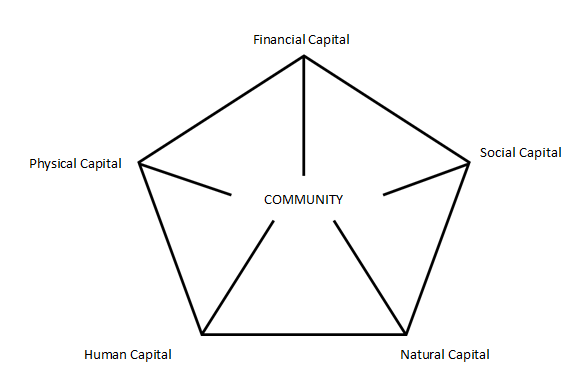
    The SL Framework defines five types of Capital Assets. These are:

    Financial Capital which denotes financial resources like: wages, salaries, pension, savings, access to credit, rent, remittances and so on.

    Physical Capital or basic infrastructure facilities like roads, transport, electricity, water supply, energy, communication, tools and technology for production

    Natural Capital like food security, adequate water supply, minimum air and noise pollution

    Human Capital through skills, knowledge, good health, ability to work

    Social Capital which includes the formal and informal social relationships such as kinship ties, client-patron relationships, networks and organisations that exist in a community

    Under the sustainable livelihood framework it is possible to draw a livelihood polygon for an individual, a group or a community, as illustrated below:
    SL POLYGON

    The relative length of each of the arrows connecting to the corners of the polygon, is an indicator of the adequacy/ inadequacy of a particular type of capital in a particular community. In the above case, if all assets or capitals are adequately developed, we see a larger polygon, thereby providing greater livelihood opportunities, and stronger coping abilities to individuals/communities.

    However, most government programmes tend to focus on just one type of capital/asset, thereby greatly shrinking the options available to the poor. For example, slum upgradation programmes in India concentrate on providing only physical infrastructure like internal roads, storm drains, public water and sanitation, and neglect the growth of human capital through better health and education services. This results in a skewed livelihood polygon with a much smaller area of opportunity  for the individual and community, as shown below:

    SKEWED SL POLYGON

    The SL Framework in Urban Areas

    The Sustainable Livelihoods Framework (SLF) can be used in the urban context to assess the current state of assets/capital in a community, and then plan new poverty reduction strategies based on this assessment. In fact, it is the ideal framework for undertaking a City Poverty Profile. Practical solutions can then be worked out within the available resources to maximise each of the five ASSETS or CAPITALS in the community, so that the livelihood polygon of the community can be suitably expanded. It must be remembered that every decision may affect more than one type of capital, sometimes adversely. The emphasis is therefore on thinking holistically and getting the balance right.

    Thus, FINANCIAL CAPITAL can be greatly augmented through: Providing a place for a cooperative store / fair price shop to be run by the community; starting kitchen gardens; installing metered electricity connections in each household; forming women’s Self Help Groups; setting up labour cooperatives; and providing vocational training geared to local handicrafts / industry.

    NATURAL CAPITAL can be enhanced by easy ‘doables’ like providing a playground for children near their homes, initiating participatory activities for improving community environment and sanitation, and providing the means for rainwater harvesting.

    The growth of HUMAN CAPITAL in a community is a combination of sound health, education, skill development and capacity to work. All countries have numerous human development programmes either initiated by donor agencies, through NGOs, or undertaken by Governments themselves. Some of these which have impacted positively on HD across the world include: regular antenatal and post natal check-ups by community health workers; regular check-ups for HIV/AIDS, STD; Gender budgeting; immunization camps; mobile clinic schemes; improved housing and sanitation; night classes for school dropouts / child labourers; women’s Self Help Groups; nutrition checks on under-5 children on a monthly basis, awareness campaigns against drug addiction, alcoholism, domestic violence; increasing the number of group connections for water supply, adult literacy classes; school attendance / drop outs to be monitored by the community itself; constructing / upgrading community toilets for washing, bathing facilities for women… and many more

    PHYSICAL CAPITAL is already the only focus of slum improvement programmes in India, but remains very narrow in its ambit. It should also look to augment infrastructure that will help enhance other assets like income, health and education by, for example, transforming muddy approach roads to all-weather roads, building / upgrading community health and family planning centres, improving the housing facilities, removing encroachments, providing covered drains and sanitary facilities, etc.

    It is often said that SOCIAL CAPITAL is the only wealth of the poor Indian, given the vast array of caste, clan, ethnic, linguistic, tribal and kinship networks in rural India. These ties, however, are the first casualty, when the rural poor migrate to the cities. However, it is possible through development interventions to build new networks and support systems – the most obvious examples being Self Help Groups, Thrift Societies, and Workers’ Cooperatives. Group activities like literacy drives, mass immunization campaigns, and nutritional assessment camps are also instrumental in cementing community bonds, besides helping with human capital growth.


    So where do we go from here? Experts believe that the answer lies in small scale, decentralised industries of a new kind. The key factor is the application of new technologies to the traditional skill and resource base of the community. For instance, the traditional knowledge of certain tribal communities can be successfully utilised in wildlife tourism, and its conservation and preservation. Similarly, with urban heritage suddenly becoming a priority in India, there is a lot of scope for traditional artisans in restoration and preservation of heritage buildings.

    If the traditional knowledge handed down from generation to generation is not correctly utilised, it will be lost forever, and will have to be rediscovered and relearnt in Universities (as in Europe), thereby becoming an asset not of the poor – its original owners – but the better off.

    Should we sleepwalk through yet another cycle of deprivation, or hear the wake-up call?

    Perhaps, the Kudumbashree Programme of the Kerala Government could point the way to sustainable livelihoods for the entire country. They deserve an entire post to themselves, which I shall hope to put up soon. Meanwhile, time for a diversion don’t you think?