Development and Governance

Tag: India

  • Republic Day 2025: Governance or Politics?

    The Constitution of India, which is celebrated every year on the 26th of January as Republic Day, does three things: 

    ·      Firstly, it puts the people of India and the public good CENTERSTAGE in all government policy

    ·      Secondly, it delineates the moral framework for the government’s functioning, by asserting its faith in the universal values of liberty, equality, and fraternity

    ·      Thirdly it provides a template for good governance, ensuring efficiency, effectiveness, participation, accountability, responsiveness, transparency, inclusion, equity and rule of law in the day to day functioning of government and its various institutions, while encouraging all policy making and legislation to be through a consensus negotiated and arrived at by the country’s Elected Representatives

    I have made Republic Day the occasion on which I take a look at issues of governance in the country, and this time I am appalled to find that governance in its fullest sense has virtually disappeared from the Indian scene and been replaced by politics.

    When governance becomes pure politics the country is in trouble. Let me explain. 

    As outlined in the Constitution, one of the key roles of any government is to ensure equality and fraternity by enabling the DEVELOPMENT of the people in every sense of the word – by providing them with education, livelihoods, housing, health care, infrastructure, services and social security. However, when this aspect of governance is reduced to politics, we witness the unedifying spectacle of all political parties literally buying votes with tax-payers’ money by promising ever growing and increasingly unsustainable freebies before every election. As the intended beneficiaries are also the largest voter block, the party that ‘promises’ the most manages to win the election. They are feeding the poor for a day by giving them a fish (politics) and not feeding them for a lifetime by teaching them how to fish (governance). 

    If this is the politicisation of governance at the bottom level, there is an equally pernicious process happening at the top – not just in India, but globally as well. What commentators call the OCGFC (Owners and Controllers of Global Financialized Capital) are increasingly deciding the domestic and foreign policy across the world, and as the largest benefactors of political parties, the OCGFC inevitably politicise international relations.

    India won the respect of both superpowers, USA and the Soviet Union,  as a founding member of the Non-Aligned Movement (NAM) which oversaw the demise of the Colonial era, and kept India out of the conflicts of the Cold War era, allowing it to work exclusively for the public good of its vast, impoverished population.  However, post-liberalisation, India has witnessed not only the privatisation of its public assets but also of its policy and decision making. Instead of non-alignment India’s foreign policy in recent years has literally fallen between two stools, precisely because it chose to protect private interests at the cost of public ones.

    ·      First, it allowed private companies to bypass the sanctions imposed by the West after the Ukraine conflict, and import vast quantities of Russian oil. (News item: Russia’s Rosneft has pledged to supply private Indian refiner Reliance with about half a million barrels of crude a day. At today’s prices, this will generate $13 billion annually for Russia). This naturally upset the US and its allies. 

    ·      Second, the ruling party in India has been vehement in its support of Israel (despite the growing distaste for its genocidal policies across the world), partly to protect the investments of another capitalist crony in Israel’s weapons and industry and port infrastructure, and partly for ideological reasons. This has thoroughly alienated India in the global South and among Arab and Muslim civil societies worldwide. In fact, India has never been so utterly marginalised in the international community as now, and even in BRICS+, of which India was a founding member, the letter ‘I’ has increasingly come to stand for Iran, rather than India. What a shame!

    *                    *                 *

    However bleak the outlook, I have great faith in the will of the Indian people, and feel that the situation is still redeemable if: both the Government and Opposition get out of their perpetual Election mode; Policy making insists on consensus rather than the confrontation that is the staple of the Indian Parliament today; and the much delayed National Census is conducted ASAP to enable informed decision-making and planning for the larger public good.  
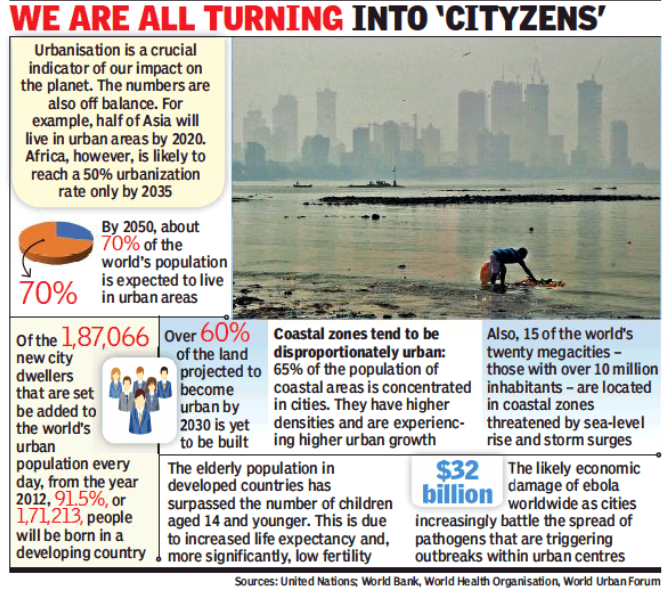
  • City tops Good Governance List, but here’s the reality

    Published in Times of India, Pune on 6 June 2018. Lost and found. Posted here for you.

    Citizens of Pune were quite pleased when they read a survey which made Pune the best governed city in India. Not so well known is the fact that it scored merely 5.1 out of 10, and all other Indian cities were below this midpoint. In comparison, London and New York scored 8.8!

    Parameters such as urban capacities and resources, empowered and legitimate political representation, transparency, accountability, participation, urban planning and design were used to give marks.

    Governance is one of those concepts that we all feel we understand. We also know that it is not merely ‘government’ but something more… We know that governance stretches beyond the political and bureaucratic framework and out into the various stakeholder groups in a city

    Therefore, governance = government + citizen.

    If this is the case, then the parameters of ‘good’ governance will also come in two categories: the first to measure the efficiency and effectiveness of the government machinery, and the second to measure how responsive, transparent, equitable and inclusive the citizen interface is.

    Governance at all levels in a democracy is also expected to be participatory and accountable and to work on the basis of consensus orientation and the rule of law. These are the very criteria of good urban governance laid out by various UN bodies, and used in ranking cities across the world.

    But is there any sense in comparing chalk and cheese?

    Indian cities are hamstrung by laws which greatly curtail their autonomy and State Governments are in no hurry to devolve powers and resources to the local level despite 26 years of the 74 Constitutional Amendment. Our mayors continue to play a ceremonial role while real power vests almost exclusively with the Standing Committee and the bureaucracy. Compare this to western mayors who even control the local police, public health and education.

    In other words, there isn’t much ‘governance’ a typical municipal body can deliver in India. No wonder then that the public perception of a local government is limited to water, sewerage, garbage and roads. Or as someone rather rudely expressed it: gutter, water, metre.

    Even within this limited ambit, Pune could score higher than other cities just by enhancing its use of Information Technology in key administrative areas like granting building permissions, monitoring projects, redressing complaints and managing its finances. PMC has also undertaken several initiatives like municipal bonds for water supply schemes, supported by an elaborate techno-financial-legal policy framework, and this too has enhanced its ranking in terms of greater efficiency in governance.

    While the efficiency of Urban Local Bodies has grown significantly in the last 10 years, the effectiveness of their actions is questionable. For example, we may be able to pay our Property Tax online in a jiffy, but is it possible to ever get a disputed assessment of your property tax looked at? Such efficiency without effectiveness is meaningless. The same is the case with access legislation, meant to enhance transparency. When the RTI became law in 2005, it met with great resistance in public bodies, but gradually, most government organisations have mastered the art of giving only the information asked for, often piecemeal and irrelevant, and good luck to the questioner if he wants to make any sense of it!

    Most importantly, good governance should be both inclusive and equitable – and therein lies the rub. Just look at the social reality in India: With a mere 8% of India’s population holding a college degree, the knowledge divide in the country is enormous. And if you extend this further, it means that not only the entire senior bureaucracy and judiciary but an increasing number of Elected Representatives and almost all corporate businesses, mass media, NGOs and civil society groups are drawn from this 8%. As they between them take over 90% of the actions and decisions that profoundly affect the lives of the remaining 92%, how inclusive, equitable and participatory has our democracy really been?

    Therefore, the inescapable conclusion is that merely making the government machinery more efficient will not hand us ‘good governance’ on a platter. It will have to flow from the ‘governed’ themselves, and how far they are enabled and empowered to expect and accept good governance…

    Related:

    Urbanization Trends in India

  • Why we are still asking the wrong questions on Slums

    Published in Times of India, Pune on 14 November 2018. Lost and found. Posted here for you.

    Informal housing – or ‘slum’ as it is derisively called – has become the hallmark of all metros in the developing world, from Rio to Lagos to Nairobi to Mumbai.

    The evolution of slums in post-Independence India, however, is the stuff of legend, on which many a career in New Wave Indian Cinema of the 1970s was built….

    Several studies during this period revealed that the typical migrant to urban areas was a semi-skilled or skilled male, 18-35 years old, who sent a major share of his earnings back home to support his family.  Housing was a low priority for such a person and he was ready to squat or settle at any location which cost him the least of his hard-earned money. The social vacuum created by a separation from rural roots was compensated by congregating along ethnic, caste, linguistic and regional lines, and such arrangements provided a strong social support system to compensate for the break-up of the rural extended family.

    The downside of this has been ghettoization, which not only enhances strife and bigotry, but provides easy mobilization in violent crises – be they communal riots, industrial unrest, or underworld gang wars.

    In planning terms, the assumption that slums and urban poverty were co-extensive and coterminous led to numerous ad hoc ‘slum improvement’ schemes at this time, where it was naively assumed that upgrading living conditions in slums in a piecemeal fashion, would eliminate the scourge of poverty from our towns and cities.

    However, as the research and information base has grown, it has become clear that the relationship between urban poverty and slums is both tenuous and complex – especially as a second generation of slum dwellers, with few choices and little upward mobility, begin to emerge on the urban scene. They can look forward to a life only in the informal economy of the city, and given our outdated civic laws, even a new-born child in such a household, breaks a dozen laws as he or she draws its first breath…

    During the 1980s, urban slums could no longer be seen as extensions of rural poverty and became more or less autonomous. As thriving, self-sustaining social systems in their own right (Dharavi being an example), urban slums were no more synonymous merely with urban poverty. While urban poverty incidence has declined between the early 1970s and the late 1980s, there is no evidence of any decline of the slum population.  As a result, fewer people have access to safe drinking water and nearly 70% are reported to be without basic sanitation. 

    Poor housing, infrastructure and urban services are the problem, not poor people.

    The consequences of regarding urban poverty and slums as one and the same have been largely negative:

    Once a slum is recognized as such, subtle political forces prevent it from ever becoming de-notified and this has stigmatized entire communities of urban poor, doomed to be labeled ‘slum-dwellers’ for generation after generation. As a result, slums become powerful vote banks and can be mobilized for various anti-social activities like crime, extortion, land grabbing, strike breaking and communal violence.

    Meanwhile, badly designed slum upgradation schemes have set up an unsustainable regime of subsidies, inculcating the same dependency syndrome among beneficiaries, which was earlier seen only in Indian villages. Providing basic services in slums was made synonymous with poverty alleviation, and the neglect of health and education in urban slums continues to eat away at the human potential of slum populations, pushing them further and deeper into unemployment, under-employment and the informal sector.

    On the side of local government, there is a tendency to underestimate the ability of the urban poor to pay for services and they have to learn to ‘do without’ these services. Slum schemes with their emphasis on shelter and basic services, neglect informal enterprise, and compound the problem by making no effort to integrate the informal slum economy within the larger city economy.

    Almost all housing schemes continue to neglect the key issues of access, security of tenure, and affordability and it is this – the most visible housing dimension of urban poverty – which continues to scar Indian cities.

    Finally, with the entry of private commercial interests into slum rehabilitation projects currently being implemented across India, there is a danger of encroached government and municipal lands passing forever into private hands.

    This would be an irrecoverable loss of public assets for generations to come. Instead, Indian cities can perhaps take a leaf out of capitalist Singapore and communist China’s public housing and long-term lease policies to ensure development with equity.

    Related:

    Housing Dimension of Urban Poverty

    Cities without Shelter

    Formalizing the Informal – the only economic reform that matters

    Read more: Why we are still asking the wrong questions on Slums
  • Ethical Consumption and Indian Industry 2.0

    First published on 8 February 2015

    I started this blog to counter the current Indian Government’s proclivity for mega pronouncements without thinking through the implications. The latest buzz phrase is ‘Make in India’. But make in India for whom? The domestic consumer or the European and American consumer, where India hopes to replace China as the key provider of the basic essentials of life?

    Update 1:

    Despite various bans and boycotts imposed by the Government of India on Chinese goods following a border clash, Indian imports from China in 2021 reached a whopping $97.5 Billion, a 30% rise from 2019. Moreover, these imports are largely ‘manufactured’ goods like electrical and mechanical machinery, auto components, pharmaceutical ingredients, and medical supplies like oxygen concentrators and PPEs.

    So much for ‘Make in India’…

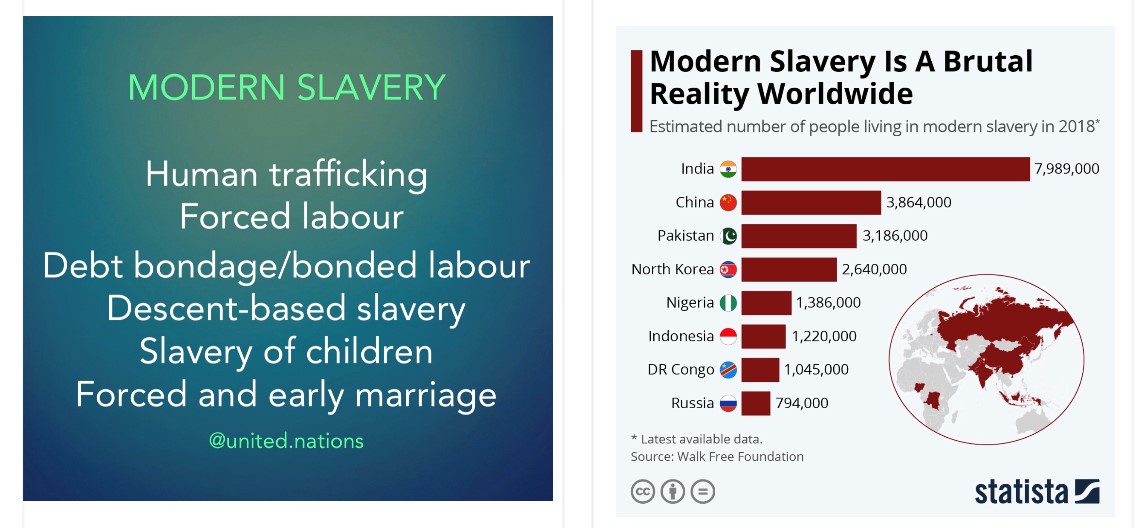
    India is also not able to compete in export markets for manufactured goods because of its relatively poor infrastructure and tedious red tape, widespread petty corruption, an ill-educated workforce (by international standards) and the prevalence of child labour and forced labour somewhere in every corporate supply chain, which creates a very negative image of the country in the minds of the western consumer, who is tech-savvy, globally connected, well-informed and increasingly believes in conscious consumerism.

    Update 2:

    Need for Regulating Supply Chains

    In the early years of this century, the movements for ethical supply chain management gathered momentum, and every time there was a furore in the western media about environmental damage, animal experimentation, poor labour practices, or unsafe working conditions anywhere down a long and trailing multinational supply chain, the most high-profile retailer bore the brunt of boycotts and protests. This was unacceptable in economic terms and extremely expensive in transnational legal terms, and so a global standard had to be put in place to assure ethical supply chain management.

    The best known of these is the SA8000 initiated by Social Accountability International, a US-based non-profit. The SA8000 looks at human rights in the workplace, worker safety, child labour and forced labour and other issues, based upon ILO guidelines, the UN Declaration of Human Rights, and the UNICEF Convention on Rights of the Child.

    Its 9 principles for certifying a business as SA8000 compliant are:

    1. Child Labour: No child labour; remediation of any child found working
    2. Forced Labour: No forced labour; no lodging of deposits or identity papers at employers or outside recruiters; no trafficking
    3. Health and Safety: Safe and healthy work environment; system to detect and prevent threats to health and safety; regular health and safety worker training; access to clean toilet facilities and potable water
    4. Freedom of Association and Right to Collective Bargaining: All personnel have the right to form and join trades unions and bargain collectively; where these rights are restricted under law, the company shall allow workers to freely elect their own representatives
    5. Discrimination: No discrimination based on gender, race, caste, origin, religion, disability, sexual orientation, marital status, family responsibilities, trade union or political affiliation, or age; no sexual harassment
    6. Discipline: No corporal punishment, mental or physical coercion or verbal abuse
    7. Working Hours: Compliant with applicable law, but, in any event, no more than 48 hours per week with at least one day off following every six consecutive days or work; voluntary overtime paid at a premium rate and not to exceed 12 hours per week; overtime may be mandatory if part of a collective bargaining agreement
    8. Remuneration: Wages paid for a standard work week must meet legal and industry standards and be sufficient to meet the basic needs of workers and their families and to provide some discretionary income
    9. Management Systems: To earn and sustain certification, facilities must go beyond simple compliance to integrate the requirements into documented management systems and into their supply chain, including complaints response, workplace dialogue, and stakeholder engagement.

    Compliance with SA8000 includes compliance with ILO conventions, local and national law, openness to worker concerns, and a commitment to continuous improvement. Research I undertook in 2012 threw up the following interesting facts about the 614 SA8000 compliant businesses in India at that time:

    • The most common businesses opting for SA 8000 were small and medium enterprises, (the reasoning is that large, heavy manufacturing businesses already have the statutory framework in place in compliance with the existing labour legislation in India, and therefore do not require an SA 8000 type of certification for their international trade activity).
    • Most of the SA 8000 certified Indian businesses are essentially part of the supply chain of large multi-national retailers, who insist on such certification, while domestic retailers seldom do
    • Most of the SA 8000 certified Indian businesses manufacture consumer nondurables like apparel, textiles, footwear, processed foods, leather and sports goods
    • Most of the SA 8000 certified Indian businesses are likely to be located in the States with niche manufacturing small and medium sector enterprises, like Tamil Nadu, where the overwhelming number of SA8000 compliant companies were in Tirupur, a cotton apparel town, sometimes called the ‘ganji’ or capital of the world for its exclusive production of men’s vests and T-shirts.

    However, just 600-700 ‘ethical’ businesses in a country with hundreds of thousands of small and medium enterprises is indeed laughable, and this ‘tokenism’ in the name of ethical supply chains by the manufacturing sector is bound to take its toll in the international market, where the conscious consumer is now king.

    Whatever claims of equitable work conditions are made by corporate India, the sad fact is that India’s image abroad has steadily declined as it continues its downward slide in various international rankings like the World Hunger Index and the World Press Freedom Index; besides the negative press it gets abroad for its growing communalism, casteism, curtailment of dissent, and treatment of protesters.

    The aftermath of the COVID19 pandemic too has added to India’s woes as huge masses of rural children have dropped out of the education system into forced and child labour, and general poverty, unemployment, informalisation and inequality have reached frightening levels.

    ———————————————————————————————–

    Thus, before proclaiming grandiose schemes like ‘Make in India’, perhaps the Government should overcome its aversion to ‘leftist’ ideals of a rights-based approach to human development – especially, education, vocational training, and public health. This was the path so successfully followed by Japan, Singapore, South Korea and China. Let India not go down in history as the country which so carelessly threw away its priceless demographic dividend.

  • Independence Day 2021 : Redeeming the Pledge

    At Midnight on the 15th of August 1947, India won its freedom from British Colonial Rule and on that historic occasion, Pandit Jawaharlal Nehru, the first Prime Minister of India delivered the famous Tryst with Destiny speech, which ranks amongst one of the greatest speeches of the last century, in any language.

    Long years ago we made a tryst with destiny, and now the time comes when we shall redeem our pledge, not wholly or in full measure, but very substantially. At the stroke of the midnight hour, when the world sleeps, India will awake to life and freedom.

    He went on to outline the many challenges the new nation, bent and broken by centuries of servitude, more diverse and ungovernable than any other on the planet, faced…

    Freedom and power bring responsibility. The responsibility rests upon this Assembly, a sovereign body representing the sovereign people of India. Before the birth of freedom, we have endured all the pains of labour and our hearts are heavy with the memory of this sorrow. Some of those pains continue even now. Nevertheless, the past is over and it is the future that beckons us now.

    That future is not one of ease or resting but of incessant striving so that we may fulfill the pledges we have so often taken and the one we shall take today. The service of India means, the service of the millions who suffer. It means the ending of poverty and ignorance and poverty and disease and inequality of opportunity.

    And it was this Nehruvian Vision which makes it possible for every Indian to look back with pride at what has been so painstakingly and assiduously achieved, in the face of adversity, scarcity, conflict and constraint:

    Lately however, it is becoming more and more difficult to keep India’s tryst with destiny, as we seem to be moving backward from the road to human development, which changed a billion lives for the better, over 75 long years.

    Some indications:

    • The Pew Research Centre, using World Bank data, has estimated that the number of poor in India (with income of $2 per day or less in purchasing power parity) has more than doubled to 134 million from 60 million in just a year due to the pandemic-induced recession. This means, India is back in a situation to be called a “country of mass poverty” after 45 years
    • As manufacturing jobs dry up, workers are returning to the low-productivity farm sector. Getting back to a higher growth trajectory will require getting people out of this disguised unemployment and into more gainful productive employment. The Centre for Monitoring Indian Economy (CMIE) has been monitoring these numbers and its Consumer Pyramids Household Survey shows that these numbers have been steadily rising in recent years. The government’s own Periodic Labour Force Survey (PLFS) shows that employment in agriculture, as a percentage of total employment, has gone up from 42.5% in 2018-19 to 45.6% in 2019-20. In other words, our labour force is in reverse gear and the situation can only grow worse, resulting in India forfeiting its demographic dividend
    • Globally, India fell 20 places in ten years on the WORLD PRESS FREEDOM INDEX – from 122 in 2010 to 142 in 2020. This story is becoming all too familiar, whether it is the World Development Index, the Social Progress Index, the Human Development Index and a myriad other global indices and criteria

    Nehruji ended his speech with rousing words indeed:

    We have hard work ahead. There is no resting for any one of us till we redeem our pledge in full, till we make all the people of India what destiny intended them to be. We are citizens of a great country on the verge of bold advance, and we have to live up to that high standard. All of us, to whatever religion we may belong, are equally the children of India with equal rights, privileges and obligations. We cannot encourage communalism or narrow-mindedness, for no nation can be great whose people are narrow in thought or in action.

    To the nations and peoples of the world we send greetings and pledge ourselves to cooperate with them in furthering peace, freedom and democracy.

    And to India, our much-loved motherland, the ancient, the eternal and the ever-new, we pay our reverent homage and we bind ourselves afresh to her service.

    Jaihind!

  • Happy Republic Day: Can India ever become truly Inclusive?

    Clearly inspired by the French Revolution, the Preamble to the Constitution of India reads:

    WE, THE PEOPLE OF INDIA, having solemnly resolved to constitute India into a SOVEREIGN SOCIALIST SECULAR DEMOCRATIC REPUBLIC and to secure to all its citizens:

    JUSTICE, social, economic and political;

    LIBERTY of thought, expression, belief, faith and worship;

    EQUALITY of status and of opportunity; and to promote among them all

    FRATERNITY assuring the dignity of the individual and the unity and integrity of the Nation;

    IN OUR CONSTITUENT ASSEMBLY this twenty-sixth day of November, 1949, do

    HEREBY ADOPT, ENACT AND GIVE TO OURSELVES THIS CONSTITUTION.

    As it took 2 more months for India to formally become a Sovereign Republic, we celebrate Republic Day on the 26th of January every year, with a grand parade in New Delhi, usually with a foreign Head of State as Chief Guest. The entire parade, works the theme of Unity in Diversity to death, and brushes under the carpet the great dissensions, differences, divisions and disparities which plague us even 68 years later.

    This year however, the Government of India scored several own goals in the week leading up to the Republic Day. Firstly, the PM a la Marie Antoinette said in an interview, ‘They have no jobs? Then let them sell street food to survive…’. Then, in the face of gross government inaction, protesters against a movie actually stoned a school bus full of terrified children; and finally, Oxfam published its Commitment to Reducing Inequality (CRI) Index Report, which ranks not India but the INDIAN GOVERNMENT at a pathetically low 132 – all this, while the PM was exploring in Davos, ways to make India’s rich richer.

    Indian voters are said to exercise great freedom of choice each time they throw out the incumbent and bring in a new regime, which spends the first 2 years blaming the ‘legacy’ issues for its non-performance, and the last 18 months preparing to overcome its own incumbency factor before the next election. So the best time to judge a Government’s performance is in its third year – and that is why the present Government is facing severe scrutiny on every front: economic, governance and development.

    This dear reader, is why Oxfam’s CRI Index is so damning – because it measures the commitment of current governments, and this cannot be fobbed off by stories of ‘inherited’ problems, historical inequality, the caste system, the British colonial rule or whatever. This is the here and now and the present government is answerable – not its predecessors of any shape or colour.

    Interestingly, this Republic Day, the parade in Delhi had not one, but a clutch of Chief Guests – the Heads of State of ASEAN – who are in Delhi for a meeting. So how does India compare to the 5 founding members of ASEAN on the CRI Index? Let’s see…

    Country Spending on Health, Education, Social Protection Rank Progressive structure and incidence tax Rank Labour market policies to address inequality Rank Total CRI Rank
    Thailand 61 22 136 70
    Singapore 65 105 96 86
    Indonesia 121 34 114 101
    Philippines 101 80 122 104
    Malaysia 96 30 135 106
    INDIA 149 91 86 132

    Oxfam India offers blunt advice to the Government of India on how to improve its CRI ranking:

    Create an economy for all: Promote inclusive growth by ensuring that the income of the bottom 40% of the population grows faster than of the top 10% so that the gap between the two begins to close. This can be done by:

    • Promoting labour-intensive sectors that will create more jobs
    • Investing more in agriculture
    • Implementing fully the social protection schemes that exist

    Seal the leaking wealth bucket: Reduce extreme wealth and create a more equal opportunity country.

    • Tax the super-rich by re-introducing inheritance tax and increasing the wealth tax
    • Reduce and eventually do away with corporate tax breaks
    • Take stringent measures against tax evasion and tax avoidance
    • Increase public expenditures on health and education

    Bring data transparency: Produce and make available high quality data on income and wealth, and regularly monitor the measures the government takes to tackle the issue of rising inequality.

    In other words, go for INCLUSION. But does a government whose basic ethos is exclusivist and divisive, even begin to understand what inclusion means in modern development jargon, let alone devise and implement policies to bring it about in this most unequal of societies? (Who can forget Dumont’s classic definition of the species of humans in this society as Homo Hierarchicus?)

    It is time indeed to truly understand this concept in all its dimensions because it is the development phrase du jour and crops up in the UN’s Sustainable Development Goals, in the Smart Cities projects, and so on…

    The best explanation I have come across recently is in a World Bank Report East Asia and Pacific Cities – Expanding Opportunities for the Urban Poor. Incidentally, the Report covers the ASEAN countries mentioned above, besides China and Japan – home to the largest single city and urban agglomeration respectively. It begins with giving due credit to the East Asian countries in drastically reducing urban poverty, and any traveler there  will indeed vouch for the much better living conditions of the urban poor in East Asia, than in South Asian cities in India, Pakistan and Bangladesh.

    The writers of the report explain the expanding opportunities for the urban poor by consciously inclusive policies introduced by their governments.

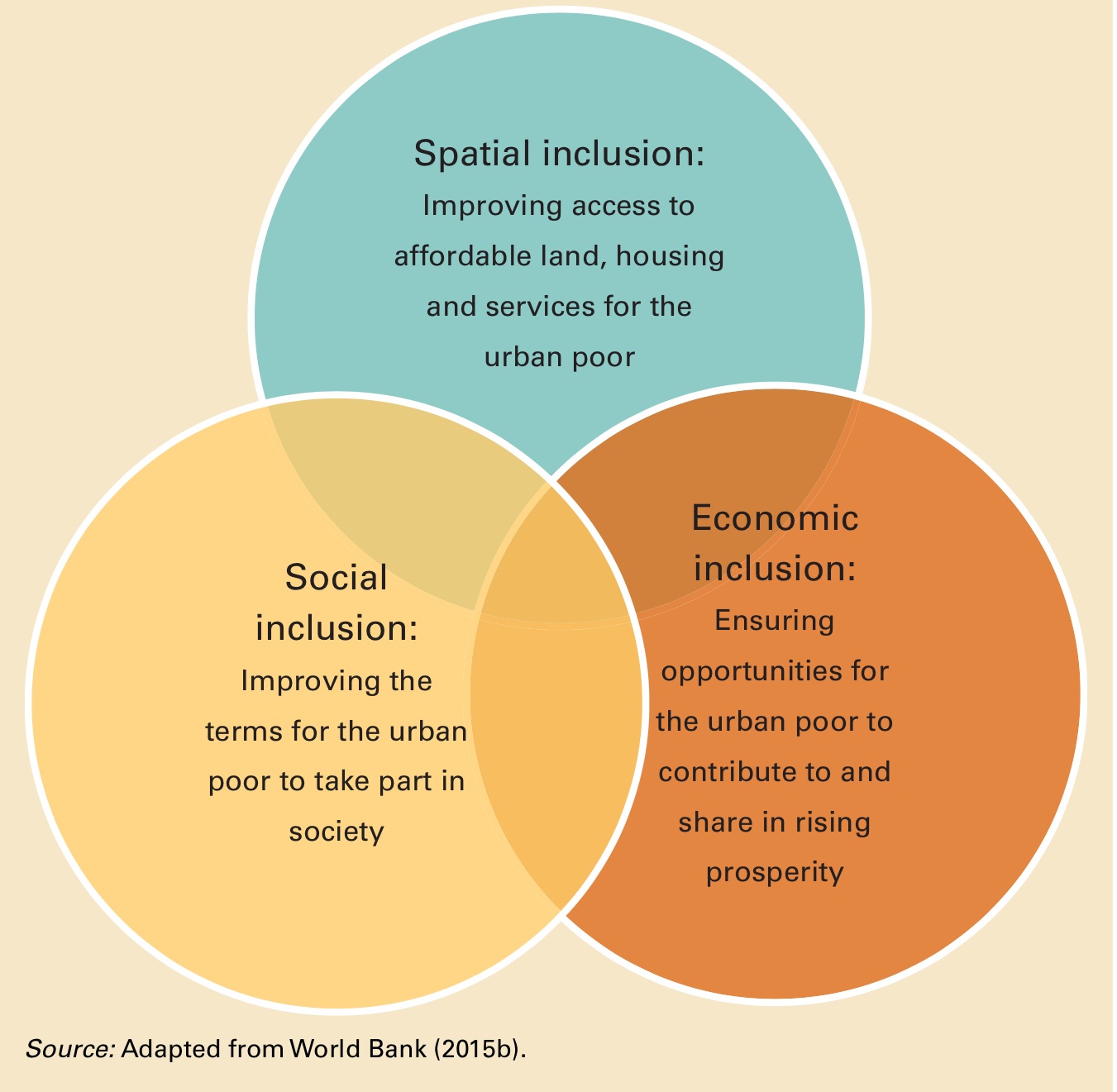
    They identify three dimensions of inclusion:

    Economic Inclusion: refers to equitable access to jobs and income-generating activities, mechanisms of resilience to withstand shocks and removal of barriers to formal employment

    Spatial Inclusion: links equitable access to land, housing, infrastructure, and basic public services. Mobility is particularly important, given its role in connecting low-income residents to jobs, services, and amenities. Housing must be accessible, affordable and ensure good quality and safety

    Social Inclusion: relates to individual and group rights, dignity, equity, and security

    This Multidimensional Framework of Inclusion is graphically depicted in the report as under:

    Multidimensional Model of Inclusion

    What is noteworthy is that the three dimensions overlap, and government interventions cannot be designed and implemented piecemeal. We have seen the havoc caused to the environment in Gujarat in the name of ‘development’ during the last two decades, and a similar short-sighted approach to inclusion may end up as nothing more than ‘including’ India’s entire billion-plus population in an electronic, biometric database which is being regularly hacked, misused and abused.

    If the Government of India doesn’t show a greater commitment to long term investments in Education, Health and Social Protection, doesn’t introduce a more just taxation system, and doesn’t formalise the rapidly growing informal sectors of the economy and society, well then organisations like Oxfam will not keep quiet and India’s international credibility will take a further beating…


  • Development? Governance?

    After 75 posts on this blog, one may be forgiven for sitting back and letting readers explore whatever was said over the last three years. I am gratified that various search engines have serendipitously landed people from over 132 countries on this site, and many have bookmarked it and returned to browse from time to time. Thank you.

    However, a WordPress notification wished me a happy anniversary, and I revisited the ABOUT page to check out my original motives for starting this blog: to explain the much misused terms of governance, corruption and development being arbitrarily thrown about in India’s political discourse at the time of the 2014 election, which brought to power a conservative, right-wing, market friendly party (the BJP) and routed the old establishment party – the INC, or Congress (please note this is not the legislative body it is in the US, but a political party in India.)

    So let us indeed look at how these concepts have evolved and are understood, 42 months down the line:

    Governance: I had covered the theory of Good Governance in one of my earliest posts, where I explain the relation between governance and government, and explain the globally accepted criteria for good governance: Good Governance

    However, it has totally escaped this regime that government is subsumed within governance which has the empowered citizen at its heart. There is a similar ignorance of concepts like rule of law, consensus orientation, probity, code of ethics, freedom of information, conflict of interest, protocol, chain of command etc. As a result, the present government doesn’t score too well on providing either efficient and effective government, or participatory, accountable, responsive, transparent, inclusive or equitable governance.

    The shortcomings of the ruling cabinet in terms of education, experience and exposure are very evident in the fact that almost ALL of the schemes and programmes of the previous government have been continued with NO substantive change except in their names. Never mind that most of these programmes had huge flaws which this cabinet of innocents continues to propagate. But if you throw out the baby (research, monitoring and evaluation wing) with the bath water (Planning Commission) who will point out these flaws and suggest ways to correct them? Instead, by farming out evaluation of important and costly schemes to private consultants, Indian data has lost a lot of its credibility among multilateral research organizations, and gained no real insights for future policy formulation.

    Other institutions are also being undermined – whether the Reserve Bank of India, the Election Commission, or various federal and state investigative agencies. Further, the federal structure is itself under threat as decision making has become non-consultative and centralized (e.g. demonetization), and financial allocations to State Governments are becoming increasingly politicized – being used in election campaigns as threats or promises.

    Corruption: The entire corruption narrative in India is limited to favours granted in return for bribes/cash. This is rather simplistic, and if it affects the common man then this type of corruption continues unabated among the petty bureaucracy no matter which party is in power. That is a fact of life in India. I had tried to broaden this debate by showing how capture and clientelism are equally detrimental to national interest (The 3 Cs- Corruption, Clientelism, Capture). Three years on, the great Indian people are at last getting to understand what is meant by ‘capture’ or crony capitalism as our social media prefer.

    But clientelism remains more elusive – the best example of that is seen during elections in largely rural States like UP, where a village chief or mukhia can deliver an entire village’s vote for a promise of future personal benefit – like a share in a Central Government infrastructure project, or a ticket in the next State election. As this pattern of bottom up electoral victories is repeated, we will all get a better understanding of clientelism. It is noteworthy that virtually nobody has been brought to book, or even formally charged, in the various ‘scams’ the previous government and its coalition partners were allegedly guilty of – again clientelism in action: support us today and go scot free tomorrow. Simple.

    Development: I had sarcastically hinted that development would be reduced to acquiring bullet trains, never dreaming how true this would be – literally! Never mind that the rest of the country’s infrastructure is among the poorest globally. Of course, this reduction of all ‘development’ to physical infrastructure, ignoring concepts of ‘human development’, will remain the most damaging legacy of the present government, as it will become the key deciding factor in 2019, as it was in 2014.

    This tunnel vision is coupled with attitudes of climate change denial and loosening of ecological regulations in the sanctioning of megaprojects and it augurs ill for India’s achievement of the UNDP’s Sustainable Development Goals – which would be a tragedy, because India had done better than expected in the previous Millennium Development Goals. Interestingly, attempts to achieve the MDGs and thus governance in favour of the poor and disadvantaged, necessarily pushed the UPA Government and the Congress Party to the ideological Left and away from their 1991 image of pro-free market globalists. And in my humble opinion, this was the real cause for the Congress Government’s defeat in 2014.

    The Indian electorate was not tuned to fashionable ideas like the Rights Approach to development…

    You see, the disgruntled middle level ‘dominant castes’ in India have such a sense of entitlement that they see any action in favour of the poor, the disadvantaged and minorities as appeasement and will not allow rights-based programmes to succeed. Sadly, even in 21st Century India, your politics and opportunities continue to be decided by an accident of birth.

    I had clarified in an earlier post (India an Aspirational Society? Not yet… ) that India would never be a truly ‘aspirational society’ without greater equality, better distribution of wealth, unity of purpose and civility. Sadly, all these ideals are in tatters just three and a half years down the line, and Indian society and polity have never been as divided, discriminatory and raucous as they are today.

    One consequence of these attitudes has been the conscious marginalization of India’s poor, which now manifests itself in greater hunger, deprivation, malnutrition, higher school dropout rates, poorly educated human resources, increase in child and forced labour, distress migration, farmer suicides and ever greater informalisation of the economy, livelihoods, and urban housing. And frankly, nobody in power gives a damn. The Opposition too is patently moving from the Left to the Right of Centre, with the entire electoral focus shifting to businesses and the ‘entitled’ middle castes (as in Gujarat), with no mention at all of the poor…


    Sadly, it is this disempowered but enfranchised section of the population who can even now deliver the votes needed (a mere 31%) to elect the next government. All that the incumbents have to do is use the standard right wing tools of diversion, emotion, commotion, coercion and subversion to ensure another term. These are the means which bring and retain the neocons in power from North to South America, to Israel to South East Asia…

    But is this democracy, you may wonder… Of course it is. Because what else will give us the ‘moral’ high ground vis-à-vis autocratic China and Russia ? (I am sure this resonates a bit with my American readers too…)


  • Formalizing the Informal – the only economic reform that matters

    Two incidents last week: a friend’s enthusiastically launched ‘start-up’ is downsizing in less than a  year and will probably become ‘stop-down’ soon; and another friend’s 16 year old but spacious flat has been attracting great interest from the local small businessmen, even before she has put it on the market. In other words, the money in India is inexorably moving from the formal to the informal sector. With the advent of a hefty Goods and Services Tax, the situation will only get worse. And there is little the Government can do, or is willing to do, to stop this leaching away of its legitimate tax revenue.

    Given that its traditional support base has always been the urban business class, the ruling party is unlikely to take stringent action against this class which is the biggest beneficiary of that twilight zone of the informal sector that now covers over 68% of the economy of India’s commercial capital – Mumbai.

    By promising greater ease of business to attract domestic and foreign investors, the business-friendly and business-financed central government has weakened the regulatory framework to such an extent that it has opened the floodgates for environmentally irresponsible infrastructure projects, and the exploitation of child labour – now legitimized by allowing children to work in family businesses or ‘learn’ traditional crafts. (Though there is hardly any skill or craft to be learnt, at the cost of regular schooling, to serve tea in your uncle’s roadside cafe, is there?)

    Not quite familiar with consumer preferences in the West and the growing importance of ethical supply chains (especially among EU importers), both the Indian Government and the Indian business community are at a loss to understand why foreign direct investment in the country continues to remain sluggish.

    But domestic consumption continues to grow and this demand is increasingly being met by informal and semi-informal enterprise, both in services and light manufacturing. As a result, quality and safety standards are readily sacrificed to cut costs. Ever wondered why a plumber or carpenter brings along a drill with bare leads which he pushes into the nearest electric socket? Because there is no standardization in the electric fittings produced cheaply in some back alley, and no two plugs/sockets in India will ever be compatible… This haphazard style of ‘making do’ with whatever is available then gets eulogized in management books as the inherent Indian genius of ‘jugaad’ while its corollary of ‘Chalta hai’ or ‘anything goes’ is blamed for every social evil from corruption to traffic snarls… God save us from management gurus.

    But what of the workers in the informal sector? Most of them are likely to be poor male migrants from the North, with little education and only the skill of their specialization – which means they are exclusively employed in the construction, interior design or garment sectors. They also tend to belong to the lower castes and religious and ethnic minorities who have few opportunities for education and development on their home soil. They are ready to live and work in abysmal conditions so long as they make good money, to look after their families back home. In essence, as the informal sectors of the economy expand, so do the slums and informal settlements in a city – with all the concomitant consequences of anomie, alienation, violence and crime.

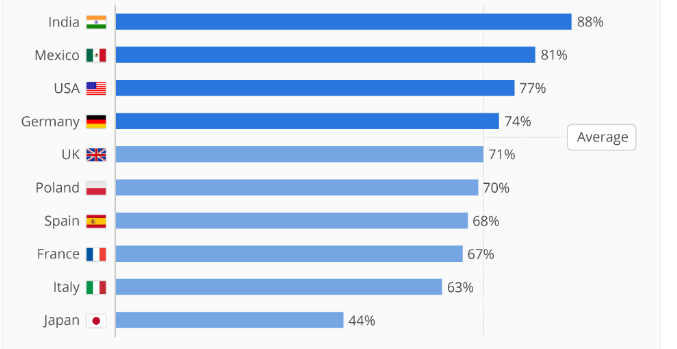
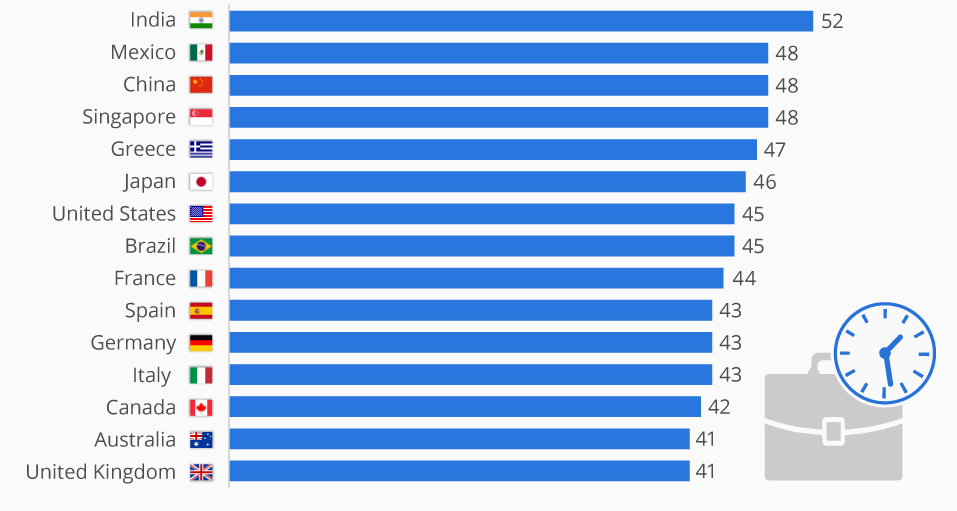
    And as the formal sector keeps shrinking under the onslaught of the informal, the job market shrinks, and those lucky enough to be born into a higher caste/class and able to afford the qualifications to work in the formal sector, are so grateful to find a job – any job – that Indian workers report the greatest sense of well-being in their jobs, while paradoxically also being the hardest working, as these two Statista infographics indicate:

    Percentage expressing well-being at work:

    STATISTA WELL-BEING AT WORK

    Working hours of Millennials (20-34 age group):

    STATISTA WHERE MILLENNIALS WORK LONGEST HOURS

    The point is that no amount of policy tweaking can swing a country’s economy this way or that because the way the economy works is inexorably tied to the way that society is organised. And all economic reform must necessarily be underpinned by social reform – greater equality of opportunity, inclusion, universal education, equitable regulation … and so on…


  • The Digital Divide

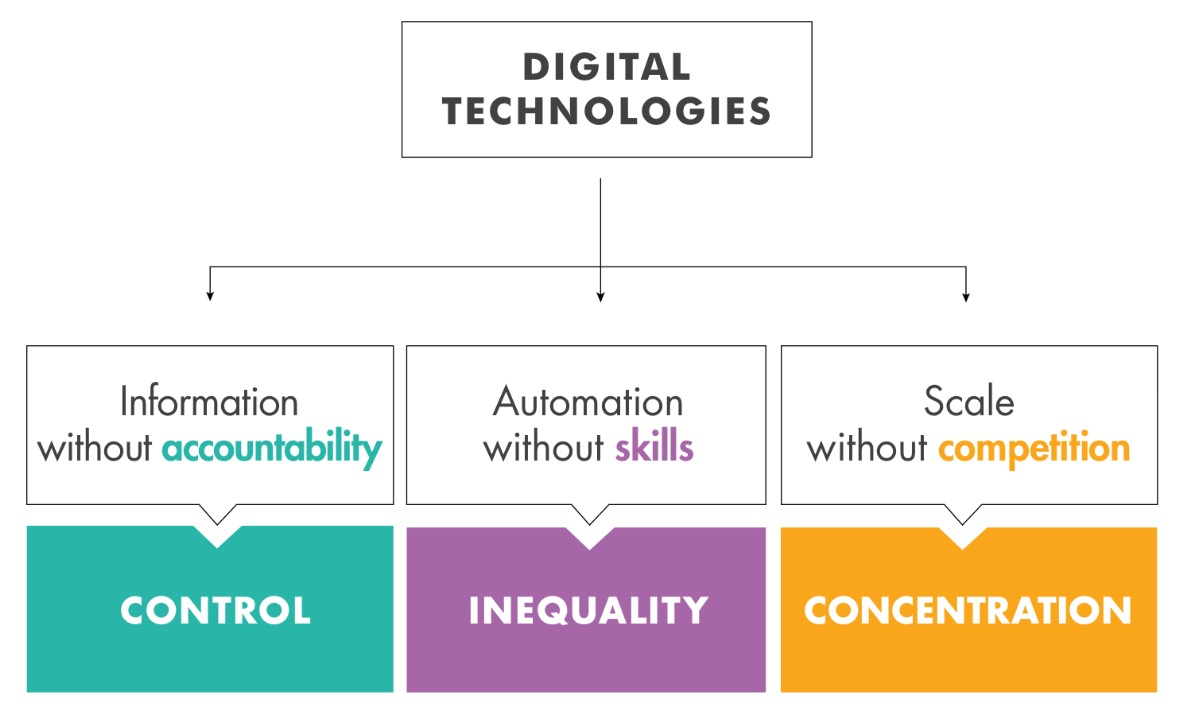
    The World Bank’s World Development Report 2016 looks at Digital Dividends. It explores the impact of the internet, mobile phones, and related technologies on economic development. The Report lists digital dividends as growth, jobs, and services. It explains how digital technologies help businesses become more productive; people find jobs and greater opportunities; and governments deliver better public services to all.

    By reducing information costs, digital technologies greatly lower the cost of economic and social transactions for firms, individuals, and the public sector. They promote innovation when transaction costs fall to essentially zero. They boost efficiency as existing activities and services become cheaper, quicker, or more convenient. And they increase inclusion as people get access to services that previously were out of reach.

    The Report lists the dividends of digital technology as follows:

    Dividends of Digital Technology WDR2016

    It goes on to point out that these dividends are not as widespread as expected because:

    1. Nearly 60% of the world’s people are still offline and cannot fully participate in the digital economy. There also are persistent digital divides across gender, geography, age, and income dimensions within each country.
    2. Some of the perceived benefits of the internet are being neutralized by new risks, such as vested business interests, regulatory uncertainty, and limited contestation across digital platforms, leading to harmful concentration in many sectors.

    Risks of Digital Technology WDR2016


    Moreover, quickly expanding automation, even of mid-level office jobs, could contribute to a hollowing out of labour markets and to rising inequality. And the poor record of many e-government initiatives points to high failure of ICT projects and the risk that states and corporations could use digital technologies to control citizens, not to empower them.

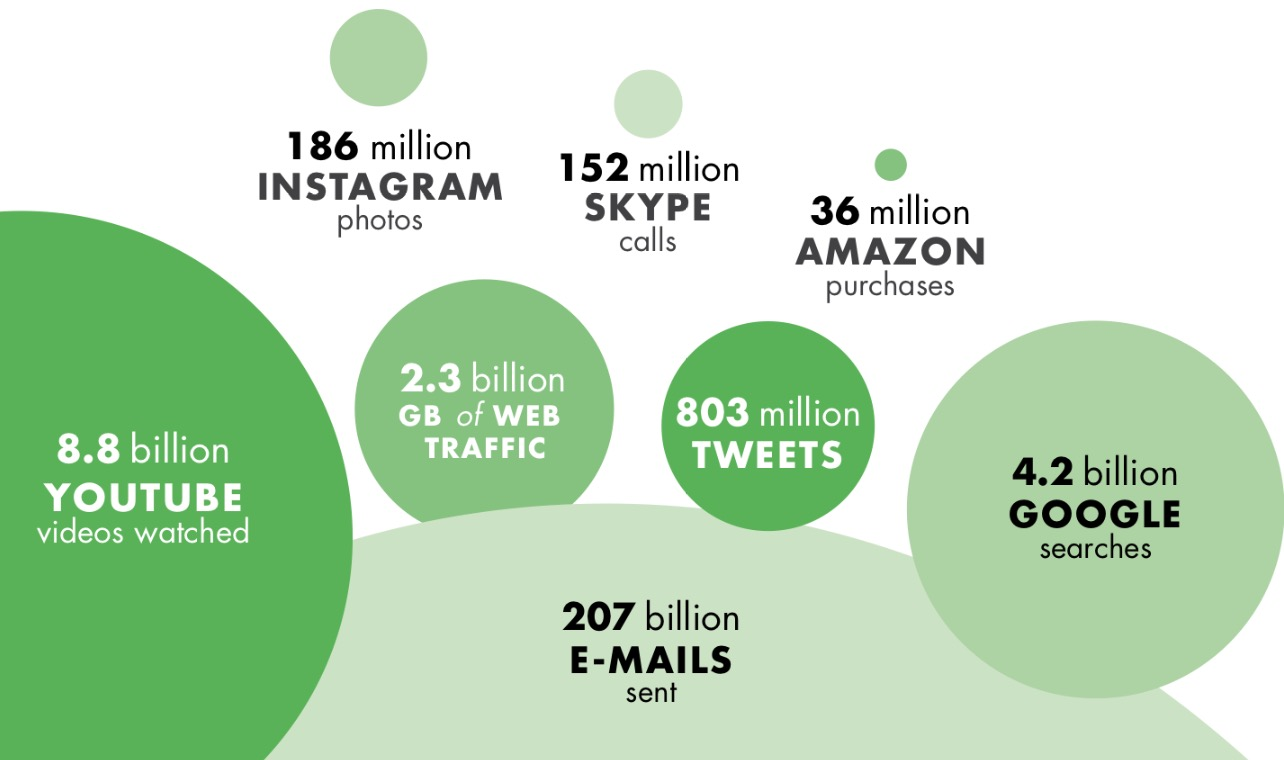
    There is an interesting graphic of a typical day in the life of the Internet, which clearly tells you that even with extended connectivity, only a miniscule minority of the 40% of the world’s people who are on-line, are using the internet to its full potential:

    A typical day in the life of the Internet WDR 2016


    The Report concludes that enhanced connectivity is vital, but not enough to realize the full development benefits. “Digital investments need the support of analogue complements: regulations, so that firms can leverage the internet to compete and innovate; improved skills, so that people can take full advantage of digital opportunities; and accountable institutions, so that governments respond to citizens’ needs and demands. Digital technologies can, in turn, augment and strengthen these complements—accelerating the pace of development.”

    As is its wont, the World Bank seeks solutions from governments and its institutions, never asking essential (if embarrassing) questions about the social milieu where development is a desired objective.

    Take the case of India, where for millennia, society has been divided along caste, class, ethnic and religious lines, and where access to the basic elements of development – such as education and health – is often decided by one’s social status, often ascribed by birth and therefore immutable. The digital divide so clearly visible in India cannot be bridged without tackling the underlying social and economic divide throughout the country.

    So perhaps a government given to pithy sloganeering should first promote a casteless India, an equitable India, an educated India, a healthy India and only then look for a digital India. Or  failing that, leave behind a legacy of greater inequality, greater marginalisation, concentration of wealth in fewer and fewer hands, and greater social malaise, intolerance and deprivation than it inherited from its predecessors…

  • Convention 189 on Domestic Workers

    The outrage caused in India when a Saudi employer chopped off the hand of his 58 year old female domestic worker made the headlines for exactly a day and a half in the victim’s home country. The twitterati, who set the news agenda, quickly moved on. After all, which Indian (or Pakistani, or Afghan) will cast the first stone?

    This is the region where the underclass has been ill-treated, raped and abused incessantly for centuries, if not millennia. An abuse justified by the pernicious caste system and the feudal mindsets of the region. In recent years, even the diplomats of these countries have got into all sorts of trouble wherever their ‘servants’ have been brave enough to seek justice in the host country, but these cases are few and far between. The overwhelming majority put up with this abuse generation after generation, because they are conditioned from birth to expect nothing better – deprivation piled upon deprivation are their ‘fate’ and ‘destiny’, after all…

    I was just wondering about international mechanisms to deal with this sustained exploitation and abuse of domestic workers across borders, when I received a mail from walkfree.org about exactly such an ILO mechanism, known as Convention 189 and its lamentably low ratification by the countries of the world.

    The rationale for a Convention on Decent Work for Domestic Workers is:

    • Recognition of the significant contribution of domestic workers to the global economy through substantial income transfers within and between countries
    • The undervaluation and invisibility of domestic workers at large, and especially of women and children so employed
    • The fact that in developing countries with historically scarce opportunities for formal employment, domestic workers constitute a significant proportion of the national workforce and remain among the most marginalized
    • The special conditions under which domestic work is carried out that make it desirable to supplement the general standards for all workers with standards specific to domestic workers so as to enable them to enjoy their rights fully

    Convention 189 draws upon all other relevant international instruments such as the Universal Declaration of Human Rights, the Protocol to Prevent, Suppress and Punish Trafficking in Persons, the Rights of the Child, and the International Convention on the Protection of the Rights of All Migrant Workers… and many more.

    It entered into force on 5 September 2013.

    The Convention was initiated by the Philippines, probably for the very good reason that a large number of Filipinas are employed as domestic workers in the Gulf region, and there are constant stories of abuse in the local press ­­- yet the desperate keep seeking employment there. And Philippines remains the only Asian country among the Convention’s paltry 22 ratifiers – shame Asia, and North America. Understandably, the rise of left-wing Governments in South America gives that continent the best record in this case, with Uruguay being the first to ratify Convention 189 on Decent Work for Domestic Workers.

    ILO Convention 189 Ratifiers


    And what about India? At the time of Independence, visionaries like Nehru and Kidwai succeeded in giving India one of the most compassionate and pro-worker set of Labour Laws, and India was at the forefront of enlightened labour legislation and at the ILO. But its record has been steadily blemished since 1991 when it jumped on to the unquestioned globalization bandwagon: Out of the 43 ILO Conventions and 1 Protocol ratified by India, 42 are in force, 2 Conventions have been denounced; BUT none have been ratified in the past 12 months.

    What a sorry landmark for the current Government to achieve…

    Why am I not surprised?