Development and Governance

Tag: Formalising the Informal

  • Independence Day 2023: On to true Freedom…

    As we celebrate another Independence Day in India, there will be a lot of chest thumping about the steadily growing GDP, reaching a record $3.75 trillion in 2023.

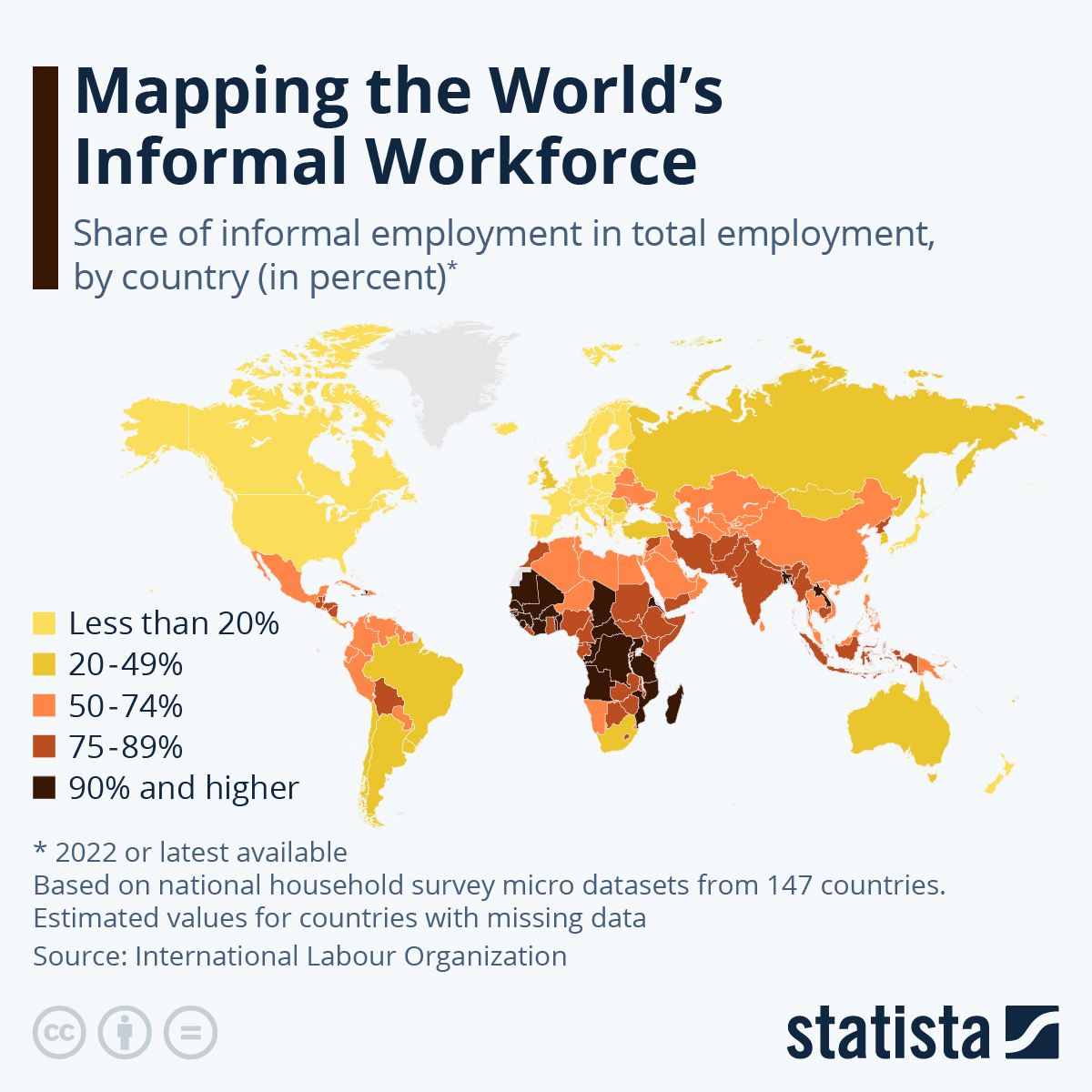
    However, the flip side is that the benefits of this economic growth are not reaching 75-85% of the common people, trapped as they are in India’s infernal informal sector.
    As a consequence:

    • The poverty rate in India has remained high, at 21.9% on the Multidimensional Poverty Index, and the number of people living in poverty is not declining
    • India’s Human Development Index has not improved significantly in recent years. In 2014, it was 0.629, and in 2022, it was 0.631 and the country ranks at 135/188 
    • Levels of Inequality are amongst the highest in the world. The richest 1% of Indians control more than 20% of the country’s wealth, while the poorest 50% of Indians control less than 10% of the wealth. The increasing inequality in India is not just of income and resources but also of opportunity, and as caste, class and birth continue to eclipse the opportunities available to an individual, the poor continue to remain poor as will their children and grandchildren. And continuing informalization will only deepen the divide between those who can and those who cannot

    The social effects of the growing informalisation of the economy are already visible:

    • Vast numbers of unemployed and underemployed youth are just waiting to be exploited by the rich and powerful to ignite an incident here, a rampage there, resulting in an increasingly unstable law and order situation
    • The decline in India’s manufacturing capabilities continues, where the trade deficit keeps inexorably rising, and domestic consumption is relegated to shoddy products manufactured in sweatshops in back alleys with no regard for quality assurance or labour welfare – leading to greater exploitation of the working class
    • The growing fatalism among the poor is very noticeable today, along with the total annihilation of protest movements, because the formal sector trade unions have been systematically eliminated following liberalisation
    • The increasing privatisation of primary, secondary and tertiary education and health care has eroded the very core of a welfare state that Nehruji evoked in his famous ‘Tryst with Destiny’ speech on 15 August 1947. This has not only nullified India’s demographic dividend, but will adversely affect the quality of its human resources for generations to come. 
    • The total politicisation of society, where even the most basic of human rights are bestowed as a ‘gift’ by the rulers and the subsequent subsidisation of basic needs, which creates the ‘dependency culture’ so noticeable in the declining years of all great powers. Moreover, workers in the informal sector are denied a feeling of self-worth and self-esteem and their only identity becomes an anonymous number in an indifferent identity system like Aadhar – which is at best a way to procure meagre benefits from an uncaring government, not a ticket to claim their rights as proud citizens of this country

    *               *              *

    The time has come this Fifteenth Day of August to revert to the original meaning of ‘Azadi’, which is not just independence but FREEDOM – a freedom from subservience, apathy, anomie, poverty, illiteracy, illness and the shackles of a burdensome past of grudge and grievance. 

    Happy Freedom Day to all!

    Related:
    Formalising the Informal

  • Poverty now an ascribed status?

    While I was writing a piece on understanding urban poverty for a newspaper, I was struck by the fact that being poor has become as much an ascribed status across the world, as race, gender and caste. In other words, you live and die with what you are born into – an accident of birth that marks you for life. And you start ‘paying’ for this accident in the womb itself – with a malnourished mother giving birth to a chronically undernourished child.

    Look at the state of children today – at the forefront of every conflict, born and growing up with the sound of rockets and bombs in their ears – not their mother’s lullabies. Escaping war only to succumb to entirely treatable diseases like cholera, ravaging their malnourished little bodies. All across the world, what begins as politics and resource grabbing, ends up as another humanitarian crisis where the children of the poor continue to pay the price for being born at the wrong place at the wrong time: whether in Syria, Yemen, Gaza, or Myanmar.

    If a child of a poor household escapes being born in a war zone, it will have other conflicts to endure – child labour, trafficking, slavery, sexual exploitation, little food and less education. In other words, no aspiration or escape from the terrible conditions he or she is born into – only a childhood lost forever.

    The Sustainable Development Goals may speak of ending poverty in the next decade or so, but see how the world is treating its future generations: children make up the majority of those living in extreme poverty. In 2013, an estimated 385 million children lived on less than US$1.90 per day. Still, these figures are unreliable due to huge gaps in data on the status of children worldwide. And this income data by itself is far from sufficient to truly gauge the depth of deprivation among poor children worldwide.

    Gone are the days when poverty, especially urban poverty was measured merely by the lack of income, or resources. As Robert McNamara pointed out as far back as 1980: the deprivations of the absolute poor “… go beyond income. And in many cases, even if their income were higher… they could not by that fact alone free themselves from their difficulties. The reason is that absolute poverty is a complicated web of circumstances, all of them punitive, that reinforce and strengthen one another.”

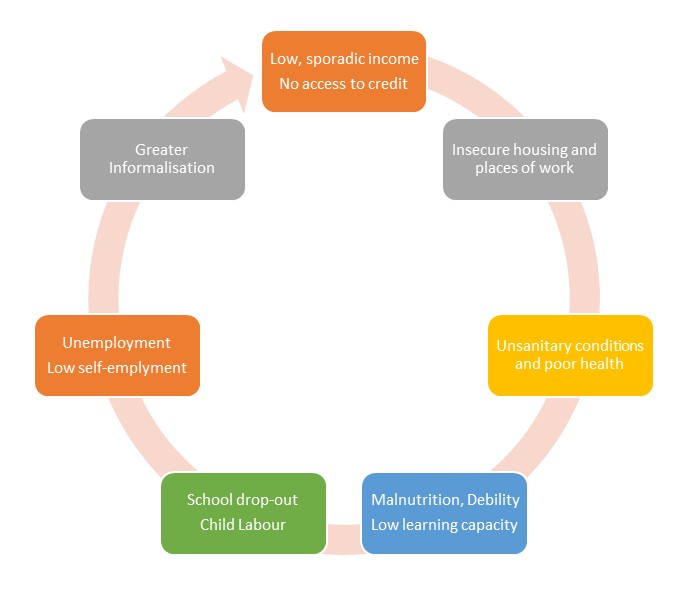
    And the reinforcement covers all dimensions like low income, little or no access to credit, lack of security of tenure, unsanitary living and working conditions, malnutrition and poor health, low learning capacity and lifelong unemployment and underemployment.

    Trapped in this vicious circle, can the poor ever break out on their own?

    Cycle of Poverty

    Obviously not. But there are several points at which a government can break the cycle, provided it has the political will not to sell out to the rich, and to agree with McNamara when he says: “To reduce and eliminate massive absolute poverty lies at the very core of development itself. It is critical to the survival of any decent society.”

    Governments, especially those in South Asia, need to realize that the universalization of primary and secondary education is key to all future development – social, industrial and economic. Schools themselves can become an agency to monitor the nutritional status of children and their immunization against the deadliest childhood diseases besides spreading the message about hygiene and sanitation.

    With the basic education structure in place, social evils like child and forced labour can be eliminated from society, and the future workforce can continue learning long enough to move to vocational and professional education, which will enable employment in the formal sectors of the economy and gradual formalization of the tiny, micro and informal sectors through proper registration, record and regulation by the government.

    South Asian countries must also put in place a representational system for all assets, liabilities, and inventories of the poor to give them access to institutional finance. The absence of such a system is one of the reasons that the poor and their assets cannot be mainstreamed into the local, regional and national economies in these countries, resulting in huge losses to governments in terms of unassessed and uncollected taxes.

    But these things have been said again and again and nobody seems to care anymore.

    I hang my head in shame…