Development and Governance

Tag: Constitution of India

  • Republic Day 2025: Governance or Politics?

    The Constitution of India, which is celebrated every year on the 26th of January as Republic Day, does three things: 

    ·      Firstly, it puts the people of India and the public good CENTERSTAGE in all government policy

    ·      Secondly, it delineates the moral framework for the government’s functioning, by asserting its faith in the universal values of liberty, equality, and fraternity

    ·      Thirdly it provides a template for good governance, ensuring efficiency, effectiveness, participation, accountability, responsiveness, transparency, inclusion, equity and rule of law in the day to day functioning of government and its various institutions, while encouraging all policy making and legislation to be through a consensus negotiated and arrived at by the country’s Elected Representatives

    I have made Republic Day the occasion on which I take a look at issues of governance in the country, and this time I am appalled to find that governance in its fullest sense has virtually disappeared from the Indian scene and been replaced by politics.

    When governance becomes pure politics the country is in trouble. Let me explain. 

    As outlined in the Constitution, one of the key roles of any government is to ensure equality and fraternity by enabling the DEVELOPMENT of the people in every sense of the word – by providing them with education, livelihoods, housing, health care, infrastructure, services and social security. However, when this aspect of governance is reduced to politics, we witness the unedifying spectacle of all political parties literally buying votes with tax-payers’ money by promising ever growing and increasingly unsustainable freebies before every election. As the intended beneficiaries are also the largest voter block, the party that ‘promises’ the most manages to win the election. They are feeding the poor for a day by giving them a fish (politics) and not feeding them for a lifetime by teaching them how to fish (governance). 

    If this is the politicisation of governance at the bottom level, there is an equally pernicious process happening at the top – not just in India, but globally as well. What commentators call the OCGFC (Owners and Controllers of Global Financialized Capital) are increasingly deciding the domestic and foreign policy across the world, and as the largest benefactors of political parties, the OCGFC inevitably politicise international relations.

    India won the respect of both superpowers, USA and the Soviet Union,  as a founding member of the Non-Aligned Movement (NAM) which oversaw the demise of the Colonial era, and kept India out of the conflicts of the Cold War era, allowing it to work exclusively for the public good of its vast, impoverished population.  However, post-liberalisation, India has witnessed not only the privatisation of its public assets but also of its policy and decision making. Instead of non-alignment India’s foreign policy in recent years has literally fallen between two stools, precisely because it chose to protect private interests at the cost of public ones.

    ·      First, it allowed private companies to bypass the sanctions imposed by the West after the Ukraine conflict, and import vast quantities of Russian oil. (News item: Russia’s Rosneft has pledged to supply private Indian refiner Reliance with about half a million barrels of crude a day. At today’s prices, this will generate $13 billion annually for Russia). This naturally upset the US and its allies. 

    ·      Second, the ruling party in India has been vehement in its support of Israel (despite the growing distaste for its genocidal policies across the world), partly to protect the investments of another capitalist crony in Israel’s weapons and industry and port infrastructure, and partly for ideological reasons. This has thoroughly alienated India in the global South and among Arab and Muslim civil societies worldwide. In fact, India has never been so utterly marginalised in the international community as now, and even in BRICS+, of which India was a founding member, the letter ‘I’ has increasingly come to stand for Iran, rather than India. What a shame!

    *                    *                 *

    However bleak the outlook, I have great faith in the will of the Indian people, and feel that the situation is still redeemable if: both the Government and Opposition get out of their perpetual Election mode; Policy making insists on consensus rather than the confrontation that is the staple of the Indian Parliament today; and the much delayed National Census is conducted ASAP to enable informed decision-making and planning for the larger public good.  

  • Republic Day 2019: Pivotal for India’s Constitution

    Every year at this time, I share my deepest personal views about that most revered of documents – the Constitution of India. To my understanding, the Constitution is the equivalent of the ‘niyat’ of a devout Muslim before prayer – the purest ‘intention’ from the heart. It articulates the purest intentions of ‘We, the People’ to build a nation which cherishes the values of liberty, equality and fraternity, and endeavours to establish the basic principles of good governance – efficiency, effectiveness, subsidiarity, participation, equity, inclusion, accountability, transparency, responsiveness, consensus orientation and most importantly, the rule of law.

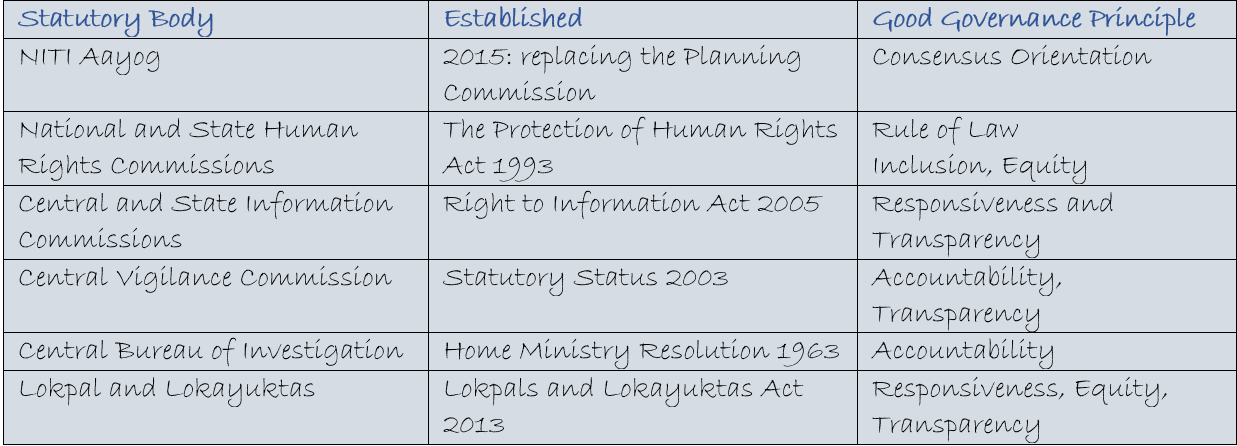
    That is why the Constitution has created the following institutions/bodies to enable the delivery of good governance:

    We should bear in mind that every successive parliament, assembly and government in India has taken an oath to abide by this Constitution, and consequently, every new statutory body since Independence has been created by these law-makers under the appropriate enactment, and within the spirit and framework of the Constitution of India, with necessary checks and balances from the judiciary.

    The major non-constitutional bodies in India are:

    So why do I say that Republic Day 2019 is pivotal for India’s Constitution? Because it is the first time since the formulation of the Constitution in 1949-50 that there are questions being raised about its relevance, coverage, ideals and mechanisms. The credibility of all the institutions either created within the Constitution or within its framework, is being systematically undermined by the Central and State Governments who seem to have forgotten their own oaths of office.

    The ball is now in the court of the people of India. Who will they empower in the next election? Will they rise as one to protect this cherished aspiration of a billion people? Or will they drop all pretence of being true to its ideals and lead the country into an amoral vacuum?

  • REPUBLIC DAY INDIA

    Here’s wishing my fellow Indians a Happy Republic Day, arguably the most important day in the country’s modern history, because on that day, we, the people of India, gave to ourselves the Constitution of a sovereign, socialist, secular and democratic Republic.

    In my post last year I had looked at the Fundamental Rights of Indian Citizens enshrined in the Constitution, so why not even the books with a look at our Fundamental Duties, this year? As these fundamental duties cannot be enforced by writs, and can only be promoted by constitutional methods, they do not make the news as often as a high profile case on the violation of Fundamental Rights.

    Nonetheless, our Fundamental Duties define the very essence of Indianness  and the essential oneness and inclusion of a vastly diverse society such as ours.

    A gentle reminder:

    It shall be the duty of every citizen of India:

    • To abide by the Constitution and respect its ideals and institutions, the National Flag and the National Anthem;
    • To cherish and follow the noble ideals which inspired our national struggle for freedom;
    • To uphold and protect the sovereignty, unity and integrity of India;
    • To defend the country and render national service when called upon to do so;
    • To promote harmony and the spirit of common brotherhood amongst all the people of India transcending religious, linguistic and regional or sectional diversities; to renounce practices derogatory to the dignity of women;
    • To value and preserve the rich heritage of our composite culture;
    • To protect and improve the natural environment including forests, lakes, rivers and wild life, and to have compassion for living creatures;
    • To develop the scientific temper, humanism and the spirit of inquiry and reform;
    • To safeguard public property and to abjure violence;
    • To strive towards excellence in all spheres of individual and collective activity so that the nation constantly rises to higher levels of endeavour and achievement.”

    And which were the values that drove our Independence struggle and our subsequent endeavours at nation-building? Justice, Liberty, Equality, Fraternity as so poetically enunciated in the Preamble to the Constitution…

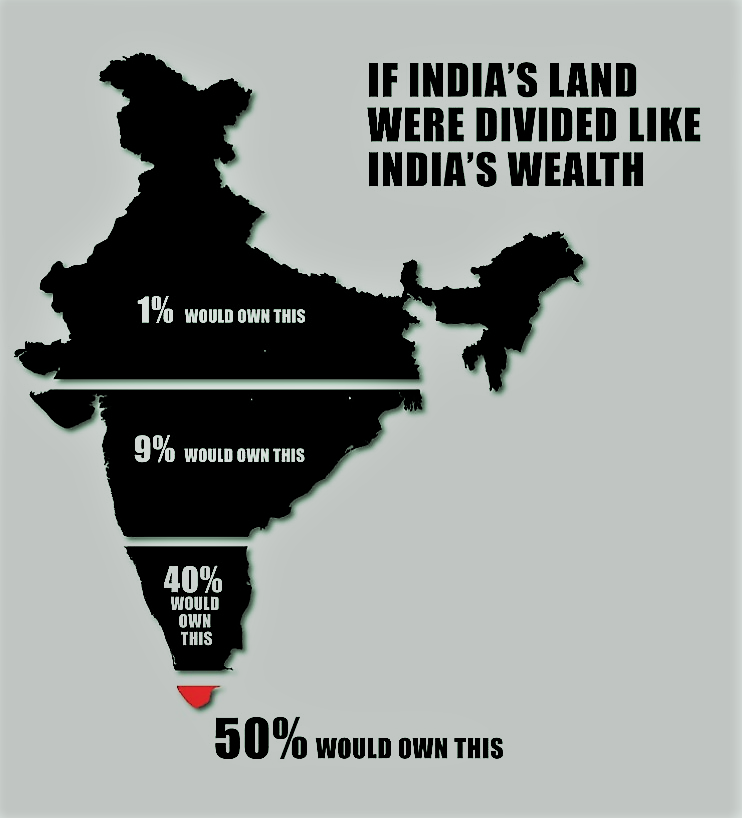
    So in this election season, let citizens evaluate their candidates based on their commitment to these values and their efforts at ensuring sustainable, equitable, inclusive and just development for all Indians, so that the map of India can never be so cruelly used to depict its inequalities as this:

    indian-disparities

    Jai Hind!

  • Happy Republic Day India – yet again…

    Happy Republic Day India. Remember it not as yet another opportunity for Amazon and Flipkart to slash their prices, but as the day when ‘We the People’ defined our very humanity and quintessential Indianness – by giving ourselves a sublimely inclusive Constitution.

    Exactly a year ago, I had explored just how far we had strayed from the spirit of the Preamble to the Constitution. This year I would like to remind Indians of their Fundamental Rights, which need to be fought over, cherished and nurtured, lest we lose them forever.

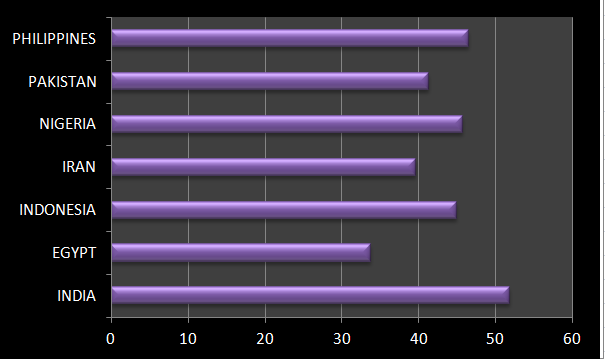
    The Right to Equality is one of the chief guarantees of the Constitution. It is embodied in Articles 14–16, which collectively encompass the general principles of equality before law and non-discrimination, and Articles 17–18 which collectively further the philosophy of social equality. And yet, inequality in India has never been higher as these figures from the World Economic Forum indicate:

    GINI COEFFICIENT FROM WEF DATA

    (Gini Coefficient as percentage, an indicator of income inequality. The higher it is, the greater the inequality)

    Right to Freedom: Article 19 guarantees six freedoms in the nature of civil rights, which are available only to citizens of India. These include the freedom of speech and expression, freedom of assembly without arms, freedom of association, freedom of movement throughout the territory of India, freedom to reside and settle in any part of the country of India and the freedom to practise any profession. And yet, Indians from one part of the country continue to be branded as outsiders in other parts of their own motherland…

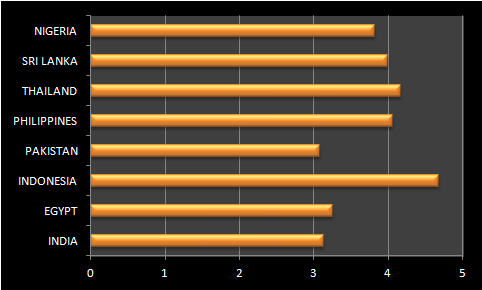
    The Right against Exploitation, contained in Articles 23–24, lays down certain provisions to prevent exploitation of the weaker sections of the society by individuals or the State. Article 23 provides prohibits human trafficking, making it an offence punishable by law, and also prohibits forced labour or any act of compelling a person to work without wages where he was legally entitled not to work or to receive remuneration for it. Yet again, per WEF figures, India lags far behind when it comes to curbing forced and child labour, and providing productive work and adequate compensation to its people:

    EMPLOYMENT AND WAGE INDICATORS FROM WEF DATA

    (Performance rated on a scale of 1-7, with India doing marginally better than only Pakistan)

    The Right to Freedom of Religion, covered in Articles 25–28, provides religious freedom to all citizens and ensures a secular state in India. According to the Constitution, there is no official State religion, and the State is required to treat all religions impartially and neutrally. Article 25 guarantees all persons the freedom of conscience and the right to preach, practice and propagate any religion of their choice. How sorry then to find that the Government’s own National Crime Records Bureau (NCRB) gives us a League Table of the worst communal incidents in Indian States and the death toll in such incidents for 2014-15:

    COMMUNAL RIOTS 2014-15 FROM NRCB

    The Cultural and Educational Rights, given in Articles 29 and 30, are measures to protect the rights of cultural, linguistic and religious minorities, by enabling them to conserve their heritage and protecting them against discrimination. The jury is still out on a number of such cultural practices considered inhuman or inhumane, while cultural issues continue to be politicised by all concerned – whether it is jallikattu or the beef ban.

    So, on this day, let us all reinforce our faith in the Constitution as we “… continue to complain; to demand; to rebel…” as urged by the President of India in his speech today.

    Jai Hind!