Development and Governance

Category: Reports & Indices

  • The Digital Divide

    The World Bank’s World Development Report 2016 looks at Digital Dividends. It explores the impact of the internet, mobile phones, and related technologies on economic development. The Report lists digital dividends as growth, jobs, and services. It explains how digital technologies help businesses become more productive; people find jobs and greater opportunities; and governments deliver better public services to all.

    By reducing information costs, digital technologies greatly lower the cost of economic and social transactions for firms, individuals, and the public sector. They promote innovation when transaction costs fall to essentially zero. They boost efficiency as existing activities and services become cheaper, quicker, or more convenient. And they increase inclusion as people get access to services that previously were out of reach.

    The Report lists the dividends of digital technology as follows:

    Dividends of Digital Technology WDR2016

    It goes on to point out that these dividends are not as widespread as expected because:

    1. Nearly 60% of the world’s people are still offline and cannot fully participate in the digital economy. There also are persistent digital divides across gender, geography, age, and income dimensions within each country.
    2. Some of the perceived benefits of the internet are being neutralized by new risks, such as vested business interests, regulatory uncertainty, and limited contestation across digital platforms, leading to harmful concentration in many sectors.
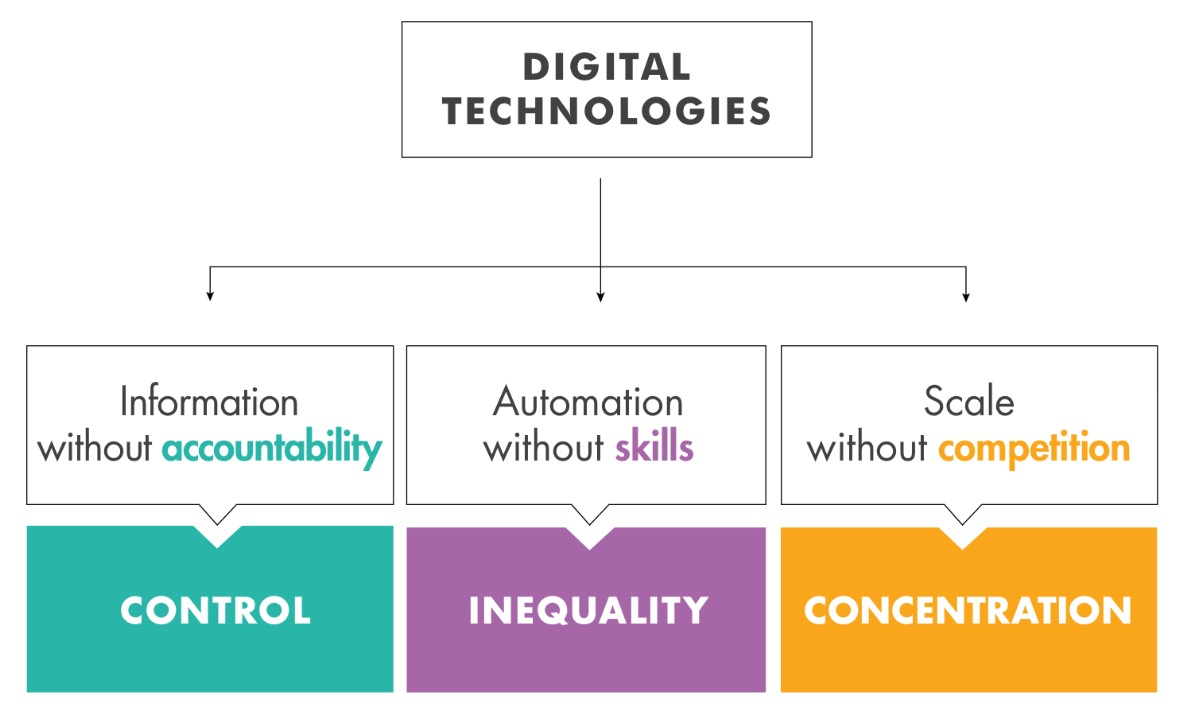
    Risks of Digital Technology WDR2016


    Moreover, quickly expanding automation, even of mid-level office jobs, could contribute to a hollowing out of labour markets and to rising inequality. And the poor record of many e-government initiatives points to high failure of ICT projects and the risk that states and corporations could use digital technologies to control citizens, not to empower them.

    There is an interesting graphic of a typical day in the life of the Internet, which clearly tells you that even with extended connectivity, only a miniscule minority of the 40% of the world’s people who are on-line, are using the internet to its full potential:
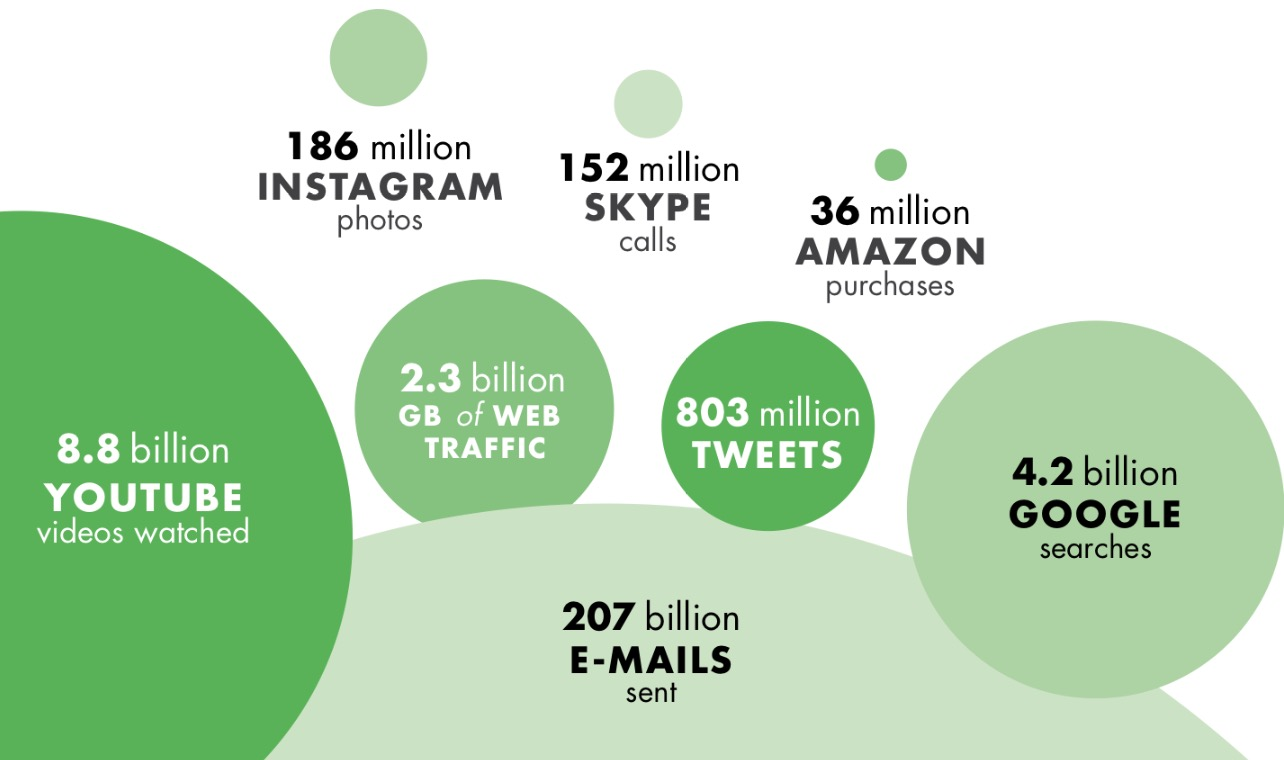
    A typical day in the life of the Internet WDR 2016


    The Report concludes that enhanced connectivity is vital, but not enough to realize the full development benefits. “Digital investments need the support of analogue complements: regulations, so that firms can leverage the internet to compete and innovate; improved skills, so that people can take full advantage of digital opportunities; and accountable institutions, so that governments respond to citizens’ needs and demands. Digital technologies can, in turn, augment and strengthen these complements—accelerating the pace of development.”

    As is its wont, the World Bank seeks solutions from governments and its institutions, never asking essential (if embarrassing) questions about the social milieu where development is a desired objective.

    Take the case of India, where for millennia, society has been divided along caste, class, ethnic and religious lines, and where access to the basic elements of development – such as education and health – is often decided by one’s social status, often ascribed by birth and therefore immutable. The digital divide so clearly visible in India cannot be bridged without tackling the underlying social and economic divide throughout the country.

    So perhaps a government given to pithy sloganeering should first promote a casteless India, an equitable India, an educated India, a healthy India and only then look for a digital India. Or  failing that, leave behind a legacy of greater inequality, greater marginalisation, concentration of wealth in fewer and fewer hands, and greater social malaise, intolerance and deprivation than it inherited from its predecessors…
  • Child Labour and Youth Unemployment

    The International Labour Organization in its World Report on Child Labour 2015, raises a very important issue: the incidence of child labour in a country, and its effect on youth employment in the long term. As the report points out: Some 168 million children remain trapped in child labour while at the same time there are 75 million young persons aged 15 to 24 years who are unemployed and many more who must settle for jobs that fail to offer a fair income, security in the workplace, social protection or other basic decent work attributes.

    Which means that all those trapped in child labour and denied education because of endemic poverty and inadequate social security mechanisms, are unlikely to find decent work opportunities as they come of age and join the work force, and will sink further into poverty, and their progeny will again be forced into child labour … and so the downslide continues, generation after generation.

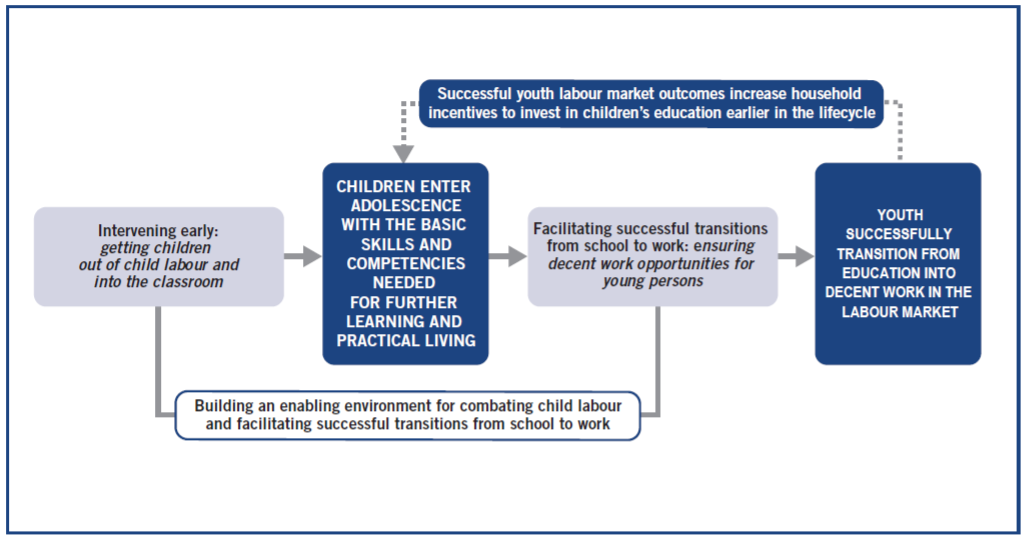
    The Report provides a framework for addressing the twin challenges of eradicating child labour and providing opportunities for decent work to the youth in any country

    ILO World Report on Child Labour 2015

    It is hoped that any national government could meet these twin challenges:

    By enacting tough legislation so that the disincentives for employing child labour far outweigh any economic advantages

    By putting in place support mechanisms so that poor households can afford to send their children to school rather than to the job market

    By strengthening the school system, especially in rural and tribal areas, with special emphasis on girls’ schools

    By providing much greater access to vocational education after high school

    By encouraging youth enterprise through easy access to credit from formal sector banks, which would also help in the tertiarisation of the rural economy

    By encouraging public and private industry to run youth and apprenticeship programmes, by offering tax benefits and as part of their CSR activity

    Sadly, none of these issues appear to be of immediate concern to the Indian Government, more interested in impressing the Indian diaspora than addressing domestic issues which have long-term deleterious consequences on Indian society and economy.

    Some facts about India :

    One in every 11 children in India is working, and more than half of the 5.5 million working children in India are concentrated in five states—Bihar, Uttar Pradesh, Rajasthan, Madhya Pradesh and Maharashtra. The first 4 States are considered ‘BIMARU’ or sick and this statistic is no surprise, but the presence of Maharashtra in this list confirms the assertion of activists that the urban informal sector is perhaps the worst exploiter of children.

    Over 80% of working children are based in rural areas and three out of four of these children work in agriculture, as cultivators or in household industries, most of which are home-based employments. Which means that they will continue in this wretched cycle, thanks to the recent amendments in the relevant Act, which legitimises child labour in family enterprises which are deemed ‘non-hazardous’, such as agriculture and handicrafts.

    While the incidence of hazardous work among adolescents is highest in Nicaragua, the number of adolescents in hazardous work is greatest in India (2.4 million) – and one would think that any Government coming to power in the name of development would squirm at this dubious honour, instead of coining a new slogan every day, and washing its hands of the bottom 30% of the population in every sense…

    And sure enough, continuing child labour does impact the long-term youth employment prospects in India, as the Report predicts. Recent studies confirm that because of poverty and poor human capital endowment, Indian youth are forced to participate in the labour market at an earlier stage than in other countries. They cannot afford to remain unemployed for long and end up in the informal sector, in low productivity and badly paid activities. Most men end up in casual wage employment, while women may become self-employed or work in agriculture. Training and skill-building at this stage may be a case of too little too late, if the targeted youth were child labourers and missed out on a solid foundation of primary and secondary education.


    At the risk of sounding extremely cynical, may one say that the only beneficiaries of all the skill building programmes recently announced are likely to be the middle classes (yet again!) and the politicians who will be granted licences to open more and more ‘technical institutions’ on prime urban land… So much for ‘skill India’…

  • Education in Asia and the Pacific

    The Asian Development Bank in its flagship annual report on Key Indicators for Asia and the Pacific 2015, includes a special chapter on education in the region. The key findings in this chapter are:

    • Developing Asia has made large strides in expanding access to education. Average years of schooling nearly doubled from 3.9 in 1970 to 8.0 in 2010
    • Skills remain weak in many parts of the region, due to gaps in both the quantity and quality of education provided
    • A failure to raise the quality of education will have consequences for growth prospects
    • Public educational expenditures are necessary, but not sufficient to improve learning outcomes
    • Families and firms also need to be involved in the region’s skill development agenda.

    Pretty obvious you would think, but having elucidated these issues, the report cannot really hide its private sector bias and meanders into all sorts of contradictions. For instance, stressing the importance of motivation among teachers, it goes on to suggest filling the vacancies on contract. Where in the world have you heard of temporary workers – insecure, underpaid and overworked – remaining truly motivated about their jobs, which never ever develop into a vocation?

    Similar ambiguities mark the redesign of school and college curricula – are they to be redesigned to empower the individual to play a more responsible role as a citizen, or to produce automatons for the assembly lines of private industry? Can higher education really bring together vocationalisation and the liberal arts? And so on…

    Nonetheless the report does contain some important data which one can interpret from a different perspective. Take the graph on country-wise data on the vocationalisation of secondary and technical education:

    ADB Report 1

    And compare People’s Republic of China in 2011 and India in 2012… Although India seems to have better coverage, the extent of vocationalisation of secondary and tertiary education in China far outranks India.

    Further, if we look at the sector-wise distribution of types of education received, what do we find?

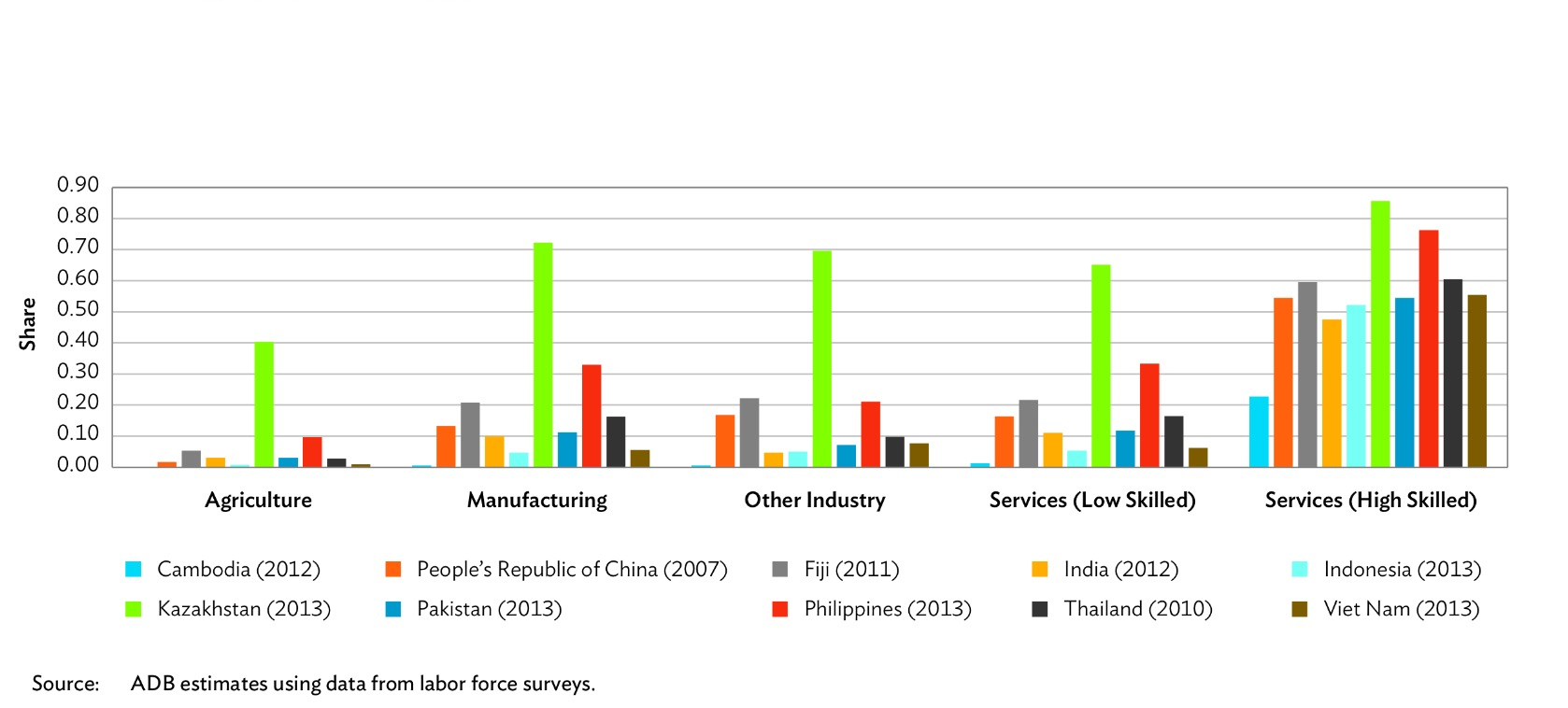
    ADB Report 2

    While China’s educated are represented in all sectors, including agriculture, India’s educated are overwhelmingly in the high-skill services sector.

    In my post China and India: Two roads diverged dated 29 November 2014, I had written:

    The benefits of the Chinese Revolution are most visible in the way the country raises and educates its children. The first major reform was the standardisation of the written language (Mandarin-Beijing dialect) across the country. Then, there was universal literacy and mass education, and eventually with a new higher education system geared to the country’s development needs, we see massive vocationalisation with an emphasis on technology in higher education. Today, there are no less than 4 Chinese and 4 Hong Kong based institutes/universities in the Asian Top-25, and not a single one from India.

    Higher Education in China has rapidly adapted to the global trend of internationalism, duly followed by indigenization of the knowledge gained. This means that the Chinese technocratic class is now geared to move from re-engineering western technology to innovation in its own right, and is encouraged through government investment to set up businesses in China itself. Contrast this with India, where IITs and IIMs, funded entirely by the humble Indian taxpayer, compete with each other in how many alumni they have been able to place in foreign companies – preferably in the USA!

    Furthermore, by opting to invest heavily in manufacturing industry, China has found a place for its unskilled, semi-skilled, skilled, and highly skilled workers, all in the same business matrix. Whereas, by opting for hi-tech services such as IT, India can provide the best opportunities only to its best and most educated workers, further fuelling the social and digital divide in the country.

    Thanks to ADB, I stand vindicated. And what a great way to conclude one’s 50th post in less than a year…

  • Convention 189 on Domestic Workers

    The outrage caused in India when a Saudi employer chopped off the hand of his 58 year old female domestic worker made the headlines for exactly a day and a half in the victim’s home country. The twitterati, who set the news agenda, quickly moved on. After all, which Indian (or Pakistani, or Afghan) will cast the first stone?

    This is the region where the underclass has been ill-treated, raped and abused incessantly for centuries, if not millennia. An abuse justified by the pernicious caste system and the feudal mindsets of the region. In recent years, even the diplomats of these countries have got into all sorts of trouble wherever their ‘servants’ have been brave enough to seek justice in the host country, but these cases are few and far between. The overwhelming majority put up with this abuse generation after generation, because they are conditioned from birth to expect nothing better – deprivation piled upon deprivation are their ‘fate’ and ‘destiny’, after all…

    I was just wondering about international mechanisms to deal with this sustained exploitation and abuse of domestic workers across borders, when I received a mail from walkfree.org about exactly such an ILO mechanism, known as Convention 189 and its lamentably low ratification by the countries of the world.

    The rationale for a Convention on Decent Work for Domestic Workers is:

    • Recognition of the significant contribution of domestic workers to the global economy through substantial income transfers within and between countries
    • The undervaluation and invisibility of domestic workers at large, and especially of women and children so employed
    • The fact that in developing countries with historically scarce opportunities for formal employment, domestic workers constitute a significant proportion of the national workforce and remain among the most marginalized
    • The special conditions under which domestic work is carried out that make it desirable to supplement the general standards for all workers with standards specific to domestic workers so as to enable them to enjoy their rights fully

    Convention 189 draws upon all other relevant international instruments such as the Universal Declaration of Human Rights, the Protocol to Prevent, Suppress and Punish Trafficking in Persons, the Rights of the Child, and the International Convention on the Protection of the Rights of All Migrant Workers… and many more.

    It entered into force on 5 September 2013.

    The Convention was initiated by the Philippines, probably for the very good reason that a large number of Filipinas are employed as domestic workers in the Gulf region, and there are constant stories of abuse in the local press ­­- yet the desperate keep seeking employment there. And Philippines remains the only Asian country among the Convention’s paltry 22 ratifiers – shame Asia, and North America. Understandably, the rise of left-wing Governments in South America gives that continent the best record in this case, with Uruguay being the first to ratify Convention 189 on Decent Work for Domestic Workers.

    ILO Convention 189 Ratifiers


    And what about India? At the time of Independence, visionaries like Nehru and Kidwai succeeded in giving India one of the most compassionate and pro-worker set of Labour Laws, and India was at the forefront of enlightened labour legislation and at the ILO. But its record has been steadily blemished since 1991 when it jumped on to the unquestioned globalization bandwagon: Out of the 43 ILO Conventions and 1 Protocol ratified by India, 42 are in force, 2 Conventions have been denounced; BUT none have been ratified in the past 12 months.

    What a sorry landmark for the current Government to achieve…

    Why am I not surprised?

  • Social Security Nets as guarantors of Human Development

    Whenever one talks of sustainable livelihoods, we look not only at the 5 types of assets of a community or individual, but also at their coping strategies. Thus vocational diversity in a farming family will cushion it against a bad crop or a natural disaster, or the sudden death of the principal breadwinner. At the national level, the coping mechanism is provided by the state in the form of social security nets like unemployment benefits, health care, free education, pensions or child benefits.

    The second edition of The State of Social Nets which attempts to compile, analyze, and disseminate data and developments as part of the World Bank’s 2012–22 Social Protection and Labor Strategy, makes for interesting reading, and its key findings are summarized below:

    • The portfolio of social safety net programmes is large and diverse. A developing country runs about 20 different safety net programmes, on average.
    • Cash transfers and school feeding programmes are present in almost all countries. Cash transfers are becoming more popular and increasingly complex. Conditional cash transfer programmes are now present in 64 countries, a dramatic increase from 2 countries in 1997 and 27 countries in 2008.
    • Worldwide, 1.9 billion people are enrolled in social safety net programmes.
    • The world’s five largest social safety net programmes are all in middle-income countries and reach over 526 million people.

    It was also noted that the social security programmes and composition of social spending varied greatly across regions, as seen below:

    Social Security Nets

    However, the Report  found that despite remarkable progress over the past 5 years, most of the poor remain outside the social safety net system, especially in low- and lower-middle-income countries, which have the lowest coverage levels of poor people in their societies, and the least ability to direct resources to those most in need. The coverage gap is particularly acute in Sub-Saharan Africa and South Asia, where most of the global poor live. In these regions, only one-tenth and one-fifth of the poorest 20 percent have access to social safety nets, respectively. Urban areas have serious gaps in coverage, at all income levels. While 285 million poor people live in cities in developing countries, reaching them presents special challenges, including identifying, targeting, communicating with, and enrolling perspective beneficiaries.

    In this writer’s own experience, the National Social Assistance Programme (which consisted of a nominal pension to the poor above the age of 65) showed very good results in rural areas, but was absent from the big metros, chiefly because the pension was disbursed through money orders, and the urban poor being homeless, simply did not have a postal address! Such procedural lapses are the chief cause that the social security coverage of the poorest in developing countries remains inadequate. Take the latest case of cheap loans for farmers, which have been cleverly diverted to non-farming uses. Firstly, as these loans use land as collateral, the poorest landless tenant farmers are not covered; and as the scrutiny before granting loans is cursory at best, a lot of these loans end up in Fixed Deposits earning the borrower anything from 8-9% interest, while he pays no more that 4% on his loan.

    To plug such loopholes, many countries are increasingly looking to Unconditional Cash Transfers (UCT) and Conditional Cash Transfers (CCT). This strategy has several additional benefits, as the Report points out: “Newer studies confirm the positive and significant impacts of cash transfers on school enrollment and attendance; increased live births in safer facilities; improved prenatal and postnatal care; regular growth monitoring of children during critically important early ages; and enhanced food security.”

    The studies also delve deeper into the productive impacts of cash transfers, demonstrating how predictable cash transfers enhance households’ investment in activities to generate agricultural and nonagricultural income. In the urban context, a secure and predictable monthly income can mean the difference between shelter and homelessness, between education and illiteracy, between health and illness. Cash transfers also have major positive spillover effects on the local economy of target communities, especially in urban areas.


    Sadly, India is now ignoring all these benefits and the new government has ruthlessly slashed social expenditure in its last budget. What is frightening is that the eternal chase for higher growth rates (with a matching aversion to any form of subsidies and direct cash transfers, which are now being replaced by contributory insurance schemes), may rapidly undo all the gains in the areas of social security, social welfare and food security made by India as part of its commitment to the global social agenda, and the Millennium Development Goals.

  • Growing fragility of Indian Society

    No sentient human being on this planet can ignore the increasing fragility of the human condition across the world today – civil wars, burgeoning arms industries, natural calamities, epidemics, inter-communal and intra-communal violence, the destruction of viable nation-states in an unending battle for the control of natural resources, and so on and so on…

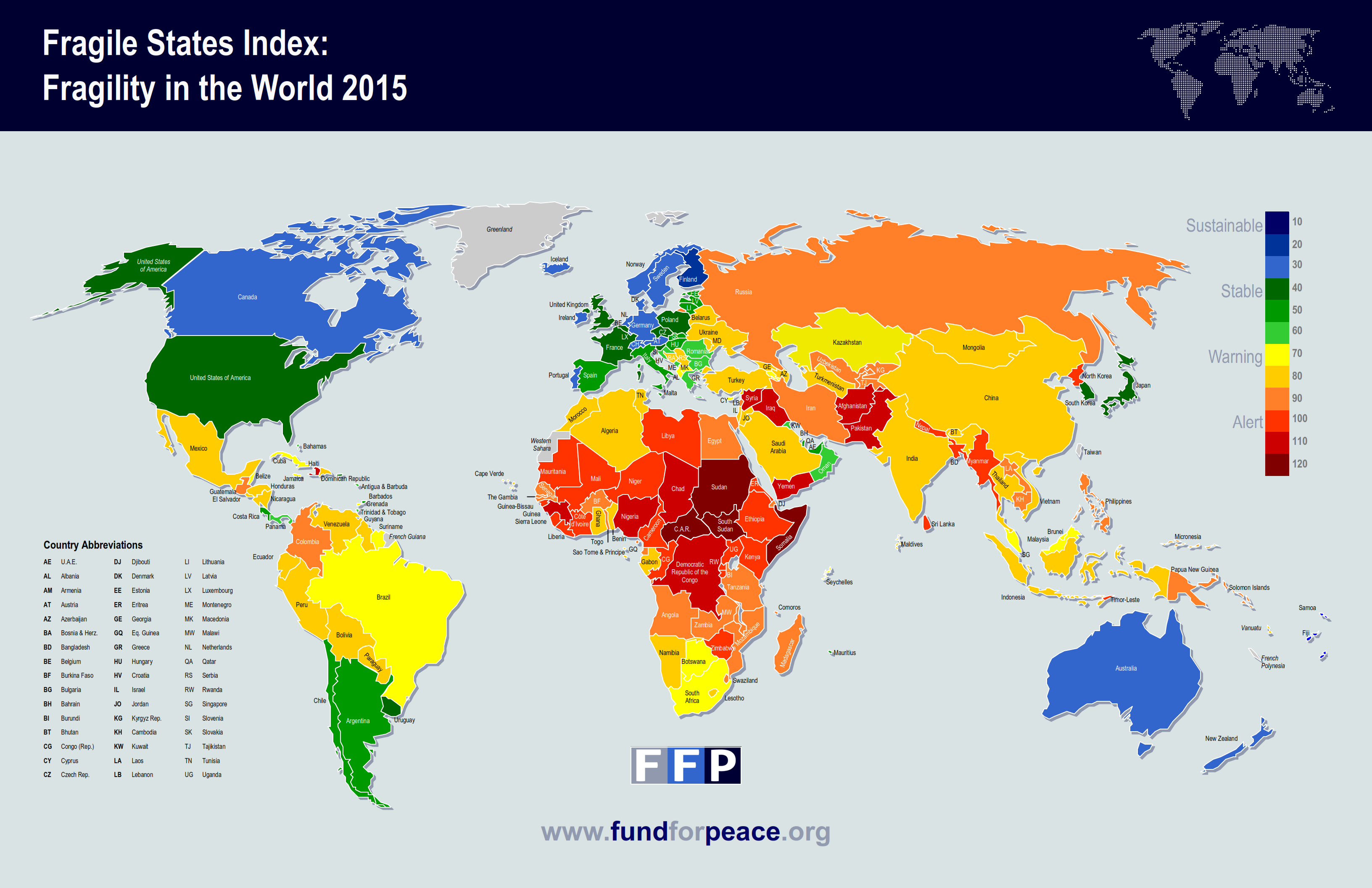
    And sure enough, we now have a Fragile States Index with facts and figures to give frightening substance to these events. Brought out annually by a Washington-based non-profit, the Fragile States Index has this to show in its latest report:

    Fragile State Index Map 2015

    And at 79.4, there sits India on the cusp of a High Warning Status.

    While the country is thankfully NOT in a state of war, the high score is all the more disturbing because it reflects the deepening fault lines in its social fabric, as measured in the socio-economic aspects of the Index – especially relevant to India being the Demographic Pressures, Uneven Economic Development, Group Grievance, and Poverty:

    World Fragility Index social factors

    Several recent events have thrown into sharp relief the growing disparities in every aspect of life in India. And the worst discrimination is that practised by the mainstream media in their overkill coverage of issues that impact the haves, the privileged and the entitled classes; while totally ignoring or cursorily dismissing those issues which affect the vast numbers of the permanently disadvantaged – the poor, the disempowered and the disenfranchised.

    Under pressure from industry which thrives on the cheap overheads of the urban informal sector, the government is proposing to amend the Child Labour Act of 1986, relaxing the ban on children working in family-owned occupations, which is sure to lead to much more exploitation and abuse than India is shamed with today. Instead of widespread discussion to ascertain the views of working children, what we get on the mainstream media is endless discussion on the possibility of excessive lead in noodles manufactured by a multinational, and consumed mainly by the urban haves and their children as a lifestyle choice, and not as a necessity for survival!

    Similarly, the fact that the present government has ruthlessly cut social welfare expenditure in its very first year has also gone unnoticed by the mainstream media. Instead, there is great publicity for 3 contributory schemes targeted at the poor, which totally miss the point that you have to first assure regular incomes, so that the potential beneficiaries can pay the premium on these insurance schemes, isn’t it? The only beneficiaries of these schemes are the fat cat insurance companies, who have already found a very lucrative market in the private medical insurance being offered in India. How hurtful it is that a noted hospital can offer different ‘packages’ for radiation therapy to cancer patients, with the top package available to the well-heeled and the well-insured. When asked what the difference was, one is told that there was more regular monitoring by CT scans for the higher packages, and also more care in mitigation of side-effects of radiation therapy. The sheer cold-bloodedness of such a commercial approach takes one’s breath away!

    Yet again, the ‘manufactured’ aspect of communal riots such as the recent one in Haryana are not commented upon, nor is the fact that at the heart of the trouble is a piece of disputed land. According to one writer, what is noticeable is the total absence of remorse among the perpetrators, and the deliberate targeting of the relatively wealthy members of the victim community, who had their homes and worldly possessions like washing machines and fans systematically destroyed! Very reminiscent of what goes on in the Palestinian Occupied Territories, isn’t it?

    And amid all the talk of building new smart cities, what happens to that terminally ill queen of Indian cities – Mumbai? The first spell of heavy monsoon rain, and the infrastructure and services come crashing down, as though no lessons were learnt from the calamitous floods of nine years ago…

    Meanwhile, the intermittent tit-for-tat violence continues in the Indian North-East, with NO attempt to address the festering grievances of that region.


    The deepening of these fault lines along caste, class, region, ethnicity and community have become so aggravated in recent months, that Indian society as a whole has become more fragile, more unpredictable, more liable to implosions and violence… and I dread to think where India will find itself in the Fragile States Index in 2016.

    This is the first and most frightening consequence of pursuing economic growth at all costs – human and environmental.

  • Social Progress and Directed Growth

    Blog Entree The recently published Social Progress Index Report made big news in India, because it put India lower than both Nepal and Bangladesh in its rankings. The ruling rightist Government (which worships at the altar of S&P, McKinsey and Moody’s) dismissed it as yet another leftist conspiracy – just as they dismiss all critics from Amartya Sen to Greenpeace – not realising that the report comes from the pens of globalization experts and management gurus like Michael E Porter.

    The Report defines Social Progress as “… the capacity of a society to meet the basic human needs of its citizens, establish the building blocks that allow citizens and communities to enhance and sustain the quality of their lives, and create the conditions for all individuals to reach their full potential.”

    Under these 3 broad categories, the Social Progress Index measured the following indicators for 132 countries:

    SPI COMPONENETS The Social Progress Report makes it a point to disassociate itself from prevalent economic indicators like GDP, pointing out that the top ranker on this Index (New Zealand) has a GDP practically half that of the world’s largest economy, the USA, yet outranks it by 15 places.

    The following graph is very interesting (especially to the BRICS Countries, where India again, sadly, brings up the rear…):

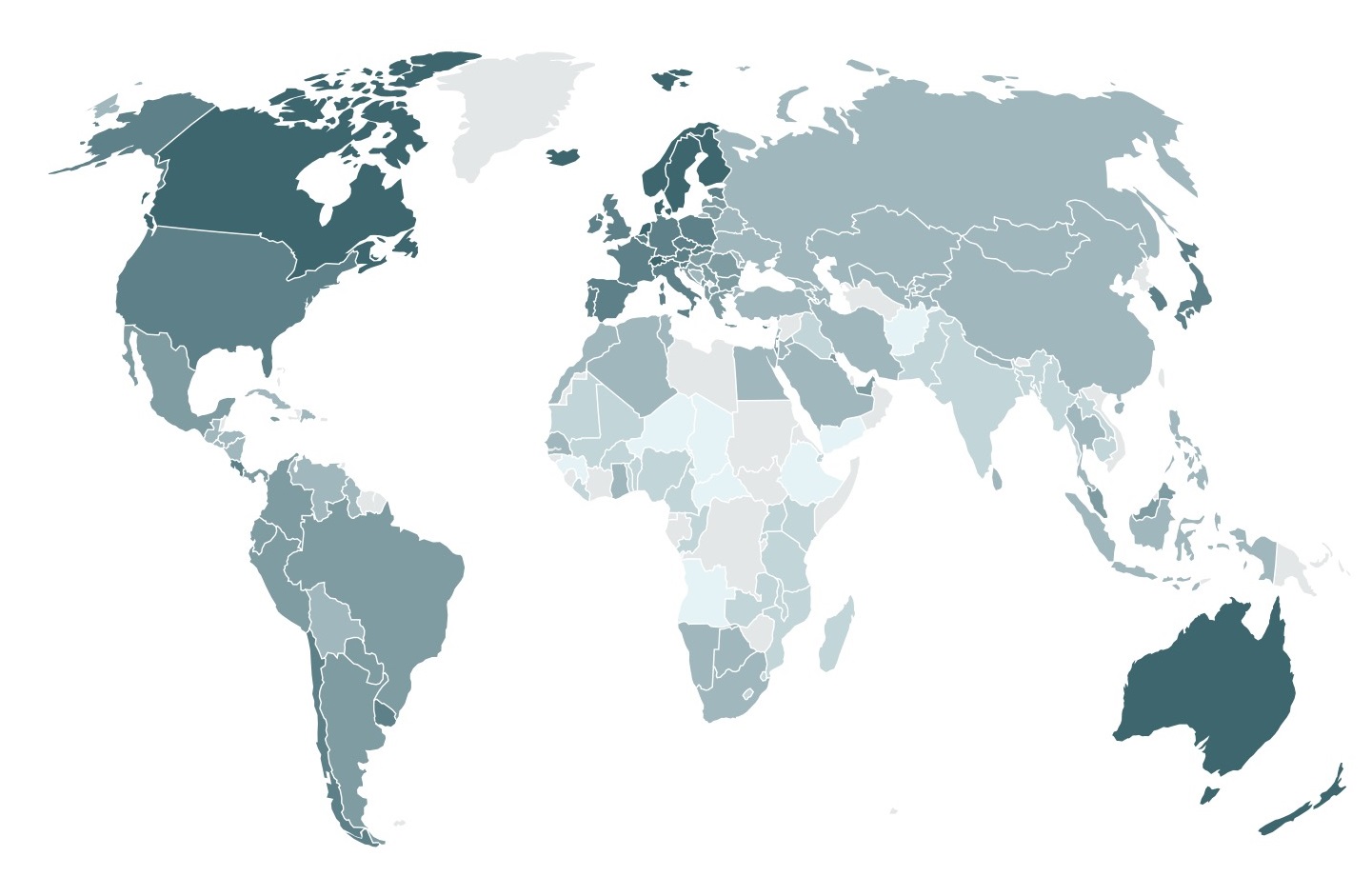
    SPI & GDP The overall findings of the Social Progress Report 2015 are best encapsulated in this map:

    SPI MAP The beauty of the Social Progress Index is that it is interactive, and you can immediately see the impact of any indicator by adding a component and watching the colours change. I tried it for each of the components, one by one, and read at a glance the signals for India, especially those where it faded from pale to paler jade, to almost white… and the real areas of concern were:

    • Availability of Water
    • Availability of affordable housing
    • Deterioration of the environment
    • Inequality in the attainment of education
    • Average years spent in school by the female half of the population
    • Years of tertiary education
    • Access to advanced education
    • Religious intolerance
    • Discrimination and violence against minorities – religious, ethnic, sexual preferences

    Of course it would not be fair to put the blame on (or give the credit to, for that matter) a government which has been in office for less than a year. However, if development is directed growth, and progress the distance covered in that direction, then it is the direction which may need to change – especially for a government which came to power on the promise of ‘development for all’…

    Or else, the next 4 years will see increasing discontent in civil society, more violence from the disgruntled, more Public Interest Litigation in the courts, more protests, and more raucousness in Parliament.

    Then how will the dream of smart cities and industrial corridors be achieved?

  • Infrastructure Projects in India

    What is it with first-time rulers that they waste no time in commissioning mega infrastructure projects, statuesque monuments and monumental statues? Perhaps it is a primal need in the human soul… and chieftains, kings and emperors have been building huge monuments even before the first signs of urban living e.g. in Turkey, nearly 10,000 years ago. And anthropologists, archaeologists and historians all agree: building huge monuments is essentially an expression of power by the ruler…

    So when the new Indian Government came to power on pledges of development, their first proclamations were the world’s tallest statue, the development of the River Ganga, and high speed trains between key metros. This was followed by announcements of smart cities, road networks, new railway links, ports, a new capital city for Andhra Pradesh and hundreds of bridges and power projects across the country. Failures to galvanize the Indian infrastructure sector in the past, were smugly put at the doorstep of the last government, and with some drastic tweaking of the land acquisition process, they were ready to give India the infrastructure (and monuments!) that would be the envy of all Asia – and that too in just 5 years!

    To be fair, the last government had tried its best to upgrade urban infrastructure through the JNNURM with private sector involvement, so why has the infrastructure sector in India NOT lived up to expectations?

    A report by McKinsey entitled ‘Building India – Accelerating Infrastructure Projects’ may have the answer. It identifies several bottlenecks in the development process from the planning and design of projects, to the tendering process, to their actual execution with inadequately trained manpower.

    Specifically, the report mentions:

    • Poor quality of planning and engineering design, which creates problems such as scope changes and variations during project execution, thereby creating disputes and delays.
    • Tendering of unviable PPP projects that are planned beyond their scope, contain dated cost estimates that lead to insufficient viability gap funding (VGF), and increased risk to the provider due to several contractual terms such as the possibility of termination of concession, if traffic crosses a threshold level.
    • Use of inappropriate contracts that allow the designs to be variable and increase the frictional cost of interaction between the nodal agency and the construction contractor.
    • Slow and centralised pre-tendering approval processes, involving a plethora of government agencies, with minimal or no accountability for resultant delays.

    Once a project finally gets going, the construction phase is marked by delays in land acquisition, ineffective resolution of disputes, shortages in the availability of skilled manpower and weak performance management in nodal agencies, resulting in time and cost over-runs.

    • Nodal agencies are hampered by weak performance management including low transparency in performance, lack of meaningful incentives, and absence of clearly defined consequences in the event of under-performance.
    • Insufficient availability of skilled and semi-skilled manpower is a major and enduring problem. A survey by the National Sample Survey Organisation estimates that while 13 million workers enter the market every year, only 3 million receive training. Furthermore, India’s vocational training curriculum is largely outdated and not based on clear standards, and the current certification process is based largely on theoretical testing, and does not ensure employability. So much for India’s demographic dividend!

    McKinsey manpower

    After winning a contract with great difficulty, the provider faces further problems. The report found that skills are weak across the value chain – ranging from the near absence of risk management skills, to below-par design and engineering skills. This paucity of skills is aggravated by a lack of best-in-class procurement practices, and low prevalence of lean construction principles.

    While the current Government may make some headway in addressing the land acquisition, project design, and tendering issues in the short term, the real challenge lies in building up the country’s skilled and semi-skilled manpower base.

    In other words, it should mature from the current project-mode of thinking to policy-mode.

    It took Japan, China, Singapore, South Korea and Thailand decades of social engineering to universalise primary and secondary education, and vocationalise their higher education, so that they had a trained and ready workforce in place when the industrial and infrastructure revolutions hit their shores. But the Indian Government is constrained by its 5-year electoral myopia and refuses to take a long term view of human and social development.

    What the country needs are not more IITs and IIMs to produce world class engineers and managers for the American economy, but more ITIs and vocational training centres in every city and town to get the Indian economy going …

    Sadly, the trouble with emperors is that they are so taken up with monumental projects that the child in the crowd who points out that the emperor has no clothes, is seldom heard…

  • Vulnerability and Risk

    I always enjoy comparing the views of World Bank and UNDP on what ails this world of ours, and their 2014 flagship publications (World Bank’s World Development Report, WDR 2014, and UNDP’s Human Development Report HDR 2014) approach the question of growing vulnerability in today’s world from exactly opposite directions. The World Bank sticks to the classic progression of VULNERABILITY > RISK > OPPORTUNITY; while the UNDP warns that heightened vulnerabilities in an interconnected world could undo the progress achieved in HUMAN DEVELOPMENT in the last two decades.

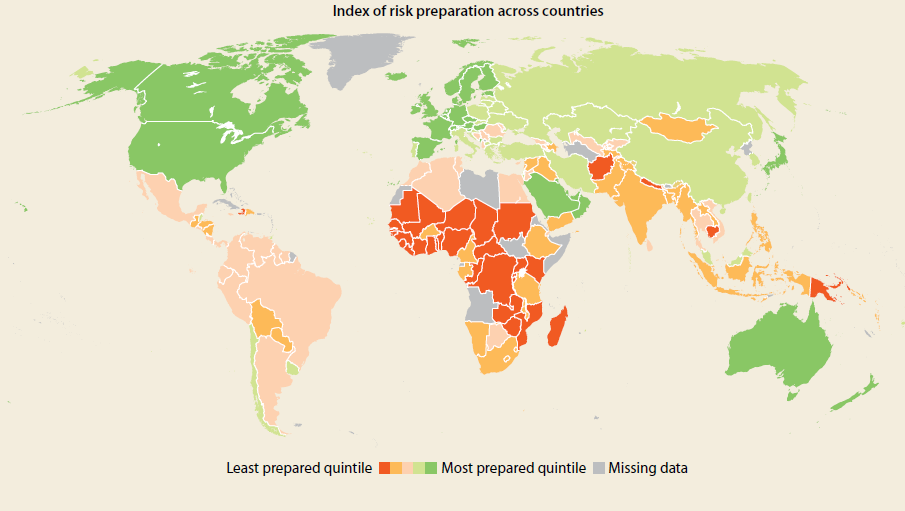
    The WDR looks at the risk preparedness of the world and presents a rather dismal picture for countries like India: Risk preparedness Its suggestions for better risk management and reduction of vulnerabilities too, are rather predictable: WDR Risk Management

    Not only does the role of the state remain paternalistic and minimal in this paradigm, it puts the onus on Civil Society and the Private Sector, yet again. Never mind that civil society in developing countries like India remains fragmented and powerless; and the private sector is not in the business of greater social responsibility. (See my earlier post on India an Aspirational Society? Not yet…)

    So we must look perforce at the UNDP’s suggestions… The entire approach of the Human Development Index differs from income-based indicators because it does not look at what people have or do not have; but what they can or cannot do. It looks at capabilities. The Human Development Index 2014 is mapped below: HDI Map

    The HDR 2014 introduces the concept of human vulnerability and how it erodes people’s capabilities and choices. Despite recent progress in poverty reduction, more than 2.2 billion people are either near or living in multidimensional poverty. The challenge is not just to keep vulnerable populations from falling back into extreme difficulty and deprivation; it is to create an enabling environment for their continuing human development advancement in the decades to come.

    The report feels that as globalization deepens, the policy space available to individual governments to enhance coping capabilities is becoming increasingly constrained. And “… unless more-vulnerable groups and individuals receive specific policy attention and dedicated resources across all dimensions of human development, they are in danger of being left behind, despite continuing human progress in most countries and communities.”

    The HDR 2014 reiterates that to tackle vulnerability, particularly among marginalized groups, and sustain recent achievements, reducing inequality in all dimensions of human development is crucial.

    The key messages of the HDR 2014 are:

    • Vulnerability threatens human development— and unless it is systematically addressed, by changing policies and social norms, progress will be neither equitable nor sustainable.
    • Life cycle vulnerability, structural vulnerability and insecure lives are fundamental sources of persistent deprivation—and must be addressed for human development to be secured and for progress to be sustained.
    • Policy responses to vulnerability should prevent threats, promote capabilities and protect people, especially the most vulnerable.
    • Everyone should have the right to education, health care and other basic services. Putting this principle of universalism into practice will require dedicated attention and resources, particularly for the poor and other vulnerable groups.

    Although the world has pulled up its socks and made remarkable strides in human development through the Millennium Development Goals (MDG), the agenda for future human development must necessarily focus on building up the resilience and coping mechanisms of the deprived.

    And this will require a common commitment—national and global—towards universal provision of social services, strengthening social protection and assuring full employment. Besides the universal provision of health and education, and strengthening social protection through unemployment benefits, protective labour laws, pensions, provident funds etc in both the formal and informal sector, national governments are also responsible for enhancing cohesion in society by building institutions of governance that are responsive and accountable, and can address and overcome the “… sense of injustice, vulnerability and exclusion that can fuel social discontent…”

    Is the Indian Government ready to take up this responsibility, or will it continue to march on its present path of greater privatisation, blatantly pro-rich policies, and confrontational and divisive politics? Only time will tell, but it is time India can ill afford and may put the country seriously behind in achieving the human development goals it set itself long, long ago when it set up its ‘tryst with destiny’ on 15 August 1947…