Development and Governance

Category: Published Article

  • Our cities cannot be run just as businesses

    Published in Times of India, Pune in October 2018. Lost and found. Posted here for you.

    Very simply, large cities cannot be run as businesses because urban governance is more than just government. It is government + people. And while a business can clearly classify all its stakeholders (share-holders, management, workers, suppliers and distributors), how does a city draw the lines – between the property owners and the squatters? Between the tax-payers and the untaxed? Between the rich and the poor? Between the empowered citizens and the illegal migrants? Between the natives and the newcomers? Between the producers and the consumers? Between the governed and the government? Between local demands and regional priorities? 

    Thus, while a business can be satisfied with mere efficiency, a city needs to look at effectiveness. There is little merit in computerized property tax bills, if the tax base has not been updated for the last twenty years, is there? Ditto with completing a pumping station on time, if the water delivery continues to be erratic and unreliable. City dwellers are more interested in the water in their taps than in the technology which gets it there.

    Similarly, a business doesn’t really care about participationequity or inclusion while an urban government must necessarily provide for it.

    Accountability in business is often merely a matter of financial accounting and compliance with various government norms – if they were accountable to society at large, we wouldn’t need a law of torts, or liability clauses in every business contract. A city on the other hand, is held to account in every election by its citizens, and there are a large number of mechanisms available today, for citizens to monitor and pull up their local governments.

    These thoughts have come to mind as the citizens’ reactions to initiatives like AMRUT and Smart Cities are turning sour. Because they were (mis)led into believing that a little tweaking of software here, and a beautified road there would make them instantly more mobile and therefore more productive.  That has not happened. Instead, the mistakes of the erstwhile government’s JNNURM have been repeated in duplicate, with private consultants running the show and the State and Local bodies who are expected to execute, complete and maintain the various infrastructure projects, sulking in the sidelines as before. 

    The fact that the JNNURM then, and AMRUT now, are deeply influenced by organizations like the ADB explains this ‘cities as businesses’ approach, where a Business Development Plan got renamed as a City Development Plan, and almost all reforms made mandatory, had a financial angle – and somewhere along the line we forgot what a mish-mash the urban scene in India is, with thousands of small market towns, ancient pilgrim towns, bustling cities, and dysfunctional megacities with huge informal sectors, all getting the same treatment.

    Perhaps India needs to look at its BRICS partners for a lesson or two… Brazil had a similar experience, as the mayor of Sao Paulo admitted in an interview in 2013: “The previous economic model was very private-sector orientated, so the reaction of the local community was very negative. We need to rebalance the equation so development is not seen as a threat,” he said. “People consider politicians as bad people so it is important to get them involved personally. If they feel a sense of ownership then they don’t complain.” 

    So, the Brazilians took a different approach when preparing for the Olympics in Rio. They broadened the framework of a Smart City to include every aspect of the citizens’ lives: public safety, social programmes, healthcare, education, transportation, energy, water and the environment. And the tools used were smarter buildings and urban planning, and better government and agency administration. Only such a holistic approach which balances the human development, infrastructure and environmental aspects, and formulated with the active participation of the residents of a city, can make a city SMART in the long run.

    But who will convince the many IT consultants looking enviously at Songdo in South Korea or Masdar in the UAE, and hoping to create something similar in India? They don’t seem to realize that Indians may not really want this kind of super-efficient but impersonal urban experience. Nor that only a minute percentage could eventually afford to live in such a place! 

    Related:
    Good Governance

  • How we could resolve our growing Garbage Problem

    Published in Times of India, Pune on 1 May 2019. Lost and found. Posted here for you.

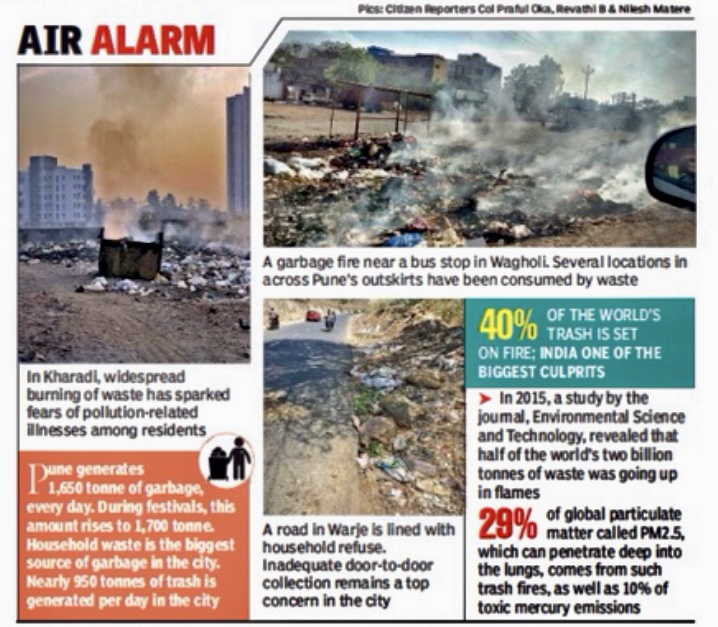
    According to the latest World Bank estimates, the world generates 2.01 billion tonnes of municipal solid waste annually, and global waste is expected to grow to 3.40 billion tonnes by 2050. Worldwide, waste generated per person per day averages 0.74 kilogrammes, but ranges widely, from 0.11 in the poorest countries, to 4.54 kilogrammes in high-income countries – which generate about 34% of the world’s waste, although they only account for 16% of the world’s population.

    Around the world, almost 40% of waste is disposed of in landfills. About 19% undergoes materials recovery through recycling and composting, and 11% is treated through modern incineration, while the remaining is openly dumped. More disturbing for the planet’s future is that at least 33% of the waste generated, is not managed in an environmentally safe manner.

    The most common form of waste collection across the world, is door-to-door. In this model, trucks or small vehicles are used to pick up garbage outside of households at a predetermined frequency. In certain localities, communities may dispose off waste in a central container or collection point where it is picked up by the municipality and transported to final disposal sites. In lower-middle-income countries like India, collection rates are about 51%. Improvement of waste collection services is a critical step to reduce pollution and thereby to improve human health and longevity.

    The city of Pune in Western India generates 1600 -1700 tons of solid waste per day, with 160 trucks deployed to collect waste door-to-door. In addition to household waste, the bulk generators are construction and demolition waste, garden waste, and biomedical waste. 

    Pune Region has set up 200 material recovery centres, to reduce, reuse, recycle and recover 170 to 180 MT of plastic waste it generates per day, but 10,000 MT of e-waste per annum continues to pose a challenge. The downside of a green and beautiful Pune, is of course the huge quantities of garden waste generated – 60 to 70 MT per day – and a separate collection system is in place for collecting the waste, shredding it and transporting it to a centralised processing system.

    Waste disposal practices vary significantly by income level and region, and as nations prosper economically, waste is managed using more sustainable methods. Construction and use of landfills, is commonly the first step toward sustainable waste management. 

    The darker side of waste disposal is that richer countries often export their electronic waste to poorer countries and this e-waste contains toxic substances such as lead, mercury, cadmium, arsenic and flame retardants. Once in a landfill, these toxic materials seep out into the environment, contaminating land, water and the air, and harming the local community. In addition, devices are often dismantled in primitive conditions, and those who work at these sites suffer frequent bouts of illness, and long-term diseases.

    The ship-breaking yard at Alang in Gujarat is notorious for the chronic illnesses of its workforce, and is sardonically referred to as ‘Alang se Palang’ – death bed. On-site medical facilities at such places are either absent or totally inadequate. 

    The South Asia Region, where India is the largest country, generated 334 million tonnes of waste in 2016, at an average of 0.52 kilogram per capita daily, with 57% characterized as food and green waste. About 44% of waste is collected in South Asia, mainly through door-to-door systems, and three-fourths of waste is currently openly dumped, although improvements to collection systems and construction of sanitary final disposal sites are under way.

    It is estimated that basic solid waste management systems covering collection, transport, and sanitary disposal in low-income countries cost $35 per tonne at a minimum, and often much more. Systems that include more advanced approaches for waste treatment and recycling, naturally cost more – from $50 to $100 per tonne. 

    Almost all low-income countries, and a limited number of high-income countries, such as the Republic of Korea and Japan, subsidize domestic waste management from national or local budgets. The PMC sets aside 20.5% of Annual Rateable Value of one’s property as Conservancy Tax, in your annual property tax bill. Given that the base figure itself is often a gross undervaluation and seldom updated and all property taxes are non-buoyant, this amount is totally inadequate to cover the ever-rising costs of labour, transport, treatment and disposal. As a result, the local government has to depend on State and Central Government subsidies, and as with any subsidized service, the customer is never satisfied with the quality and adequacy of service provided. 

    Although public-private partnerships could potentially reduce the burden on local government budgets, the experience of such services in Indian cities has not been very encouraging.

    Thus, we are basically left with three options and some tough choices, if our cities are not to disappear in mounds of garbage:

    • Increase Fee collection – a move sure to meet with great resistance
    • Strengthen household waste collection systems by active collaboration of both the waste generators (at the housing society level), and NGOs or Collectives of professional waste collectors 
    • Decentralize the waste collection, treatment and disposal systems to Ward level. 

    Costs of Corruption

  • India’s cities are running out of water

    Published in Times of India, Pune in August 2018. Lost and found. Posted here for you.

    It may seem a little perverse to speak of a looming water crisis in the midst of heavy monsoon downpours, but the sad truth is that India’s water consumption is projected to touch 843 billion cubic meters (bcm) by 2025 against the current availability of 695 bcm. By 2050, the country will need 1,180 bcm of water, and at the same time groundwater is being depleted at unsustainable rates. These are the conclusions of a new report by the Niti Aayog, and its author, Avinash Mishra, goes on: “We’re in dire straits and we need to change our approach to tackle the crisis, otherwise the situation will become so grim that the shortages will knock down our GDP by 6 percentage points in over a decade.” 

    The problems begin with sourcing of water for big cities like Pune, Mumbai and Delhi. At the institutional level, urban local bodies do not have control of the source which is either with the Irrigation Department or parastatals like the Maharashtra Jeevan Pradhikaran, whose first priority is, naturally, agriculture. 

    Secondly, the groundwater of a city remains largely in private hands and is tantamount to theft, as the aquifers supplying water to private wells are a common natural resource for everyone. The Groundwater Surveys and Development Agency (GSDA) of the State Government has identified 4,500 wells in Pune, but only 200 borewells are registered with the PMC. The result of this discrepancy has been the growth of a tanker mafia, with the average Punekar at its mercy for his/her daily water supply. Again, only 150 water tanker suppliers are registered with the Corporation, while hundreds more operate below the radar – often tapping the PMC’s own supplies illegally, to sell at a premium to the hapless citizen.  

    To make matters worse, an estimated 70% of India’s water is contaminated with arsenic, fluoride, salinity, nitrates, industrial effluents, organic and inorganic solid waste. Further, only one-third of its wastewater is currently treated, meaning raw sewage flows into rivers, lakes and ponds – and eventually gets into the groundwater. Meanwhile, unchecked extraction by farmers and wealthy residents has caused groundwater levels to plunge to record lows, and 21 major cities will run out of groundwater by 2020, affecting 100 million people. 

    But a municipal corporation’s woes are only just beginning – having made this low-quality water drinkable at great cost in terms of treating agents and electric power for purification, it must further spend crores to distribute the treated water through an antiquated distribution network, losing further through illegal tapping and leakages in the system (PMC estimates the loss to be as high as 40%). The heavy physical losses, low pressure and intermittent supplies, lead to back siphoning and further contamination of water in the distribution network. 

    Of course, the consumer at the other end is never happy with the result, curses the Corporation for not providing water 24×7, and will take out morchas to protest even a 10-rupee hike in his monthly water bill. Water, it is argued, is a ‘gift of nature’ and should be free. In reality, the heavy subsidy on drinking water is the main reason for the impoverishment of municipal bodies the world over. The Pune Municipal Corporation, for instance, spends Rs 11 to provide 1000 litres of water, and recovers only Rs 5 – a subsidy of Rs 6 for every thousand litres, multiplied a thousand-fold, takes a heavy toll of its inadequate resources.

    The financial situation of municipal bodies was not helped by replacing buoyant local taxes like Octroi with grants from the Central kitty, routed and delayed by the State Government. It is estimated that although the Centre will compensate cites like Mumbai on par with their last receipts when Octroi was replaced by GST, the loss to the Corporation in terms of buoyancy and immediacy built into Octroi, could mean anywhere between 10-15% loss of revenue. The problem arising from the complexity of the institutional arrangements, the machinations of the informal water sector, and the huge imbalance between revenue and expenditure, all make urban water supply a city manager’s worst nightmare. 

    However, all is not lost – municipal bodies themselves can do a lot to improve operational efficiency in the sourcing and supply of water to their citizens. An effective, professional and dedicated workforce will go a long way in preventing the massive losses through illegal connections and leakages. The PMC has a permanent maintenance staff of only 1800 and must depend upon private contractors whom it can neither monitor, control nor regulate. This adds greatly to the inefficiency of the city’s water supply as a whole.  

    Demand side management of costing and pricing of water also needs to be modernised, learning from the good practices across the world. Currently, Pune has only 23% of its (mostly commercial) connections metred, but the bulk of its non-commercial users pay a lump sum as part of their annual property tax – and this has no relation whatsoever, to the actual quantity of water used in a year by that property owner. As the poor are limited in the amount of water they can store, the greatest beneficiaries of the subsidy are the middle class, who may indiscriminately use the expensively provided water for drinking, bathing, flushing their toilets, or washing their cars. While a more discriminatory pricing system like the Increasing Block Tariff or IBT will ensure that the available subsidies go to the deserving, the conservation of water through rainwater harvesting and recycling schemes could also be incentivised through a system of rebates on tariff. 

  • How to create empowerd Local Governments in India

    Published in Times of India, Pune, on 12 January, 2019. Lost and found. Reposted here for you.

    It would be amusing, if it were not sad – but every time one reads citizens’ demands or looks at the pictures sent by citizen reporters, one sees a limited obsession with just four things: garbage, potholes, traffic congestion and overflowing drains. The typical reader of our English press seems to believe that the Municipal Corporation is simply a recalcitrant and lazy servant, who collects a salary (property tax) from us and does nothing in return. Moreover, that money is either lost to corruption or in subsidizing the parasitic poor because they are captive vote banks.

    Nothing could be further from the truth.

    We Indians seem to have ingrained in our minds the image of the municipality as cleaners, scavengers, firefighters, recorders of births and deaths, and providers of water for men and cattle going back to Kautilya’s Arthashastra. The image of municipal officer as regulator got further exaggerated by the ‘kotwal’ mentioned in the ‘Ain-e-Akbari’ and of course the British formalized this image of local government in the mother of all municipal laws – the Bombay Municipal Act of 1888.

    This history has led to 3 major misconceptions among the formal sector or white-collar citizens of Indian cities:

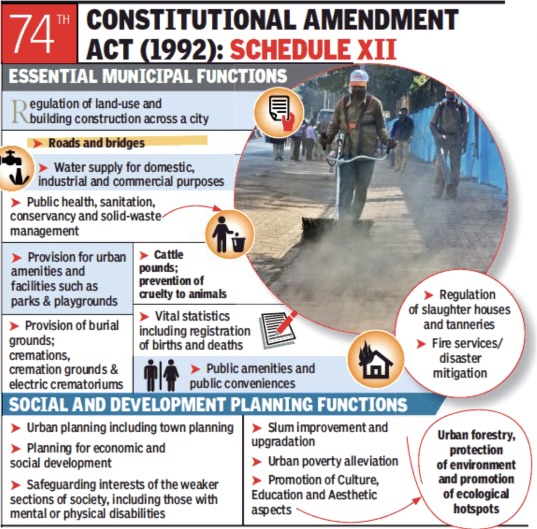
    Firstly, many believe that the Corporation merely performs a regulatory and conservancy role. This is not true. As seen from the box, the 74th Constitutional Amendment (1992) extended the role of urban local bodies to Development Planning, Poverty Alleviation and Social Sectors, under Schedule XII. But do we ever see our citizens mention the adequacy or inadequacy of a school or clinic in an area? Of course not. After all, the reader would never dream of sending her child to a municipal school, though her maid and driver will – because they have no choice! Never mind that the Pune Municipal Corporation (PMC) runs one of the poshest, entirely e-learning based schools in Sahakarnagar!

    Secondly, we the payers of Property Tax think we are bank rolling the Corporation’s annual budget. Far from it – believe me, the poorest woman is paying tax on every grain of salt she buys at the kiranawala (grocery) and part of it goes to the Municipal Corporation, earlier as Octroi, and now as the Goods and Services Tax (GST). And surprisingly, in the larger cities this indirect tax component is anything from 10-20% higher than the Property Tax collection.

    In the matter of subsidies, certain programmes for the poor are financed directly by Central Government or donor agencies, and others by State Government grants – not from local taxes. The most obvious local subsidy is on water supply (with the Pune Municipal Corporation spending Rs 11 and charging Rs 5 per 1,000 litres) but because of the indiscriminate pricing system, the biggest beneficiaries are not the hutment dwellers but people like us, with the luxury of huge storage tanks in our posh societies. 

    Thirdly, in the present dispensation, the local government is very limited in its activities and choices by various State Government departments and parastatals. For instance, it is the State Motor Vehicle Department which makes big money from an unbridled registration of new vehicles, but it falls to the Local Government to provide parking and roads. Similarly, while parastatals like MSRDC may construct flyovers, their subsequent upkeep is a burden on local government, even though they had no say in the quality of the original construction.

    Even the supply of water released to a city is controlled by the State Irrigation Department, and Corporations are charged commercial rates for power installations by Electricity Boards, even when used for street lighting in public spaces. Moreover, even the most senior level local employees of a Corporation ultimately report to Officers from a Central Service, posted by a State Government for a period of three years or less, with no historical memory of the city’s past, nor long term interest in the city’s future. So much for Local Government autonomy.

    Of course, we the citizens are not doing our bit to make the city liveable. With a middle class which considers individual mobility from the age of 16 a birth right, the congestion of private vehicles on our roads is inevitable – and when the pollution caused by these vehicles reaches Delhi levels, we will, of course, blame the municipal authorities. Ditto with garbage. How many housing societies start off with earnest vermicomposting, only to abandon it in a month, as all the composting worms have died because the wet garbage fed to them had bits of indigestible plastic?

    And how long do we care about maintaining our rain harvesting systems? Nobody knows how effective the collection is every monsoon, but we do crib about the PMC not giving us the 5% tax incentive in every Society AGM. In fact, all it takes is a visit to the nearest Cooperative Court to see the huge number of cases resulting from squabbling among members of Cooperative Housing Societies. This is the ONE chance at self-government we were given – and look at the mess.

    It is not this writer’s case that urban local bodies are the exemplars of every virtue. Only that instead of complaining about the shortcomings of the present system, we need to fight for systemic reforms – the Constitution of India provides us with the tools of transformation. All we need is to use our votes to push State Governments into taking our cities seriously and empowering our Local Governments and devolving the necessary resources and manpower to make them viable.

  • Development Plan remains only on Paper

    Published in Times of India, Pune in 2018, Lost and found. Reposted here for you

    We often read in papers about the DP or Development Plan of a city but barely 2% of us know what a DP is. The Development Plan of a city is its vision. It sets the agenda of what the city wants to do with itself in the next two to three decades. It takes into account the various public requirements of the city and reserves lands, whether public or private, for those purposes. The plan also proposes conservation and preservation of areas that have natural, historical or architectural importance.

    There are two instruments of a Development Plan – Zoning, and Reservation.

    ZONING is the means whereby compatible land uses are grouped together, and incompatible uses segregated – such as manufacturing industry and residential areas. RESERVATIONS for public purposes means reserving space for schools, colleges and educational institutions, medical and public health facilities, markets, social welfare and cultural institutions, theatres and places of public entertainment, religious buildings, government buildings, open spaces and playgrounds, natural reserves and sanctuaries, dairies, sites for public utilities such as water supply and sewerage, fire stations, other community sites, service industries and industrial estates. 

    The Development Plan also makes provisions for the city’s transportation and communication system such as roads, railways, airways and waterways, and parking facilities.

    In order to successfully implement the Development Plan, the municipal body needs to be empowered and this is done through Development Control Rules (DCR). These rules deal with the manner in which building permission can be obtained, the general building requirements, and aspects of structural safety and services. Access, layouts, open spaces, area and height limitations, lifts, fire protection, exits and parking requirements are all stipulated in the DCR. 

    Similarly structural design, quality of material and workmanship, and inspections during construction are also spelt out. The control of floor space use, tenement densities, and the Transfer of Development Rights are some of the most crucial issues dealt with by the rules. These rules are also framed by the planning authority and are sanctioned with suitable changes by the State Government.

    Although Development Planning is the path to city development all across the world, the sad fact is that in most Indian States, not even 10% of a DP gets actually implemented. This is because while the planning takes place at the State level, the implementation is left to the municipal body, which has limited resources to acquire land to implement various schemes. Local Governments are also preoccupied with meeting the daily needs of citizens and have neither the expertise nor the personnel for long term planning.

    As a result, people go in for new construction in areas where the Development Plan has promised infrastructure which may never materialize, and the beleaguered municipal body then has to ‘retrofit’ the area with these facilities at ten times the original cost. Perhaps greater involvement and participation of the affected citizens in the planning process, from the beginning, may be the best solution to the growing problems of underserviced urban sprawl in Indian cities.

    Related:

    Indian Urban Planning in Limbo

  • Why we have no real say over our Public Transport Systems

    Published in Times of India, Pune on 14 November 2019. Lost and found. Posted here for you.

    In an article published almost exactly a year ago, I had pointed out the huge impact of British colonial rule on Indian cities and towns – especially their love of low-form urbanization, which had proved to be utterly unsuitable and unsustainable for India’s teeming millions.

    By limiting the Floor Space Index (FSI – Built-up permitted wrt land available) in Indian cities, we have forced people to settle further and further from the city centre and their places of work, education and healthcare. Moreover, because our national priorities immediately after Independence were food security and rural distress, our cities never really had the resources to provide the public transport networks, which would make a sprawling city viable – as London is.

    Any latter-day attempts at densification fail because our existing infrastructure like water pipes, sewerage lines, power supply, simply cannot cope with high rises. Both the ill-conceived JNNURM and its progeny AMRUT and the SMART cities programme have found the limits of retrospective infrastructure upgradation, to our (the taxpayers’) immense cost.

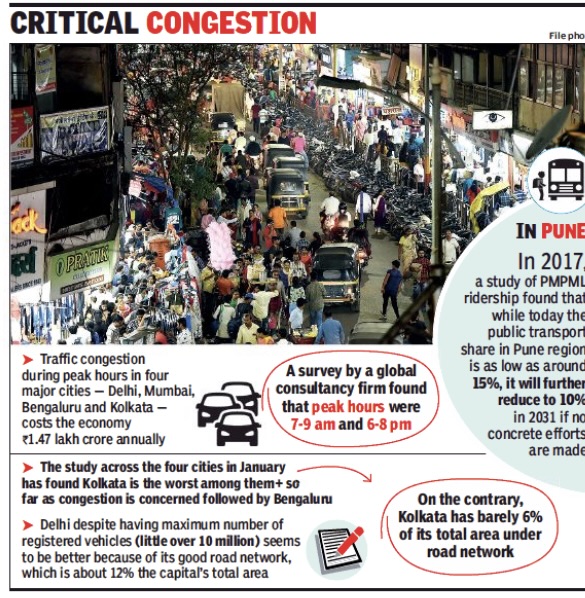
    The lack of adequate public transport has inevitably led to a growth in private vehicles, increasing pollution, and unsustainable traffic congestion on our roads. Further, retrofitting today’s cities with public transport networks like the metro are hugely expensive – not just in terms of the capital outlay but also the opportunity and social costs of the upheaval caused during construction, as Pune citizens are only too aware of.

    The sharp rise in the private ownership of motor vehicles and the multiple modes of private transport have made traffic management a nightmare, leading to an unacceptably high rate of serious and fatal road accidents. The upgradation of roads and networks is extremely expensive if done retrospectively and therefore the only way out is to integrate transport planning into urban planning at all levels – locality, city or region.

    Just look at the facts:

    • There are over 210 million vehicles on Indian roads and more than 90% are privately owned
    • Percentage of land under road for Class I Indian cities is 16% compared to 29% in USA, with 1.6 million km of non-rural roads
    • Inadequate road length leads to congestion, pollution, higher fuel consumption, with peak hour speeds limited to 5 – 10 km/h
    • Suspended Particulate Matter in India’s 3 largest cities is greater than 3 – 4 times WHO maximum acceptable level
    • At the ground level we find that manufacturers use the same truck engine and chassis for all buses, and therefore, Indian cities have few, if any, buses especially designed for intra-city travel, further adding to the inefficiency of the system.

    Part of the reason for the growing crisis has been that urban transport management in India is a case of all responsibility and no authority for local governments. For instance, it is the State Government which formulates Development Plans which lead to urban sprawl, but it is the local body which must provide subsidized public transport. Yet again, registration of new vehicles being a very lucrative source of income for State Governments, there is no incentive to limit their number, and it is left to local bodies to provide parking and road space for them.

    When it comes to the building of new expressways and flyovers, the contracts are given either to large private firms or to parastatals like MSRDC, NHAI or BMRDA. It is noteworthy that ALL parastatals are accountable only to their respective State or Central Government, and not the local authorities.

    The same is the case with rail-based transport systems like metros, which depend totally for expertise and execution on the Indian Railways and its subsidiaries, which are under the Central Government, and are seldom geared to handle local issues and concerns. Once these large projects are handed over, their maintenance and upkeep become a further responsibility for municipal bodies.

    So, like everything else in India, we need a paradigm shift in our patterns of urban planning and urban governance – and that dear reader is unlikely in the near future…

    Related:

    Deteriorating Services and Infrastructure in India

  • City tops Good Governance List, but here’s the reality

    Published in Times of India, Pune on 6 June 2018. Lost and found. Posted here for you.

    Citizens of Pune were quite pleased when they read a survey which made Pune the best governed city in India. Not so well known is the fact that it scored merely 5.1 out of 10, and all other Indian cities were below this midpoint. In comparison, London and New York scored 8.8!

    Parameters such as urban capacities and resources, empowered and legitimate political representation, transparency, accountability, participation, urban planning and design were used to give marks.

    Governance is one of those concepts that we all feel we understand. We also know that it is not merely ‘government’ but something more… We know that governance stretches beyond the political and bureaucratic framework and out into the various stakeholder groups in a city

    Therefore, governance = government + citizen.

    If this is the case, then the parameters of ‘good’ governance will also come in two categories: the first to measure the efficiency and effectiveness of the government machinery, and the second to measure how responsive, transparent, equitable and inclusive the citizen interface is.

    Governance at all levels in a democracy is also expected to be participatory and accountable and to work on the basis of consensus orientation and the rule of law. These are the very criteria of good urban governance laid out by various UN bodies, and used in ranking cities across the world.

    But is there any sense in comparing chalk and cheese?

    Indian cities are hamstrung by laws which greatly curtail their autonomy and State Governments are in no hurry to devolve powers and resources to the local level despite 26 years of the 74 Constitutional Amendment. Our mayors continue to play a ceremonial role while real power vests almost exclusively with the Standing Committee and the bureaucracy. Compare this to western mayors who even control the local police, public health and education.

    In other words, there isn’t much ‘governance’ a typical municipal body can deliver in India. No wonder then that the public perception of a local government is limited to water, sewerage, garbage and roads. Or as someone rather rudely expressed it: gutter, water, metre.

    Even within this limited ambit, Pune could score higher than other cities just by enhancing its use of Information Technology in key administrative areas like granting building permissions, monitoring projects, redressing complaints and managing its finances. PMC has also undertaken several initiatives like municipal bonds for water supply schemes, supported by an elaborate techno-financial-legal policy framework, and this too has enhanced its ranking in terms of greater efficiency in governance.

    While the efficiency of Urban Local Bodies has grown significantly in the last 10 years, the effectiveness of their actions is questionable. For example, we may be able to pay our Property Tax online in a jiffy, but is it possible to ever get a disputed assessment of your property tax looked at? Such efficiency without effectiveness is meaningless. The same is the case with access legislation, meant to enhance transparency. When the RTI became law in 2005, it met with great resistance in public bodies, but gradually, most government organisations have mastered the art of giving only the information asked for, often piecemeal and irrelevant, and good luck to the questioner if he wants to make any sense of it!

    Most importantly, good governance should be both inclusive and equitable – and therein lies the rub. Just look at the social reality in India: With a mere 8% of India’s population holding a college degree, the knowledge divide in the country is enormous. And if you extend this further, it means that not only the entire senior bureaucracy and judiciary but an increasing number of Elected Representatives and almost all corporate businesses, mass media, NGOs and civil society groups are drawn from this 8%. As they between them take over 90% of the actions and decisions that profoundly affect the lives of the remaining 92%, how inclusive, equitable and participatory has our democracy really been?

    Therefore, the inescapable conclusion is that merely making the government machinery more efficient will not hand us ‘good governance’ on a platter. It will have to flow from the ‘governed’ themselves, and how far they are enabled and empowered to expect and accept good governance…

    Related:

    Urbanization Trends in India

  • Why we must turn Regional Planning on its head, now

    Published in Times of India, Pune on 28 March 2019. Lost and found. Posted here for you.

    Thanks to the efforts of scholars like Dr Tharoor, we are becoming aware of the ravages of colonial rule in India. The bottom line is that all colonization throughout human history has had a dual commercial motive: firstly, through unjust taxation of a subjugated population, and secondly, through the stripping of a country’s natural and human resources.

    As these resources had to be transported back to the mother country, it is only natural that post-colonial cities were essentially gateways for the export of raw materials and import of finished goods – whether as ports on the coast, or railheads inland. In India, the British extracted our resources in the form of cotton, indigo, forest produce, jute, tea, grains and minerals. Hence the rapid development of Chennai, Mumbai and Kolkata. Their only interest in the hinterland was in extracting all they could without spending anything on infrastructure or services in rural areas. Thus, poverty became endemic in the Indian countryside, and today’s farmer distress has deep roots in the great famines of the 1930s and 40s.

    Now, 70 years after Independence, every Government has tried to address these issues of rural neglect in a piecemeal fashion – sector by sector e.g. rural roads, rural housing, rural sanitation, rural health, but the results have not matched the resources poured in.

    This is where Regional Planning comes in.

    It is not something new, but unfortunately, Indian Regional Planning has traditionally been left to urban planners and they have never been able to rise beyond the standard British formula of land use, transport and communication routes, water supply and drainage, preservation of areas, and reservations of sites for new towns.

    It’s almost as if the big city is endowing its poor rural sisters with that ultimate gift of modernity – more urbanization. Like creating 5-star Industrial Townships like Ranjangaon in the heart of good agricultural territory! In fact, with the worldwide decline in heavy manufacturing, the Special Economic Zones (SEZs) of yesteryear have quietly fizzled out, with the only beneficiaries being the business houses who promoted them, who are now the owners of vast swathes of rural and tribal lands, generously ‘acquired’ for them by Government agencies themselves.

    As currently understood, a major aspect of the Regional Plan is metropolitan decentralisation and the redistribution of the population, city functions and activities of the Mother City. In other words, it is a classic case of ‘top-down’ planning doomed to failure in a rapidly changing globalised world.

    However, as the headline suggests, maybe it is time to turn Regional Planning on its head.

    So, let’s begin with the villages. India, because of its density of population has always had market towns at the hub of a circle of villages – going back to Vedic times. These market towns have in most cases been reduced to overgrown villages or small municipalities or census towns. So why not concentrate on their revival first? Let us rebuild the spokes of the wheel of which each market town is a hub through good all-weather roads, telecommunication links, broadband connectivity, adequate water and electricity.

    The next layer can be developing the social infrastructure like schools, polytechnics, colleges, hospitals, mother and child care centres, and financial infrastructure like banks and business centres. The only industry to be allowed in these hub towns would be agroindustries and food processing, and modern polluting industries would be strictly kept out.

    To enable these hubs to function properly, the full allocation of education, health, irrigation and forestry funds should be delegated to the local authority, as has been done successfully in Kerala. The local economic development and environmental and water management will also be the responsibility of the local body. As the area becomes more productive, there should be financial incentives for the local body like higher allocation from GST collected.

    In this way, we will be tertiarizing the rural economy, creating non-agricultural jobs in small towns, using local resources in a sustainable manner, and reducing migration to cities in search of higher education and good health care. So, if we adopt this approach, we end up with multi-nodal development and these nodes or hubs can all be networked through transport and communication links.

    As we approach the medium range towns, the Regional Plan must concentrate on upgrading basic municipal services and infrastructure, which will make these towns more liveable and discourage migration to the big city. These medium towns must also provide the tertiary level of services like Universities and Multispeciality Hospitals. Such towns should focus on developing local entrepreneurs by providing affordable industrial galas, shopping malls, and reliable power, water, transport and communication. Such towns can also become cargo hubs for produce from the market towns, with the emphasis being on developing rail and water transport rather than 6-lane highways which play havoc with the environment.

    Coming to the Mother City, the emphasis must be on efficient public transport, power, water supply and environmental management with good connectivity to outlying areas, the rest of the country and abroad. With these facilities in place, the productivity of a city is bound to go up and this growth must be encouraged through higher allocations from taxes earned, more autonomy and less interference by State Governments in local matters. This will make local governments more responsive and accountable to their citizens.

    Finally, the already existing forest and conservation laws need to be stringently adhered to, so that the rights of forest dwellers and the legacy of future generations are preserved.

    In the present bleak scenario of polluted cities, urban sprawl, dwindling water sources, depleted forests and land hoarding, we all need to think outside the box, and plan for our country’s future.

    Related

    Indian Urban Planning in limbo

    Read more: Why we must turn Regional Planning on its head, now
  • When is a city truly ‘prosperous’?

    Published in Times of India, Pune on 21 December 2018. Lost and found. Posted here for you.

    A few years back, a visiting Minister of State who was in town to flag off the Marathon had commented that Pune appeared to be a ‘prosperous’ city. And I don’t think he was off the mark there. If you have lived here all your life you pick up the Pune zing of being ‘up and about’ and going about your business, with a goal and a schedule – whether the executive in his chauffeur-driven car, or the ‘bai’ (domestic) whizzing around her 6-7 jobs on her trusty two-wheeler.

    If we are to go only by ‘economic’ prosperity, then according to GDP, Pune takes seventh place behind Mumbai, Delhi, Kolkata, Bengaluru, Chennai, and Hyderabad. Which is not bad at all, because it is not a State Capital like the others.  

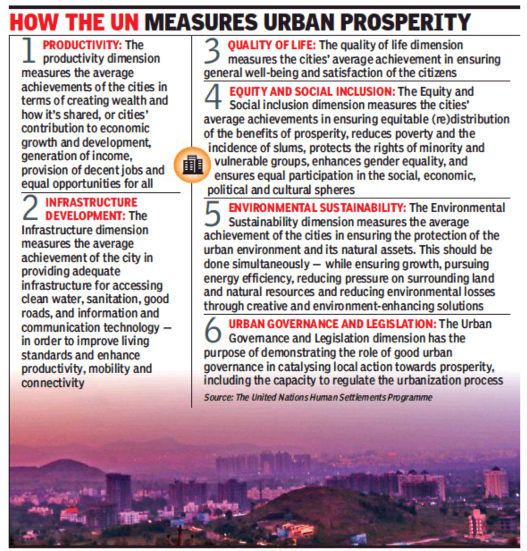
    So, what defines a city as prosperous, if not just GDP? According to the UN-Habitat:

    • First, a prosperous city contributes to economic growth through productivity, generating the income and employment that afford adequate living standards for the whole population.
    • Second, a prosperous city deploys the infrastructure, physical assets and amenities required to sustain both the population and the economy.
    • Third, prosperous cities provide social services like education, health, recreation, safety and security, required for improved living standards, enabling the population to maximize individual potential and lead fulfilling lives.
    • Fourth, a city is only prosperous to the extent that poverty and inequalities are minimal. No city can claim to be prosperous when large segments of the population live in abject poverty and deprivation (Mumbai, Kolkata please note!) This involves reducing the incidence of slums, homelessness and new forms of poverty.
    • Fifth, ensuring that the creation and (re)distribution of the benefits of prosperity do not destroy or degrade the environment; instead, the city’s natural assets are preserved for the sake of sustainable urbanization.

    So, if Pune is to appear prosperous to outsiders and host a happy and contented population, it needs to look at the pressure points, which need immediate attention, correction and upgradation.

    Pune and its satellite cities of Pimpri-Chinchwad, were blessed with excellent weather, an educated workforce and proximity to Mumbai and remain one of the most important civilian manufacturing hubs in India. As the city with the most prestigious defence and scientific establishments too, Pune offers the best work opportunities in both the public and private sectors and its citizens have prided themselves on a culture of high productivity. This culture made an easy transition to the burgeoning IT sector, as many majors set up hubs at the various software technology parks.

    However, the city’s high productivity is under threat from FAILING INFRASTRUCTURE – be it the unreliable power supply, the mediocre telecom networks and connectivity, or the lack of efficient public transport which cost millions of workhours lost in traffic jams.

    As regards sustaining everyday life, Pune is becoming more and more stressed in its WATER SUPPLY each passing year – chiefly due to a cumbersome sourcing mechanism, outdated treatment and distribution networks, and low capacity staff at the municipal level. The situation is made worse by an unregulated water tanker mafia and corruption which allows large-scale pilferage and diversion in the system.

    In the area of social services like health, sanitation and education, Pune is relatively better off but the chief hurdle is the MULTIPLICITY OF AGENCIES in these sectors – local, State and Central Government. Perhaps Maharashtra needs to learn from Kerala which thoroughly decentralized education and health to the local level and achieved not just 100% literacy and universal health coverage, but a Human Development Index rank on par with developed countries.

    As regards inequality and slums, Pune has long been an example to other cities with respect to providing basic services, high quality sanitation and total coverage in immunization of children in slums. Perhaps the need of the hour in Pune and elsewhere, is an INTEGRATED APPROACH to upgradation of slum housing (with the full participation of the residents) with new development control rules, emphasis on using recycled and indigenous materials, and providing public spaces for recreation and commercial activity in each settlement.

    Coming to the environment, Pune is again blessed with a very SAVVY POPULACE and an active (or as the bureaucracy feels, overactive) environment lobby – the ecologically sound Ganpati Visarjan (Immersion Ritual at the end of the Ganesh festival) is an example of the Punekar’s mature awareness of his/her responsibilities.

    What most citizens may not know is that Pune (along with other municipal corporations in Maharashtra) prepares an excellent annual ENVIRONMENT STATUS REPORT covering everything from air and water pollution, energy use, carbon footprints, forestation, housing to transport and waste management. The reports lay down the pressure points for the city and outline corrective measures. Sadly however, these insights are seldom if ever incorporated in either the city’s Development Plan, or the annual budget and the few incentive schemes offered to citizens – like a discount in Property Tax for installing rainwater harvesting systems – vanish in a haze of bureaucratic inertia.

    So, if an Indian city like Pune truly wants to remain a prosperous city, the State and Centre need to devolve resources and develop capacities at the local level, and the local leadership need to galvanize their workforce, exercise tighter regulation to curb petty corruption, and plan for a sustainable future for the city, based on sound scientific principles, rooted in a fast changing, environmentally challenged world.

    Related:

    Quality of Life in an Indian Context

  • Smart use of Unutilized Land can boost Affordable Housing

    Published in Times of India Pune on 12 September 2019. Lost and found. Posted here for you.

    This article was prompted by a question: Will it ever be possible to get a flat for Rs 45,00,000 in the prime areas of Pune? And my immediate response was No… and then, why not? Let me explain.

    Those of the Doordarshan (Public Service Television) generation who grew up in Pune Cantonment still remember how all our friends lived within walking distance in the streets flanking Main Street, how we walked to an excellent school and got a great education without breaking the bank, and our older siblings cycled to college – and the few posh ones in school lived in Koregaon Park, beyond which was the wilderness.

    Crossing the river to Fergusson College one discovered an almost identical habitation pattern around the peths (bazars) and wadas (family compounds) off Laxmi Road, and the better off lived in the bungalows around Deccan Gymkhana.

    Then life happened. We moved on to Murdoch’s Star TV and the new generation moved out to Silicon Valley and Dubai, Canada and Australia. But they did come back and invest in a flat back home, and while Saifee Street moved en masse to Fakhri Hills, the ‘city-walas’ moved to Kothrud.

    Meantime, there was a concerted effort by retirees to make a home in Pune and while the suburbs of Aundh and Pashan attracted those from the many educational and scientific institutes in the area, Salunke Vihar and NIBM grew into attractive localities for the ex-Army types where even today, you only hear chaste Kendriya Vidyalaya (Central School) Hindi spoken. The aspirational and business classes meanwhile, extended beyond the much-coveted Bund-KP area to Kalyani Nagar, and the nouveau riche IT class sought its own enclaves everywhere from Kharadi to Hinjewadi.

    Things were booming and Pune was growing until the bubble burst around 2007-2008. Pune’s real estate sector had priced itself out of the market – they didn’t realize that even the best amenities will not attract buyers on the outskirts because people would rather have good schools and hospitals in the neighbourhood, rather than posh gyms and swimming pools in increasingly unaffordable gated societies, stuck in the middle of nowhere. The developers had twisted the screws by reducing the carpet areas of flats while charging exorbitant rates for super built up premises, with large terraces being sold at the same price as covered areas. Finally, the worm turned and people stopped buying. Period.

    In development parlance all social sectors like education, health and housing are governed by the 3 As: Availability, Accessibility and Affordability.

    So, when we talk of urban housing, we essentially talk about the availability, accessibility and affordability of land in a city. For equity and inclusion, a city needs to make available an adequate mixed-income housing stock, which is equally accessible and affordable to the rich and the poor alike. And when a city achieves that, it prospers like Singapore – the city with the best Quality of Life in Asia.

    Coming to the case of Pune, we find that land is indeed available, but it is not accessible to the housing sector because of colonial hangovers, retrograde laws and outdated provisions – and so Punekars do not have affordable housing. We refer of course to the vast swathes of unutilized defence land in the Cantonment areas, and large tracts of government-acquired land tied up in defunct factories in the MIDC Pimpri-Chinchwad area.

    If the most high-security defence establishments in the Pashan Area can be entrusted to the jurisdiction of the Pune Municipal Corporation, there is really no need for a separate and impoverished Cantonment Board to look after a racecourse, a few schools, a fish market, some shops and restaurants and heaps of crumbling old bungalows.

    There is a simple solution: Why not consolidate all this unused land under a single government authority on the lines of the National Housing Board of Singapore? This way, we can plan affordable housing in both parts of Pune and ensure that the infrastructure provided is clean, green and state-of-the-art.

    As these would be greenfield rather than redevelopment projects, they can be planned de novo as high-rise structures with ample scope to compensate both the defence ministry and private industrialists, with housing enclaves for their personnel, or for commercial sale. This can be termed the Pune Model and applied gradually to other Indian cities where land is trapped in large government or private holdings.

    It is very essential that the Housing Board remain a Government entity, because all public-private enterprises in India tend to be dogged by cost overruns, NPAs and manipulation.

    Sadly, one doubts that this will happen – because as the supply rises to match demand, house prices will fall, and the screws will be tightened on the government by both the real estate speculators and the corporates likely to lose their massive land holdings.

    So no, it doesn’t seem likely that you will get a flat for under Rs 4.5 million in Pune any time soon…

    Related:

    Cities without Shelter