Development and Governance

Author: NASRIN SIDDIQUI

  • Happy Republic Day India – yet again…

    Happy Republic Day India. Remember it not as yet another opportunity for Amazon and Flipkart to slash their prices, but as the day when ‘We the People’ defined our very humanity and quintessential Indianness – by giving ourselves a sublimely inclusive Constitution.

    Exactly a year ago, I had explored just how far we had strayed from the spirit of the Preamble to the Constitution. This year I would like to remind Indians of their Fundamental Rights, which need to be fought over, cherished and nurtured, lest we lose them forever.

    The Right to Equality is one of the chief guarantees of the Constitution. It is embodied in Articles 14–16, which collectively encompass the general principles of equality before law and non-discrimination, and Articles 17–18 which collectively further the philosophy of social equality. And yet, inequality in India has never been higher as these figures from the World Economic Forum indicate:
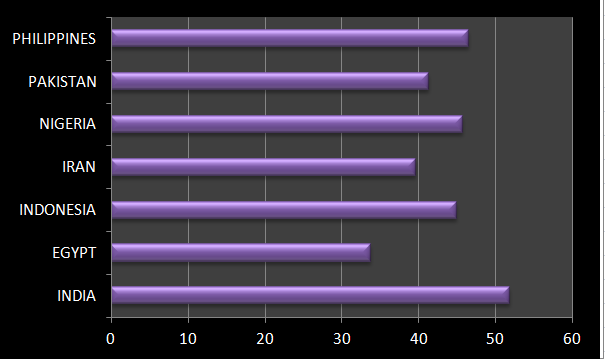
    GINI COEFFICIENT FROM WEF DATA

    (Gini Coefficient as percentage, an indicator of income inequality. The higher it is, the greater the inequality)

    Right to Freedom: Article 19 guarantees six freedoms in the nature of civil rights, which are available only to citizens of India. These include the freedom of speech and expression, freedom of assembly without arms, freedom of association, freedom of movement throughout the territory of India, freedom to reside and settle in any part of the country of India and the freedom to practise any profession. And yet, Indians from one part of the country continue to be branded as outsiders in other parts of their own motherland…

    The Right against Exploitation, contained in Articles 23–24, lays down certain provisions to prevent exploitation of the weaker sections of the society by individuals or the State. Article 23 provides prohibits human trafficking, making it an offence punishable by law, and also prohibits forced labour or any act of compelling a person to work without wages where he was legally entitled not to work or to receive remuneration for it. Yet again, per WEF figures, India lags far behind when it comes to curbing forced and child labour, and providing productive work and adequate compensation to its people:
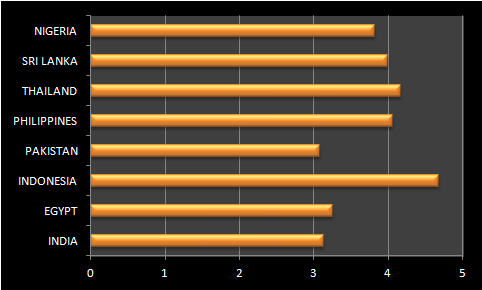
    EMPLOYMENT AND WAGE INDICATORS FROM WEF DATA

    (Performance rated on a scale of 1-7, with India doing marginally better than only Pakistan)

    The Right to Freedom of Religion, covered in Articles 25–28, provides religious freedom to all citizens and ensures a secular state in India. According to the Constitution, there is no official State religion, and the State is required to treat all religions impartially and neutrally. Article 25 guarantees all persons the freedom of conscience and the right to preach, practice and propagate any religion of their choice. How sorry then to find that the Government’s own National Crime Records Bureau (NCRB) gives us a League Table of the worst communal incidents in Indian States and the death toll in such incidents for 2014-15:

    COMMUNAL RIOTS 2014-15 FROM NRCB

    The Cultural and Educational Rights, given in Articles 29 and 30, are measures to protect the rights of cultural, linguistic and religious minorities, by enabling them to conserve their heritage and protecting them against discrimination. The jury is still out on a number of such cultural practices considered inhuman or inhumane, while cultural issues continue to be politicised by all concerned – whether it is jallikattu or the beef ban.

    So, on this day, let us all reinforce our faith in the Constitution as we “… continue to complain; to demand; to rebel…” as urged by the President of India in his speech today.

    Jai Hind!


  • Child Labour and Youth Unemployment

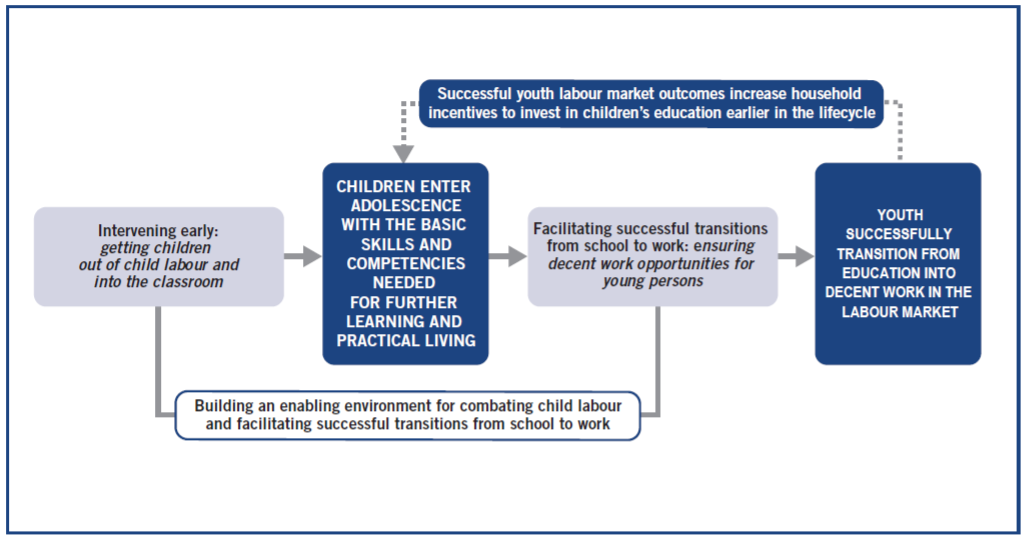
    The International Labour Organization in its World Report on Child Labour 2015, raises a very important issue: the incidence of child labour in a country, and its effect on youth employment in the long term. As the report points out: Some 168 million children remain trapped in child labour while at the same time there are 75 million young persons aged 15 to 24 years who are unemployed and many more who must settle for jobs that fail to offer a fair income, security in the workplace, social protection or other basic decent work attributes.

    Which means that all those trapped in child labour and denied education because of endemic poverty and inadequate social security mechanisms, are unlikely to find decent work opportunities as they come of age and join the work force, and will sink further into poverty, and their progeny will again be forced into child labour … and so the downslide continues, generation after generation.

    The Report provides a framework for addressing the twin challenges of eradicating child labour and providing opportunities for decent work to the youth in any country

    ILO World Report on Child Labour 2015

    It is hoped that any national government could meet these twin challenges:

    By enacting tough legislation so that the disincentives for employing child labour far outweigh any economic advantages

    By putting in place support mechanisms so that poor households can afford to send their children to school rather than to the job market

    By strengthening the school system, especially in rural and tribal areas, with special emphasis on girls’ schools

    By providing much greater access to vocational education after high school

    By encouraging youth enterprise through easy access to credit from formal sector banks, which would also help in the tertiarisation of the rural economy

    By encouraging public and private industry to run youth and apprenticeship programmes, by offering tax benefits and as part of their CSR activity

    Sadly, none of these issues appear to be of immediate concern to the Indian Government, more interested in impressing the Indian diaspora than addressing domestic issues which have long-term deleterious consequences on Indian society and economy.

    Some facts about India :

    One in every 11 children in India is working, and more than half of the 5.5 million working children in India are concentrated in five states—Bihar, Uttar Pradesh, Rajasthan, Madhya Pradesh and Maharashtra. The first 4 States are considered ‘BIMARU’ or sick and this statistic is no surprise, but the presence of Maharashtra in this list confirms the assertion of activists that the urban informal sector is perhaps the worst exploiter of children.

    Over 80% of working children are based in rural areas and three out of four of these children work in agriculture, as cultivators or in household industries, most of which are home-based employments. Which means that they will continue in this wretched cycle, thanks to the recent amendments in the relevant Act, which legitimises child labour in family enterprises which are deemed ‘non-hazardous’, such as agriculture and handicrafts.

    While the incidence of hazardous work among adolescents is highest in Nicaragua, the number of adolescents in hazardous work is greatest in India (2.4 million) – and one would think that any Government coming to power in the name of development would squirm at this dubious honour, instead of coining a new slogan every day, and washing its hands of the bottom 30% of the population in every sense…

    And sure enough, continuing child labour does impact the long-term youth employment prospects in India, as the Report predicts. Recent studies confirm that because of poverty and poor human capital endowment, Indian youth are forced to participate in the labour market at an earlier stage than in other countries. They cannot afford to remain unemployed for long and end up in the informal sector, in low productivity and badly paid activities. Most men end up in casual wage employment, while women may become self-employed or work in agriculture. Training and skill-building at this stage may be a case of too little too late, if the targeted youth were child labourers and missed out on a solid foundation of primary and secondary education.


    At the risk of sounding extremely cynical, may one say that the only beneficiaries of all the skill building programmes recently announced are likely to be the middle classes (yet again!) and the politicians who will be granted licences to open more and more ‘technical institutions’ on prime urban land… So much for ‘skill India’…

  • Whither Indian Healthcare?

    Spending most of December in hospital, fighting a life-threatening disorder like GBS and shedding 11 litres of one’s precious plasma, does tend to focus one’s mind on the necessities of life we so often take for granted – like health care. With 16 days in a private room in a private hospital (including 3 awful nights in intensive care) I was presented with a bill which was over 31 times the average monthly income in India in 2015. Lucky me – I recovered 77% of this from my (private) insurer, but the balance was still a bit of a pinch. But life and health being too precious to put a monetary value on… blah… blah…

    So what happens to an average Indian when faced with a health crisis like this? Good question.

    Healthcare in India is literally on the horns of a dilemma: with 80% of the health infrastructure in the private sector, the medical insurance coverage is a mere 5%, limited almost entirely to the urban, educated, middle classes in India’s larger cities. So where shall the twain meet? In the last few years, the Government has made it binding upon private hospitals to reserve a certain number of berths for low-income patients, whose treatment will be free and is often subsidized by government. Moreover, subscribers to group insurance schemes like Central Government employees can now be treated at the best private hospitals, unlike before, when they could only go to government-owned facilities.

    But this coverage is still extremely inadequate, and likely to remain so, as India still spends only around 4% of its national GDP on healthcare. With the growth of medical ‘tourism’ and the proliferation of large specialty hospitals in the metros, the gap between rural and urban healthcare increases day by day, and this deprivation in rural areas is very debilitating for India, as two-thirds of its population still lives in rural areas. Moreover, even in urban areas with the best medical facilities, the high out-of-pocket expenditure can cause severe hardship especially among the working classes, where an illness within the family can impoverish an entire household, and send it crashing below the poverty line.

    The public sector is handicapped by poor infrastructure in rural areas, unwillingness of trained medical staff to serve in villages, absence of standardized diagnostic procedures and information systems, and an underdeveloped medical devices sector. There are various panaceas on offer, depending on your ideological stance: the free market enthusiasts see immense opportunities for the private sector in healthcare in everything from insurance, to pharmaceuticals to diagnostics. Those with a more pro-poor bias call for much greater government investment and regulation, so that private insurance companies do not set the agenda for India’s healthcare, as they already do in the USA.


    I personally believe that the Nehruvian mix of a public sector conscience and private sector expertise may be the honourable middle road towards a more just and equitable healthcare system in India – and out of its present quagmire. A happier and healthier 2016 everyone!


  • Rethinking India’s Urban Agenda

    Very early on in my career, from the vantage point of an apex training Academy, I formulated Nasrin’s First Law: A cliché is the shortest distance between two bureaucrats. And the clichés abound in every government policy paper, programme, and proposal.

    The latest example is from a newspaper report on “India’s concerns about HABITAT III” where the country paper on India is rife with the usual platitudes: inclusive, sustainable, decentralized urban governance with an appropriate devolution of powers and resources to the local level. Never mind that the informal-formal divide in Indian metros grows day by day; India has some of the world’s most polluted cities; and the 74th Amendment on decentralization and devolution has remained on paper since 1992. So much for inclusion, sustainability and decentralization…

    One of the reasons for this myopia about India’s urban future, is the absolute monopoly of the urban discourse held by an inbred group of academics, retired bureaucrats, planners and NGOs. They never tire of hearing each other mouth the same clichés at seminars held in sylvan 5-star surroundings, away from the smell and noise of the urban reality, and are forever jetting around the world to ‘study’ innovations like Participatory Budgeting in Brazil, only to return and declare: this would never work in India…

    The present Indian Government, like the last one, apparently believes in investing only in infrastructure in the metros, with scant regard for education, health, or the environment of Indian cities, hoping that they will one day become that beloved cliché the ‘generators of economic momentum’  – at last allowing the long emerging Indian economy, to well, emerge… But a couple of reality checks:

    By 2030, it is estimated that there will be 1,350 cities > 5,00,000 population; with the world’s 7 largest cities in Asia and no European city among the 30 largest:

    Urban Didtribution 2030

    However, the Indian megacities highlighted above, will be nowhere on the global economic landscape, as estimated by the World Economic Forum:

    Cities contributing most to global GDP

    The HABITAT III to be held next year in Ecuador, will set the agenda for the world’s urban settlements for the next 20 years, and there is great excitement in development circles at the prospect of combining climate, sustainable development and urbanization in a unified time frame, with a lucky concatenation of the Kyoto Protocol, SDGs, and Habitat III.

    Unlike its two predecessors, Habitat III is expected to project intermediary and small towns as the world’s urban future, as never before; and India  with almost 58% of its urban population living in such towns is well suited to make a paradigm shift in its approach to urbanization.

    All that is needed is to get (wannabe-Chinese) Indians away from their obsession with infrastructure, metropolitanization, and crass industrialization, rescue the urban discourse from the Delhi ‘urban mafia’, and put our faith back in developing small towns as agriculture hubs to tertiarize the rural economy, reduce endemic poverty, stem migration to cities, and address the root causes of India’s growing agrarian crisis.

    We need to rethink Indian urbanization from a purely Indian perspective, and leave the clichés to the bureaucrats…

  • Education in Asia and the Pacific

    The Asian Development Bank in its flagship annual report on Key Indicators for Asia and the Pacific 2015, includes a special chapter on education in the region. The key findings in this chapter are:

    • Developing Asia has made large strides in expanding access to education. Average years of schooling nearly doubled from 3.9 in 1970 to 8.0 in 2010
    • Skills remain weak in many parts of the region, due to gaps in both the quantity and quality of education provided
    • A failure to raise the quality of education will have consequences for growth prospects
    • Public educational expenditures are necessary, but not sufficient to improve learning outcomes
    • Families and firms also need to be involved in the region’s skill development agenda.

    Pretty obvious you would think, but having elucidated these issues, the report cannot really hide its private sector bias and meanders into all sorts of contradictions. For instance, stressing the importance of motivation among teachers, it goes on to suggest filling the vacancies on contract. Where in the world have you heard of temporary workers – insecure, underpaid and overworked – remaining truly motivated about their jobs, which never ever develop into a vocation?

    Similar ambiguities mark the redesign of school and college curricula – are they to be redesigned to empower the individual to play a more responsible role as a citizen, or to produce automatons for the assembly lines of private industry? Can higher education really bring together vocationalisation and the liberal arts? And so on…

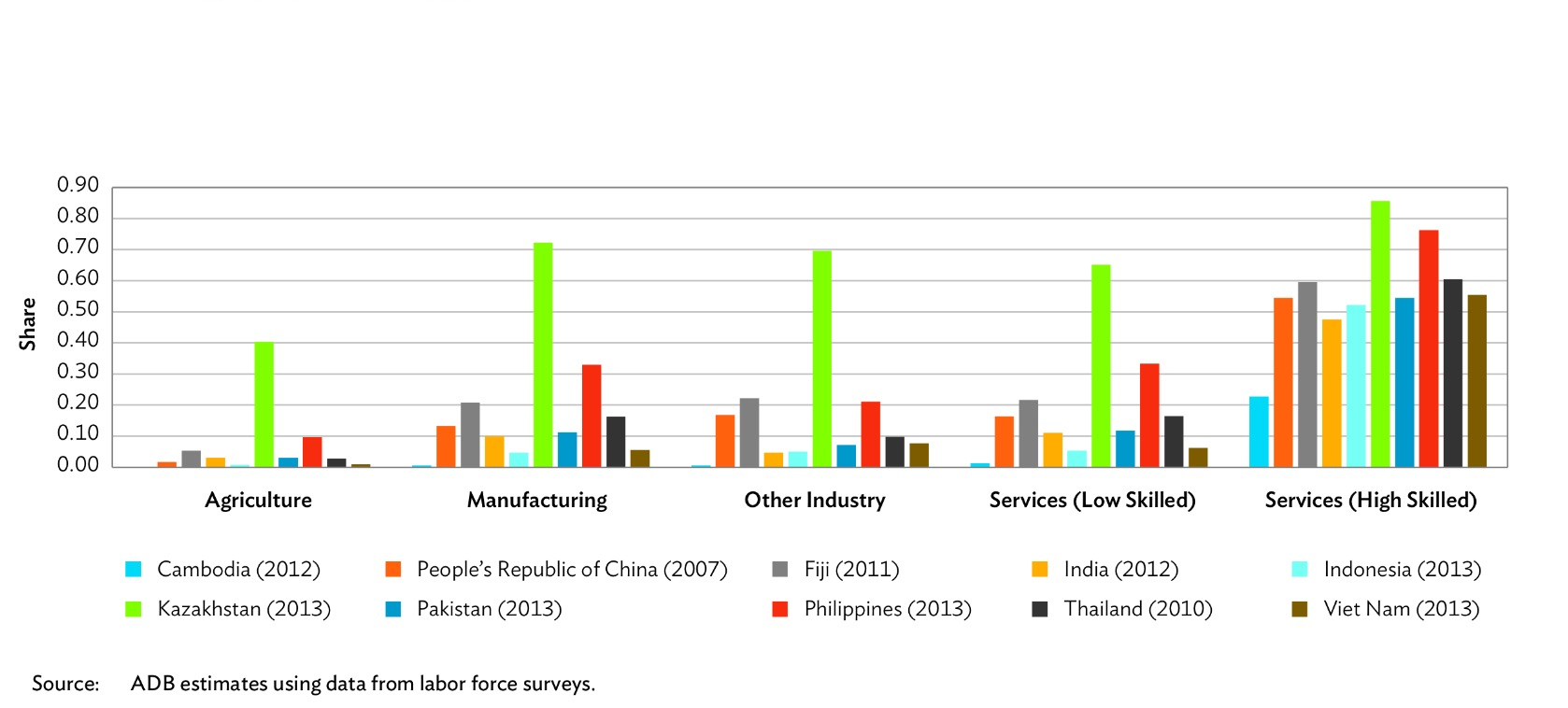
    Nonetheless the report does contain some important data which one can interpret from a different perspective. Take the graph on country-wise data on the vocationalisation of secondary and technical education:

    ADB Report 1

    And compare People’s Republic of China in 2011 and India in 2012… Although India seems to have better coverage, the extent of vocationalisation of secondary and tertiary education in China far outranks India.

    Further, if we look at the sector-wise distribution of types of education received, what do we find?

    ADB Report 2

    While China’s educated are represented in all sectors, including agriculture, India’s educated are overwhelmingly in the high-skill services sector.

    In my post China and India: Two roads diverged dated 29 November 2014, I had written:

    The benefits of the Chinese Revolution are most visible in the way the country raises and educates its children. The first major reform was the standardisation of the written language (Mandarin-Beijing dialect) across the country. Then, there was universal literacy and mass education, and eventually with a new higher education system geared to the country’s development needs, we see massive vocationalisation with an emphasis on technology in higher education. Today, there are no less than 4 Chinese and 4 Hong Kong based institutes/universities in the Asian Top-25, and not a single one from India.

    Higher Education in China has rapidly adapted to the global trend of internationalism, duly followed by indigenization of the knowledge gained. This means that the Chinese technocratic class is now geared to move from re-engineering western technology to innovation in its own right, and is encouraged through government investment to set up businesses in China itself. Contrast this with India, where IITs and IIMs, funded entirely by the humble Indian taxpayer, compete with each other in how many alumni they have been able to place in foreign companies – preferably in the USA!

    Furthermore, by opting to invest heavily in manufacturing industry, China has found a place for its unskilled, semi-skilled, skilled, and highly skilled workers, all in the same business matrix. Whereas, by opting for hi-tech services such as IT, India can provide the best opportunities only to its best and most educated workers, further fuelling the social and digital divide in the country.

    Thanks to ADB, I stand vindicated. And what a great way to conclude one’s 50th post in less than a year…

  • Convention 189 on Domestic Workers

    The outrage caused in India when a Saudi employer chopped off the hand of his 58 year old female domestic worker made the headlines for exactly a day and a half in the victim’s home country. The twitterati, who set the news agenda, quickly moved on. After all, which Indian (or Pakistani, or Afghan) will cast the first stone?

    This is the region where the underclass has been ill-treated, raped and abused incessantly for centuries, if not millennia. An abuse justified by the pernicious caste system and the feudal mindsets of the region. In recent years, even the diplomats of these countries have got into all sorts of trouble wherever their ‘servants’ have been brave enough to seek justice in the host country, but these cases are few and far between. The overwhelming majority put up with this abuse generation after generation, because they are conditioned from birth to expect nothing better – deprivation piled upon deprivation are their ‘fate’ and ‘destiny’, after all…

    I was just wondering about international mechanisms to deal with this sustained exploitation and abuse of domestic workers across borders, when I received a mail from walkfree.org about exactly such an ILO mechanism, known as Convention 189 and its lamentably low ratification by the countries of the world.

    The rationale for a Convention on Decent Work for Domestic Workers is:

    • Recognition of the significant contribution of domestic workers to the global economy through substantial income transfers within and between countries
    • The undervaluation and invisibility of domestic workers at large, and especially of women and children so employed
    • The fact that in developing countries with historically scarce opportunities for formal employment, domestic workers constitute a significant proportion of the national workforce and remain among the most marginalized
    • The special conditions under which domestic work is carried out that make it desirable to supplement the general standards for all workers with standards specific to domestic workers so as to enable them to enjoy their rights fully

    Convention 189 draws upon all other relevant international instruments such as the Universal Declaration of Human Rights, the Protocol to Prevent, Suppress and Punish Trafficking in Persons, the Rights of the Child, and the International Convention on the Protection of the Rights of All Migrant Workers… and many more.

    It entered into force on 5 September 2013.

    The Convention was initiated by the Philippines, probably for the very good reason that a large number of Filipinas are employed as domestic workers in the Gulf region, and there are constant stories of abuse in the local press ­­- yet the desperate keep seeking employment there. And Philippines remains the only Asian country among the Convention’s paltry 22 ratifiers – shame Asia, and North America. Understandably, the rise of left-wing Governments in South America gives that continent the best record in this case, with Uruguay being the first to ratify Convention 189 on Decent Work for Domestic Workers.

    ILO Convention 189 Ratifiers


    And what about India? At the time of Independence, visionaries like Nehru and Kidwai succeeded in giving India one of the most compassionate and pro-worker set of Labour Laws, and India was at the forefront of enlightened labour legislation and at the ILO. But its record has been steadily blemished since 1991 when it jumped on to the unquestioned globalization bandwagon: Out of the 43 ILO Conventions and 1 Protocol ratified by India, 42 are in force, 2 Conventions have been denounced; BUT none have been ratified in the past 12 months.

    What a sorry landmark for the current Government to achieve…

    Why am I not surprised?

  • Remembering Gandhi

    Today is the  birth anniversary of Mahatma Gandhi. And particularly poignant, as the admirers of his assassin are now out in the open at home, and state and individual violence has reached unprecedented levels across the world.

    I remember visiting the Yerawada Jail in Pune to discuss a training programme for the Prison Department, when the Jail Superintendent showed us the register from 1922 when Gandhiji was brought there to serve a 6 year sentence. There in a bold copperplate, fading to sepia, were the details of this simple man who would one day move his nation and eventually the world.

    The British jailer had meticulously recorded that he was clad in a dhoti and a shirt, carried a pen and a watch, and had 16 rupees and 8 annas (or some such) in his pocket and the distinguishing mark was a mole on his arm. I found this simple litany so moving that it brought tears to my eyes… and for a minute I could actually see his frail form in that very room, standing at that very table having his life inventoried by a stranger.

    The cramped cell where Gandhiji was held has now been turned into a memorial with the surrounding yard lovingly cared for by prisoners who are often serving life sentences themselves. I could imagine how uncomfortable this cell would have been as the hot afternoon sun blazed through its bars. And to think that people like Gandhi and Nehru did most of their writing in places like this! There is now a charkha there, to mark the hours Gandhiji spent spinning cotton, while he thought of a million things, perhaps… his own personal style of meditation.

    gandhi

    Nehru mourned the passing of the Mahatma with his characteristic eloquence:

    “Friends and comrades, the light has gone out of our lives, and there is darkness everywhere, and I do not quite know what to tell you or how to say it. Our beloved leader, Bapu as we called him, the father of the nation, is no more. Perhaps I am wrong to say that; nevertheless, we will not see him again, as we have seen him for these many years, we will not run to him for advice or seek solace from him, and that is a terrible blow, not only for me, but for millions and millions in this country.”

    And the years have gone by… And to this generation of aspiring Indians, what is Gandhi other than a face on the currency notes, the name of the main street in every Indian town, and a national holiday to mark his birth? His very philosophy is now reduced to a bunch of quotations on the  internet, to be incorporated into the speeches of politicians and visiting dignitaries, and almost expunged from Indian textbooks.

    But Bapu himself was ever the realist, humble to the last, with no grand dreams of immortality, who actually said:

    “There is no such thing as Gandhism, and I do not want to leave any sect after me. I do not claim to have originated any new principle or doctrine. I have simply tried in my own way to apply the eternal truths to our daily life and problems…The opinions I have formed and the conclusions I have arrived at are not final. I may change them tomorrow. I have nothing new to teach the world. Truth and nonviolence are as old as the hills.”

    And therein lies the man’s true greatness..

  • Poverty in South Asia

    With the viewership of this blog now touching 95 countries, the most views appear to be on issues of poverty and human development and so I thought it was time to revisit some aspects of income poverty, especially in the South Asian Region, which is home to the largest number of poor people: 43 per cent of the developing world’s 1.4 billion poor people live in South Asian countries.

    Although the three largest countries in the region, India, Bangladesh and Pakistan, have managed to substantially reduce extreme poverty in the last 2 decades, their vast populations add up to frightening absolute numbers of the absolute poor (< US$ 1.25 per day per capita). What is more challenging for the governments in this region however, is the proportion of their populations in the next slab (US$ 2.5-US$4) – just escaping being labelled as the absolute poor, but still seriously deprived in all aspects of life such as health, education, shelter and livelihoods.

    poverty post 1

    So who are these people? The small land-holder, share-cropper or farm labourer in rural areas; and the stalwarts of the informal sector in urban areas. This group may have just enough primary education and basic food security to cross the official poverty line, and ironically, are doubly deprived because they miss out on the meagre subsidies earmarked for those below the poverty line.

    Neither the governments in the region, nor the formal sectors have the will or incentive to address this type of poverty. In fact, it is universally acknowledged that it suits and profits the private sector to maintain a large informal sector, especially in the urban areas, as this unorganised sector has no collective identity and therefore no bargaining power and can be exploited at will, relentlessly and for ever.

    Another factor brought out by various UN reports and databases is the growing disparity in the countries in South Asia.

    South Asia disparity

    Income inequalities have grown steadily in South Asia since the early 1980s, in both urban and rural areas. This income inequality does not follow the classic ‘have’ and ‘have-not’ dichotomy across the country, but is further compounded by disparities between regions in the same country. For example, studies of long-term trends indicate that while the share of the total number of India’s poor in the southern states of Andhra Pradesh, Karnataka, Kerala and Tamil Nadu decreased from 18% in 1993-1994 to 15% in 1999-2000; the share in the total number of poor in the states of Bihar, Orissa, Madhya Pradesh, Uttar Pradesh and West Bengal jumped from 57% to 63% during the same period. Therefore, although there has been a steady decline in the incidence of poverty in India, the efforts of the Government have not resulted in a uniform impact across regions.


    So the writing is on the wall in all the countries of the region. Address the issues of deeply entrenched poverty – extreme and relative deprivation – or else pay the price through increasing social unrest, growing extremism, and the endless cycle of violence and state oppression… And the time is definitely running out on this clock…


  • Kerala: God’s own country?

    Today a diversion to India’s own Chile, that sliver of a state along its west coast – Kerala. This is the quintessential spice state which was trading with Sumeria and Mesopotamia and Egypt, thousands of years ago. A land of sea-farers, Kerala is a proud part of modern India, yet utterly unique. Management Gurus will tell you that while the perpetual dependence on rain-fed agriculture has made Indians fatalistic and accepting, the people of Kerala have always been enterprising and risk-takers as they farmed the sea rather than the land. And the fact that the annual Southwest Monsoon first strikes Kerala, ensures that its fields and plantations are ever lush, earning it the sobriquet of God’s own country. Heaven with forests, backwaters and divine cuisine…

    Naturally, tourism is a big part of the Kerala economy and it can satisfy everyone – the beachcombers, the wildlife enthusiasts and the mountain trekkers. And of course, history buffs. Kerala is reputed to be the entry point of all three Abrahamic traditions into India – Judaism, Christianity and Islam. It was also briefly the final resting place of Vasco da Gama, before he was reinterred back home.

    Kerala 1  Kerala2

    In the modern day, Kerala has the highest literacy rate, the best gender ratio and consequently tops the Human Development Index among Indian States in report after report. Its flagship Kudumbashree programme based upon women’s self-help groups has banished abject poverty from the countryside, and empowered its women far beyond their sisters elsewhere in India. However (and there is always a ‘however’), Kerala also enjoys the dubious distinction of being the most densely populated State in the industrialized South and West of the country – 819 souls per square km according to Census 2011. Simply too many people on too little land available for agriculture or industrial development. Consequently, ever since the oil boom of the 1970s, Kerala’s chief export has been its people. The tallest structures in Dubai, the freeways in Abu Dhabi, the grand mosques in Saudi Arabia are all a result of the blood, sweat and tears of these stalwarts from Kerala.

    Back home, this exodus mostly of young, single males has had a dramatic effect. While their families have prospered on these Gulf remittances, a disproportionate number of girls have been forced into the labour market, and none more so than in the profession of nursing. It is estimated that 80% of the membership of the Indian Nursing Association hails from Kerala, and they are ubiquitous in hospitals across India, and all over the Arab world, if not further afield.

    Indian media prominently displayed pictures of Kerala nurses evacuated from Iraq, and later Yemen, where one supervisor heroically rescued not just her staff but also the patients, by negotiating with the attacking rebels. But these tales of heroism hide a more sinister truth. Why are these girls forced to look for work in such dangerous parts of the world? Quite simply, because they get much higher salaries than would ever be possible to earn in India. And they all have harrowing tales of indebtedness to tell – having borrowed heavily first to qualify as nurses, and then to pay agents to find them the jobs.


    The moral of the story for me is that human development implies not just making more people literate, or bringing down the mortality rates; but also providing access to free higher education, and sustainable livelihoods to all within their community, or at least within their country. And neither the State Governments nor the Central Government show an iota of interest in human and community well-being, as they chase ever higher economic growth, at any cost.


  • Indian Independence and Globalization

    As someone born long after India gained Independence, one heard of Jawaharlal Nehru’s first Independence Day speech only from one’s elders and betters and got to actually hear it years later, only after the advent of the Internet. That scratchy recording from the radio archives; that emotion-laden voice, on the verge of breaking; those extempore words in an alien language…

    “Long years ago we made a tryst with destiny, and now the time comes when we shall redeem our pledge, not wholly or in full measure, but very substantially. At the stroke of the midnight hour, when the world sleeps, India will awake to life and freedom. A moment comes, which comes but rarely in history, when we step out from the old to the new, when an age ends, and when the soul of a nation, long suppressed, finds utterance. It is fitting that at this solemn moment, we take the pledge of dedication to the service of India and her people and to the still larger cause of humanity.”

    And what a pledge it proved to be! Nehru had inherited a partitioned land, a ravaged countryside, little or no manufacturing industry and famine stalking the masses at every turn. His first task was to interpret independence as self-reliance and address the abysmal poverty of the common Indian. Hence the Green Revolution to provide basic food security, and setting up of mega industries in the public sector, to provide employment in urban areas.

    In tandem was the establishment of the Indian Institutes of Technology, the Indian Institutes of Management, the National Defence Academy, and scientific research institutions like the National Laboratories, TIFR, BARC, ISRO and many more.

    Internationally, Nehru’s vision of Non-alignment protected India from the worst excesses of the Cold War, wreaking havoc all around us – South-East Asia, Africa and Latin America. Of course, the devil is always in the detail, and man is mortal, so Nehru could not redeem his pledge in its entirety, but he did leave behind a legacy of vision and daring.

    So what happened to derail Project Independent India? In a word – globalization. Ever since India chose this path, one has not heard any Prime Minister either make a pledge to the people of India, or show the courage to go it alone in the interests of the country. We are all too busy chasing Foreign Direct Investment and let the devil take the hindmost…

    In reality, the globalized world economy has deeply fragmented production processes, labour markets, political entities and societies, creating a plethora of interest groups and lobbies which have undermined the integrity of civil society and its rights and entitlements across the world. This is becoming increasingly visible in rich and poor countries in the form of growing disparity between places, people and groups. In India, globalization is manifested in much greater income inequalities and growing agrarian distress.

    In the international realm, the once proud Indian foreign office bows quietly to Washington in voting or abstaining on UN resolutions, and surrenders quietly to tough terms of international trade. Globalization, spearheaded largely by MNCs, now decides which domestic land laws need to be amended and which social issues can be ignored – like child labour, informalisation of urban economies, land rights of indigenous people, deteriorating health and education, pollution, environmental degradation and so on…

    Advocates of globalization claim that greater international connectivity has enhanced accountability of governments. True. But the global elite still get away with murder – they call it collateral damage, of course. The UN bodies, International Courts of Justice and other fora are as biased in favour of the West as before, so what has really changed for the better?

    The recent referendum in Scotland was precisely about this – globalization or independence? As is the ongoing ideological conflict in Greece. And look what happened there – economically weaker countries have quietly given up the battle and taken their humble places in the new global pecking order, and all’s well with God’s Earth! Even that bastion of hope – Cuba – is in a hurry to jump on to the globalization bandwagon… apparently globalization is as inevitable as death and taxes.

    So as India celebrated its 68th Independence Day this August, isn’t it time to take stock of where we are headed and why? To whose benefit? And at whose cost?

    It is time for India to break out of this global thraldom, and awaken once again to life and freedom…